dailynewsnblog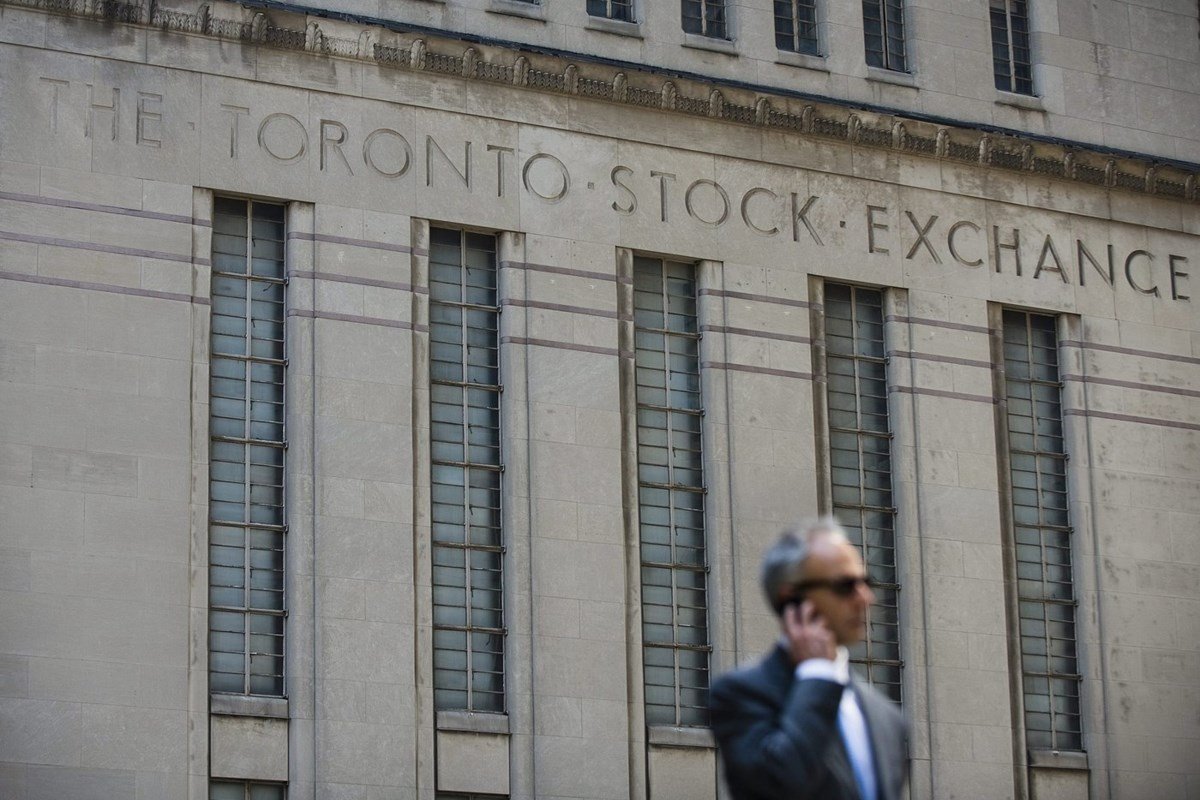

TORONTO — Canada’s main stock index edged lower on Friday on broad-based losses, capping off a week where it had largely struggled to find a direction.
The S&P/TSX composite index was down 67.61 points at 35,806.65.
TORONTO — Canada’s main stock index edged lower on Friday on broad-based losses, capping off a week where it had largely struggled to find a direction.
The S&P/TSX composite index was down 67.61 points at 35,806.65.
John Zechner, chairman and lead equity manager at J. Zechner Associates, said that markets are seemingly grinding their way higher despite a number of headwinds that include higher borrowing costs in the U.S. and worries about AI spending.
Investors from around the world were focused on Canada this week as Prime Minister Mark Carney held his two-day investment summit in Toronto that began Monday. It included a flurry of multi-billion-dollar funding announcements that Ottawa says are part of its broader goal of attracting $1 trillion in total investment to Canada over five years.
John Zechner, chairman and lead equity manager at J. Zechner Associates, said the summit appeared to be fairly successful.
Prime Minister Mark Carney also announced a “productivity mega deduction” tax credit during the Canada Investment Summit, building on a measure introduced in the 2025 budget.
“That seems like it’ll be pretty stimulative for long-term capital growth in Canada and certainly more than it’s been in the past,” Zechner said.
Separately, Statistics Canada released inflation figures for the month of August on Monday that showed the consumer price index held steady at three per cent.
Zechner said he thinks it is less likely for the Bank of Canada to raise interest rates, following the latest inflation figures.
“The bigger overhang on Canada in the short term is all the trade issues and until you get some sort of settlement there or resolution, it’s going to be a hangover on the Canadian economy,” he said.
In New York, the Dow Jones industrial average was down 95.40 points at 51,682.64. The S&P 500 index was up 12.74 points at 7,650.50, while the Nasdaq composite was up 104.25 points at 26,522.54.
Meanwhile, the U.S. Federal Reserve raised its benchmark interest rate on Wednesday for the first time since 2023 in an effort to quell stubbornly high inflation, which pushed down share prices before they recovered somewhat the next day.
Zechner said markets were particularly interested in comments from Fed Chair Kevin Warsh that “left the door open to more increases” in the future. In a set of quarterly projections, the Fed signalled that its rate-setting committee could hike rates a second time to 4.1 per cent.
That’s led to some speculation that the Bank of Canada could end its string of interest rate holds and begin raising as soon as next month.
Bank of Canada governor Tiff Macklem will give a speech next week in Halifax.
Zechner said he expects Macklem to “play it close to the chest” and that the central bank would need a significant catalyst before moving its key policy rate in either direction at the moment.
The central bank kept its key interest rate on hold at 2.25 per cent earlier this month, but said that risks for inflation had increased and new tariffs have made economic growth prospects more uncertain.
Looking ahead to next week, Zechner said markets appear to be entering a quiet period next week and doesn’t see any significant drivers to the upside or downside.
The Canadian dollar traded for 71.42 cents US compared with 71.49 cents US on Thursday.
The November crude oil contract was down US$1.15 at US$96.08 per barrel, while the December gold contract was up US$25.20 at US$4,424.90 an ounce.
This report by The Canadian Press was first published Sept. 18, 2026.
— With files from The Associated Press
Companies in this story: (TSX: GSPTSE, TSX: CADUSD)
Daniel Johnson, The Canadian Press