dailynewsnblog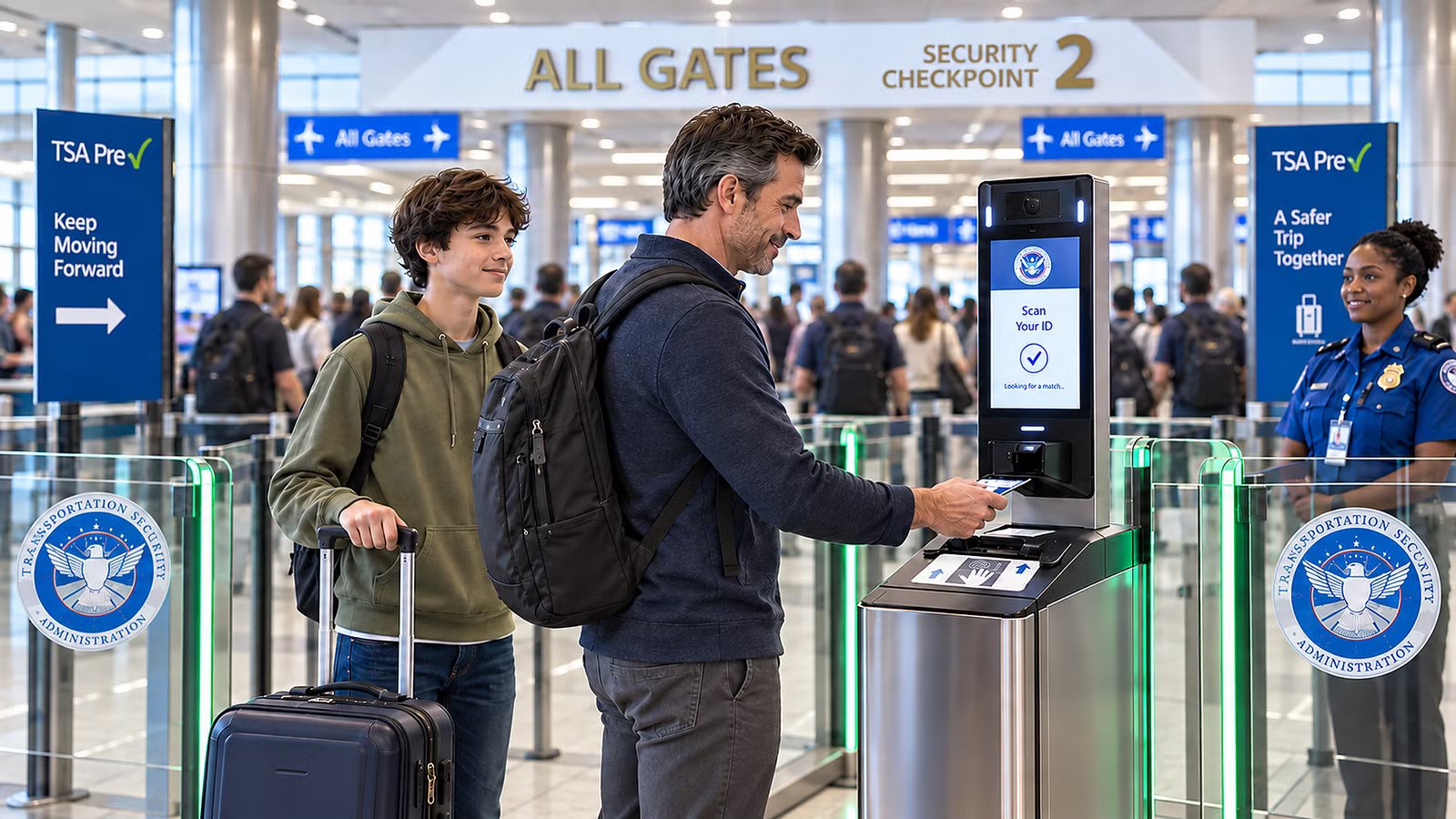
The Transportation Security Administration (TSA) is removing chairs from Travel Document Checker positions at US airport checkpoints. This means that all officers who verify passengers’ IDs and boarding passes are now expected to remain standing. TSA confirmed the nationwide change on September 29, while AFGE TSA Council 100, the TSA workers’ union, says chairs have already disappeared from most commercial airports. The union says it learned about the policy through members rather than through formal advance notification.
ABC News reports that this seemingly small change at the front of the checkpoint has become a dispute over security, customer service, and working conditions. TSA says standing will keep officers alert and create a more welcoming, professional first interaction with travelers; AFGE argues that document checking was one of the few duties that offered some relief to employees who spend most of their workday standing or walking on hard floors.
Why TSA Says Officers Should Stand At ID Checks

Travel Document Checkers (or TDCs) occupy one of the most visible positions at a checkpoint: they are generally the first TSA officers passengers encounter before proceeding farther into screening. TSA says visibility is part of the reasoning behind the change, explicitly linking standing officers to both its security posture and the passenger experience. According to CNN, every chair is being removed from TDC podiums nationwide, while some employees say individual airports removed them months earlier.
TSA commented on the change in a statement on Wednesday.
“This welcome change reinforces both our security posture and our commitment to hospitality by having these officers on their feet and alert. All officers must meet fitness for duty requirements to be capable of performing their vital national security function.”
The agency has also emphasized that officers are expected to create a welcoming and professional environment while performing their security responsibilities. Employee accounts obtained by View From The Wing say some local managers separately described the change as an issue of professionalism. TSA has not, however, released evidence that removing the chairs improves threat detection.
The emphasis on passenger interaction comes as identity verification itself is changing. Touchless ID has been introduced for eligible TSA PreCheck passengers at selected airports, while programs at Ontario International Airport (ONT) and  Seattle-Tacoma International Airport (SEA) have demonstrated how approved non-travelers can pass through TSA screening to access the secure side of terminals. Together, those initiatives illustrate a wider effort to combine security controls with a more streamlined airport experience.
Union Says The Chairs Are Basic Ergonomic Support

AFGE sees the policy very differently. The union said that it was not consulted before chairs began disappearing, with workers reportedly first learning about the broader change on September 25, according to Reuters. By the time TSA publicly confirmed the policy, AFGE said chair removal was already underway at most commercial airports and described the decision as disregarding employee rights and safety.
“These chairs serve as basic ergonomic and safety support for officers that stand and walk on hard surfaces all day,” the organization explained. “TSA is treating this matter like it is a privilege. It is not; it is basic safety and common decency for the workforce.”
That distinction matters because TSA officers rotate among different checkpoint jobs rather than spending an entire shift sitting at the entrance. One employee account cited by View From The Wing described the document-checking assignment as typically lasting around 30 minutes, providing a relatively brief chance to sit before moving to another duty. Federal occupational-health research, meanwhile, recognizes prolonged standing as a potential workplace ergonomic issue.
AFGE says it intends to challenge the decision and has encouraged members to contact their congressional representatives. The dispute also comes during an unusually contentious period in TSA labor relations: after attempts to rescind the agency’s 2024 collective bargaining agreement, a January federal court order required TSA to continue treating the agreement as applicable and binding while litigation proceeds.
The Chair Ban Comes Amid Wider Changes At TSA

Independent occupational-health guidance gives context to AFGE’s ergonomic argument, without establishing that TSA’s new rule is unsafe. The National Institute for Occupational Safety and Health found prolonged workplace standing was consistently associated with lower-back pain, fatigue, muscle pain, leg swelling, and discomfort, with dynamic movement appearing to offer the best protection. Significantly, TSA’s currently protected 2024 agreement itself requires anti-fatigue mats where employees stand in one place for extended periods and says appropriate ergonomic equipment should be provided.
The chair rule is therefore arriving during a broader reset under new TSA administrator David Cummins. He took over on August 7 and unveiled Horizon 25 just over two weeks later, with checkpoint modernization and the passenger experience among its central themes. Separately, the administration’s April budget proposal called for eliminating more than 9,400 TSA positions and cutting more than $1.5 billion from the budget, including greater reliance on private security screening at smaller airports.
TSA Development | Detail |
|---|---|
New TSA administrator | David Cummins sworn in on August 7, 2026 |
TSA workforce | Approximately 60,000 employees |
Airports overseen | 430+ |
Horizon 25 launched | August 24, 2026 |
Horizon 25 priorities | Modernize checkpoints, elevate the traveler experience, strengthen transportation security. |
Proposed workforce reduction | More than 9,400 positions under the administration’s April budget proposal. |
Proposed budget reduction | More than $1.5 billion, around 20% of TSA’s budget. |
Private screening | Roughly 20 airports already use private screeners; broader changes have been proposed. |
Latest workplace change | Chairs removed from Travel Document Checker positions nationwide. |
TSA has not said the chair removal is formally part of Horizon 25. Still, its emphasis on alertness, professionalism, and passenger interaction comes as Cummins says the agency should deliver security, efficiency, and an improved traveler experience at the same time. New technology has already changed what airport security looks like — from touchless identity checks in the US to CT scanners allowing longstanding screening procedures to be reconsidered elsewhere. The chair dispute shows that changes intended to reshape the checkpoint experience can also raise questions about the conditions under which frontline officers are expected to deliver them.