dailynewsnblog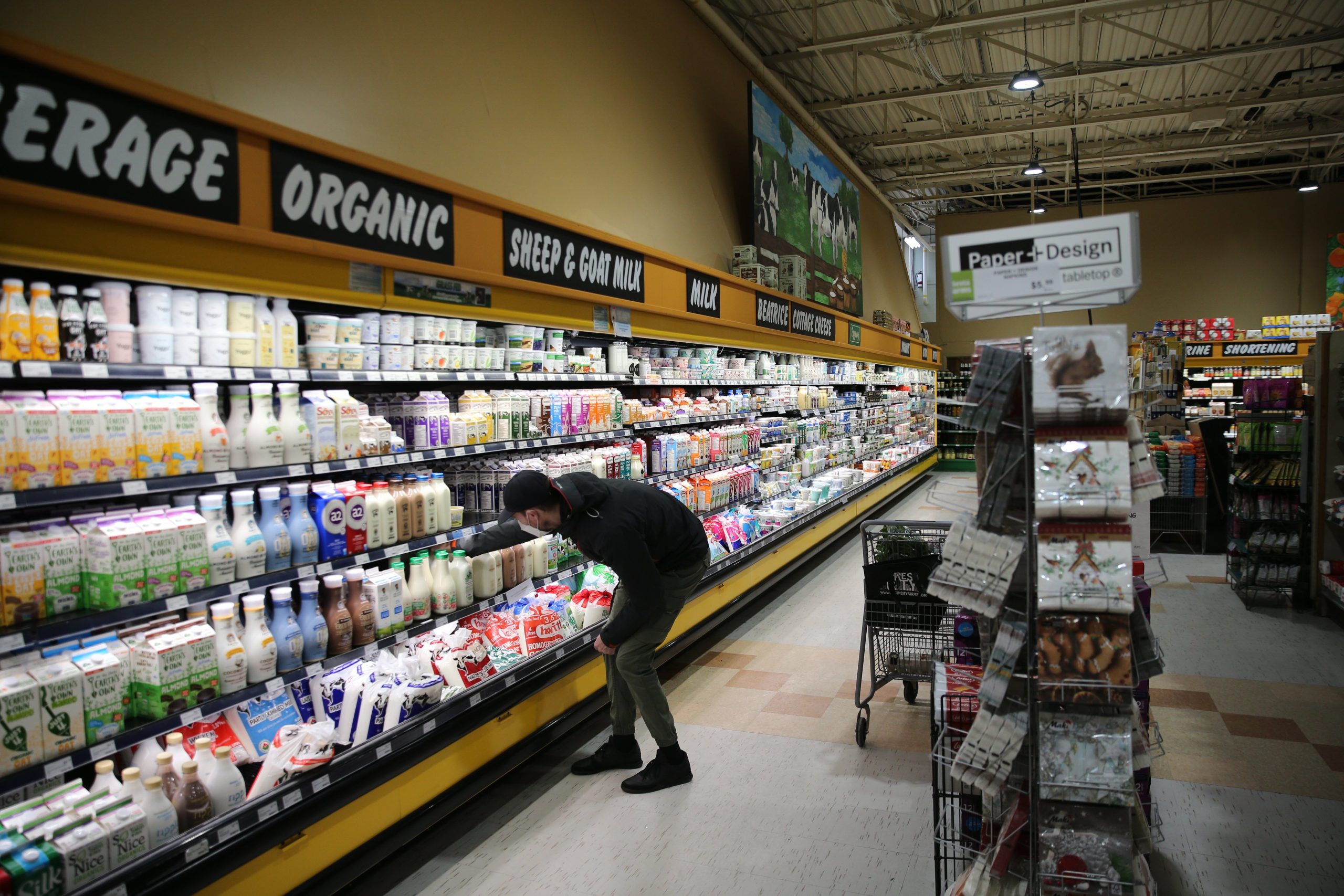
Supply management defenders say the Americans have never filled their quota of products that could be imported duty free. Canadian cheese importers say the problem is that Ottawa gives quotas to domestic dairy processors, who have no incentive to bring in products that will compete with their own.
U.S. President Donald Trump says he’s imposing hefty new tariffs on Canadian goods partly in response to our supply managed dairy system, which has long been in his crosshairs over concerns that it unfairly blocks access to U.S. producers.
But defenders of the system argue the Americans have never filled their quota of products that could be imported duty free, a concession made to secure the Canada-United States-Mexico Agreement (CUSMA) during the first Trump administration.
So, why are the Americans fuming about the Canadian dairy market if they’re not even bothering to export here in the first place?
It’s not for a lack of trying, say Canadian cheese importers, who are pointing the finger at Ottawa for giving around 80 to 90 per cent of these quotas to major dairy processors that are focused solely on protecting their market share here in Canada. They say processors are only using their access to trade with their American branches, preventing different producers from entering the Canadian market.
The International Cheese Council of Canada wants more of these quotas to be awarded to importers and distributors because they can sell to retailers and give American producers a major footprint in this market, which would help defuse protests south of the border even without granting greater access.
Pat Pelliccione, the chair of the council, said Ottawa is turning a “deaf ear” to their proposals and seems content to preserve a system that protects the major processors, even if it risks trade relationships with other countries.
“Right now the Americans have access, and they’re utilizing it, but they don’t feel that they’re getting a fair shake out of the deal,” he said.
Canada’s supply management system — which also applies to poultry and egg producers — operates by imposing production limits, setting prices for products and restricting imports through the use of tariff rate quotas. Essentially, the system offers up some limited market share for foreign producers but imports that exceed that threshold are subject to lofty tariffs.
Under CUSMA, Canada granted U.S. dairy producers tariff-free access to 3.9 per cent of Canada’s dairy market. Canada also agreed to eliminate Class 7 pricing on some skim milk products that was blamed for driving down U.S. exports of ultra-filtered milk.
The Liberal government offered $1.2 billion in compensation to dairy farmers for the loss of market share. These losses were compounded by trade deals reached with the European Union and members of the Comprehensive Trans-Pacific Partnership (CPTPP).
The Dairy Farmers of Canada said all concessions under these trade deals cost domestic producers 8.4 per cent of their market share, with imports now making up 18 per cent of the Canadian dairy market, when factoring in agreements made under the World Trade Organization.
As part of CUSMA, Canada offered increased access to U.S. dairy imports, introducing 14 different tariff-rate quotas or TRQs to be distributed to those wanting to purchase American products. But the United States Trade Representative Office said that it found that on average, only 42 per cent of those TRQs were being filled, with nine of 14 categories sitting under 50 per cent.
Global Affairs Canada decides which companies receive TRQs to import products. For CUSMA’s 2025-26 milk allocation, 11 firms were selected, including Canada’s largest dairy processors — Saputo, Agropur, Gay Lea and Lactalis. Meanwhile, 99 firms were granted TRQs for cheese, including several distributors and the major processors.
In Trump’s executive order on Monday authorizing 50 per cent tariffs on a swath of Canadian goods, the president said Canada was discriminating against the U.S. by having a different criteria for milk TRQs than those used in its trade deal with the European Union, known as Comprehensive Economic and Trade Agreement or CETA.
Trump’s order also claimed that Canada had made retailers ineligible for the cheese TRQs in CUSMA, despite permitting this for European countries.
The Dairy Processors Association of Canada didn’t respond to a request for comment prior to publication.
Pelliccione, who also serves as president of importer Jan K. Overwell, said Canada’s allocation model for CETA is much fairer than the CUSMA’s because it included retailers, who are more likely to purchase from different suppliers.
“The American processors believe that the best way to the Canadian market is to have the retailers holding the allocation model, because that way it can give a regional processor in the U.S. the opportunity to export their cheese to a Canadian retailer, and have that Canadian retailer develop the brand,” he explained.
“When the license ends up in the processor’s hands, their initiative [is to] trade between themselves. No American processor want to sell to a Canadian processor — you can’t support your competitor.”
This perceived favouritism for food processors was a key factor in New Zealand’s complaint over Canada’s dairy import policies, which led to the first-ever dispute resolution panel under the CPTPP.
That panel in 2023 ruled largely in favour of New Zealand, concluding that Canada violated its obligations to allow importers “the opportunity to utilize TRQ quantities fully.” The ruling singled out for criticism Canada’s decision to create pools that reserve access to a percentage of each TRQ for dairy processors.
Much like the experience with CUSMA, the panel found that most of Canada’s TRQs under the CPTPP weren’t being fully used and some included no imports at all.
Canada has made changes to the process for allocating TRQs in recent years, but only after prodding from the U.S.
The Americans used the CUSMA dispute resolution mechanism in 2021 to challenge Canada’s policy of reserving access to most of its dairy TRQs to processors. The CUSMA panel ruled in favour of the Americans, finding that Canada was failing to meet its obligations under the agreement.
Ottawa responded by ending the use of processor-specific TRQ pools.
But the Americans were denied another win in a separate challenge in 2023 that claimed Canada was breaching CUSMA obligations by banning some importers from applying for a TRQ allocation, including retailers. It also took issue with Canada’s practice of making allocations based on their market share and requiring importers to return unused TRQs each year.
The panel’s ruling was more favourable to Canada this time, suggesting that it retains some discretion in terms of who can apply for a TRQ.
Despite complaints from importers and the Trump administration, Canadian dairy producers say the numbers show that CUSMA has opened new doors for American products.
In a statement to iPolitics on Thursday, the Dairy Farmers of Canada said exports of U.S. dairy products to Canada have increased by 150 per cent in value from 2019 to 2025 — a leap from $423 million to $1.06 billion.
“When you look at the numbers, it’s hard to understand the rationale behind the American claims. The U.S. has a large dairy surplus with Canada, and its exports have increased significantly since CUSMA was put in place,” the group said in a statement, adding that Canada has been abiding by the terms of its trade deal with the U.S.
“A healthy agricultural sector relies on predictable, rules-based trade. The U.S. negotiated significant access to Canada’s dairy market under CUSMA. Canada has been following its commitments under this agreement.”
The group has been vocal in calling for Ottawa to avoid making concessions that would have the effect of ceding more market share to the U.S. They’ve argued that a Bloc Quebecois private members’ bill unanimously passed in 2025 prevented the government from making changes to supply management in trade talks.
Global Affairs Canada didn’t respond to a request for comment prior to publication on Thursday.
Sylvain Charlebois, a professor and director of the Agri-Food Analytics Lab at Dalhousie University, said while many have argued that Trump is going after supply management with his recent tariffs, the record shows the president is focused on securing better access for American producers, as was agreed to under our trade deal.
“In CUSMA 1.0, we did everything possible not to honour our TRQ commitments. We tend to give import quotas to people who have no intention to import more competition,” he said in an interview.
Despite the mixed record at CUSMA panels, Charlebois said it’s clear that industry is “playing with TRQs,” noting the lack of access to American cheese products at most grocery stores.
He said this is made worse when considering taxpayers footed the bill for billions in compensation to farmers for those CUSMA concessions.
“We compensated farmers because they were quote unquote losing money and losing market share. Well, that can be disputed now because I don’t see any evidence that they lost money at all.”
But in the current “Buy Canada” climate, Charlebois said it likely wouldn’t matter if more American products were appearing on grocery shelves – research shows Canadians would actively avoid those goods.
Instead, he said the focus for the Americans appears to be on dairy ingredients, noting that Trump’s latest tariffs specifically targeted Canadian dairy products like fluid and dried whey, as well as concentrated milk and cream powders and solids. No other agri-foods products were targeted.
If this is the case, Charlebois said there might be a silver lining for producers on this side of the border — those ingredients from the U.S. are cheaper and Canadians likely wouldn’t notice as long as the final product is processed here.
“Nobody will care where the dairy protein is from, but it will actually help [those] like Saputo make more money.”