dailynewsnblog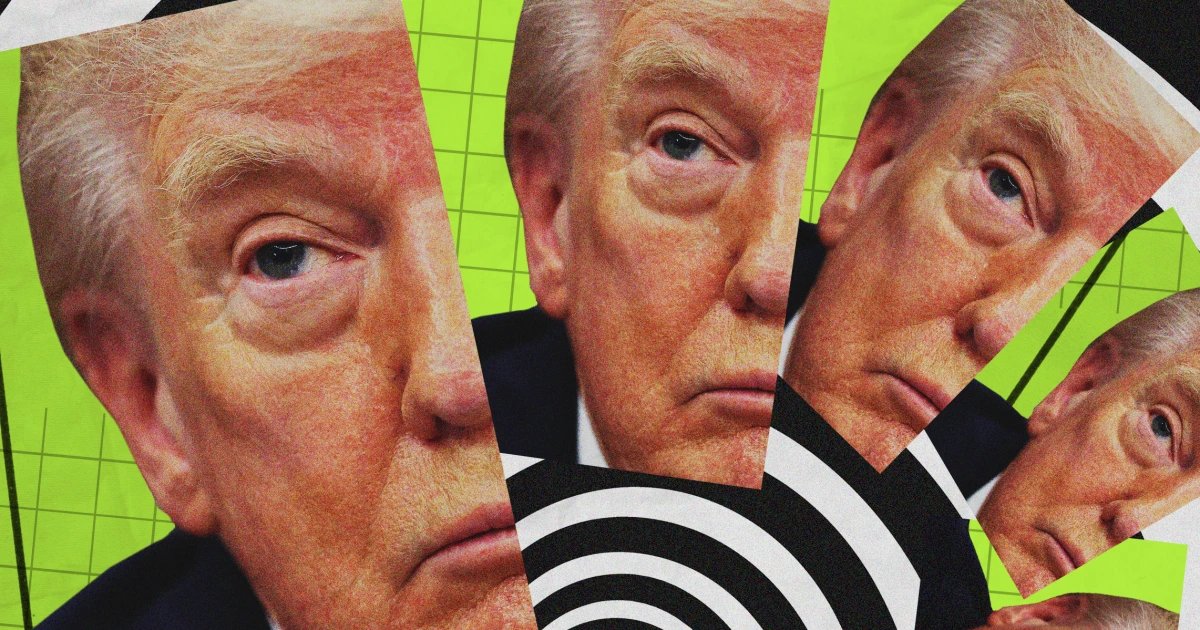
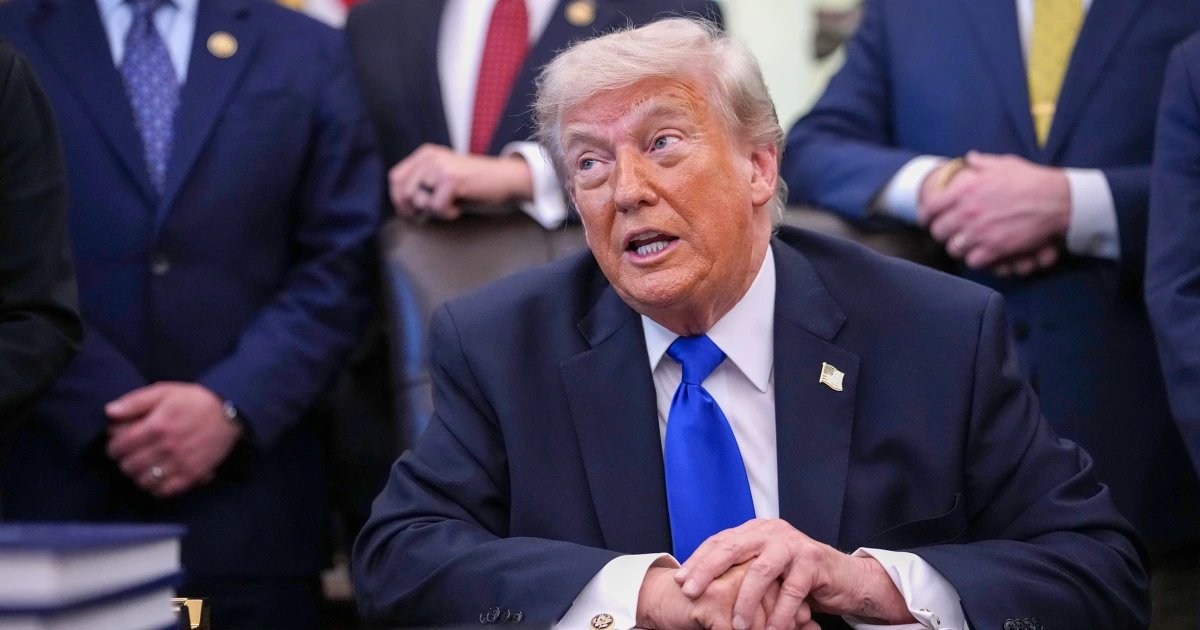
Conspiracy theories have been central to Donald Trump’s political rise. He was a leading promoter of the “birther” conspiracy theory targeting then-President Barack Obama, embraced outlandish theories about a “deep state” in the government and still pushes false claims that the 2020 election was stolen from him.
Subscribe to read this story ad-free
Get unlimited access to ad-free articles and exclusive content.

But conspiracy theories, and the people who support them, are unpredictable and hard to control. Now, Trump is increasingly the subject of conspiracy theories on both the left and the right, with many of his onetime supporters increasingly viewing him with skepticism.
This new dynamic played out immediately after Saturday’s White House Correspondents’ Association dinner with conspiracy theories and false claims flooding social media, questioning whether the assassination attempt was “staged” for Trump’s benefit. There is no evidence suggesting that is the case.
Some of those who circulated that idea were once among Trump’s most vocal backers.
“Was The Trump Whitehouse Corespondents Dinner Shooting Staged??” posted the right-wing conspiracist Alex Jones, who has recently broken with Trump over the war with Iran. Former Rep. Marjorie Taylor Greene, R-Ga., who similarly broke with Trump over Iran and his handling of the release of information about the late disgraced financier and convicted sex offender Jeffrey Epstein, questioned why the suspect’s writing was released “almost immediately.” On the left, prominent progressive podcasters Jennifer Welch and Angie Sullivan released an episode on Monday headlined: “Major False Flags Revealed In Trump Shooting Aftermath, He’s Hiding From the Public?”
The White House tried to tamp down on the misinformation.
“Anyone who thinks President Trump staged his own assassination attempts is a complete moron,” White House spokesman Davis Ingle said in a statement.
Sen. Bernie Moreno, R-Ohio, a Trump ally who was at the dinner, told NBC News, “For the people who think what I experienced personally on Saturday was staged, they need to put the phone down, go outside and touch grass.”
Trump seemed surprised by how quickly the conspiracy theories flew across the internet.
“Usually it takes a little bit longer,” he told CBS’ “60 Minutes” on Sunday. “Usually they wait about two or three months to start saying that.”

The shift in the conspiracy world could mean the loss of a powerful messaging tool and base of support for Trump, if it sticks. But it also poses problems for Democrats, who now have more of their own supporters embracing outlandish theories and are deciding whether to break bread with some of these influencers now criticizing the president.
The development comes as Trump’s job approval rating has sunk to its lowest point in his second term, as voters express worries about the economy and war with Iran, per last month’s NBC News Decision Desk Poll powered by SurveyMonkey.
Among Republicans, Trump still enjoys overwhelming support, but his numbers are falling. In April, 83% of Republicans approved of Trump’s job performance, down 4 points from earlier this year, while the share of Republicans who strongly approve dropped from 58% to 52%.
Trump goes to war with ‘nut jobs’
A number of high-profile conservative influencers — including Tucker Carlson and Candace Owens — who have been at the forefront of pushing pro-Trump conspiracy theories have split with the president.
In turn, Trump has blasted them as “NUT JOBS” and went as far as calling out specific conspiracy theories some have promoted. In a Truth Social post in April, Trump wrote that Owens “accuses the Highly Respected First Lady of France of being a man, when she is not, and will hopefully win lots of money in the ongoing lawsuit,” while Jones “lost his entire fortune, as he should have, for his horrendous attack on the families of the Sandy Hook shooting victims, ridiculously claiming it was a hoax.”
A former senior Trump campaign official said the ongoing fight with influencers on the right is “a real problem” for Trump. They pointed to the fallout from the Epstein files as one of the splits on the right that has been particularly damaging.
“I actually think you’re starting to see it in public polling as well as private polling,” this person said, pointing to some softening in his numbers with Republicans.
The breakup was brewing for a while as Trump and administration officials — some of whom promised to reveal new and damaging findings on Epstein and his associates once in power — sought to tamp down on efforts to release that information and downplay its contents once congressionally mandated to release it, triggering an uproar on both the right and the left.
Then the war with Iran accelerated these tensions. Some of the former supporters have gone as far as saying Trump needs to be removed from office over his handling of the war while separately promoting theories about Israeli leaders controlling Trump. Other conservative personalities have remained steadfast Trump backers, including former administration official Dan Bongino and podcaster Benny Johnson.
Steve Bannon, the MAGA media personality and former White House adviser, noted that as is often the case with Trump, these relationships can be crosswise one day and repaired the next. He pointed to podcaster Joe Rogan, who supported Trump in 2024 but has been critical of several of his initiatives in office. In April, he nevertheless appeared with the president to promote research into the psychedelic drug ibogaine.
“Trump’s always open for business when it comes to flip-flopping on media personalities,” Bannon said.
Brian Friedberg, senior researcher at the Harvard Kennedy School’s Shorenstein Center who studies the online political influencer sphere, said more pro-Trump conservative outfits such as The Daily Wire, Breitbart and the One America News Network have shed parts of their audiences, while Rogan, Owens and Carlson are among the top podcasts on YouTube, the company’s rankings show.
But he said it is unclear whether Trump’s fractured support in this realm will solidify into gains for Democrats.
“It’s very difficult to say exactly who’s listening to them and exactly if it’s going to change their vote,” he said.
“There are certain folks who are intent on uniting reactionary elements of the right and conspiratorial elements of the left,” Friedberg added. “I think that that’s absolutely a phenomenon on the X platform that has been very well-rewarded by their recommendation algorithm that there may not have any presence in the real world other than that.”
The correspondents dinner was not the only instance of right- and left-wing anti-Trump conspiracy theories merging.
In recent weeks, individuals on the right, including Greene, have questioned the 2024 attempted assassination of Trump in Butler, Pennsylvania, demanding more information about his would-be assassin. Joe Kent, a former top administration official who resigned over the war with Iran, told Carlson he was blocked from probing both the Butler assassination attempt and the assassination of Charlie Kirk last year, another source of conspiracy theories on the left and right. Separately, a survey conducted by the Manhattan Institute, a conservative think tank, in February found that nearly half of registered Democrats polled believed the attempt on Trump’s life in 2024 “was orchestrated by his supporters to increase sympathy for him.”
Democrats debate a path forward
For those on the left, there is an irony in seeing Trump subjected to the kinds of conspiracy theories he has fomented. Trump’s initial political rise went hand in hand with promoting the “birtherism” falsehood that Obama was not born in the U.S. and therefore not a legitimate president. In his 2016 presidential bid, Trump promoted the false claim that Sen. Ted Cruz’s father was connected to the assassination of President John F. Kennedy.
While in office, Trump refused to disavow the QAnon conspiracy theory, which subscribed to the idea that Trump was fighting off a deep state cabal of pedophiles. The biggest conspiracy theory of all is Trump’s continued insistence of the falsehood that he won the 2020 presidential election but that the election was fraudulently stolen from him.
But Trump’s return to power has also led to a boom in conspiracy theories on the left. It comes as more than 75% of Americans subscribe to at least one conspiracy theory, according to a survey published by the National Academy of Sciences in June. That has happened as domestic attacks and plots against the U.S. government last year reached their highest levels in more than 30 years, with the majority of the attacks originating from the extreme left for the first time in two decades, according to data from the Center for Strategic and International Studies.
For years, leading Democrats have condemned Trump for engaging with conspiracy theorists. But now some on the left, including Reps. Jamie Raskin, D-Md., and Ro Khanna, D-Calif., have said the party should be willing to welcome people like Greene, who had promoted conspiracy theories, including QAnon.
In April, Khanna credited Carlson and Greene for their anti-war advocacy, saying it contributed to Trump’s stepping back from his threat to annihilate Iranian civilization, adding that there is a need for “an anti-Epstein class, anti-war, pro-working class coalition.” He’s said he agrees with Greene on healthcare issues and appeared with the former congresswoman in a joint interview.
“We should find common cause on specific issues,” Khanna told NBC News, adding, “We are the party of redemption, and we should not demonize people who voted for Donald Trump.”
Khanna expressed sympathy for those who subscribe to conspiracy theories.
“There’s a lot of people who are very, very angry at the status quo and who are upset at having wealthy and powerful people control a government in a way they don’t have a say in,” he said. “And so some of the conspiracy theories that have emerged, which are not true, are a reaction to trying to provide an explanation for a world that isn’t working for them.”
Other Democrats were more skeptical of offering such a warm embrace.
“I still firmly believe that there’s room for people who want to fight for our causes,” a Democratic operative who has worked with multiple potential 2028 contenders said. “But I think people that sort of have toxicity to them, it’s problematic.”
“You’re going to bring, like, rabid conspiracy theorists?” this person, who requested anonymity because they are not authorized to speak with the media, continued. “I don’t know that our tent is that big, and I think we need to be very cautious about who we’re aligning ourselves with.”
Mike Nellis, a Democratic strategist working with potential 2028 presidential contenders, said the party needs to build as big of a tent as possible heading into the midterms and beyond.
“There’s a difference between people who promote conspiracy theories and … people who listen to those conspiracy theories,” he said. “So a regular person is free to join every day. The Tucker Carlson, Nick Fuentes, Candace Owens vibe … I’m willing to engage with them, but I wouldn’t give them a speaking slot at the DNC.”
But he has been surprised by the prevalence of some conspiracy theories on the left, particularly after Saturday night.
“I’ll be honest with you, I have been telling my people on all my channels, ‘I don’t believe it was staged,’” he said. “I’ve been getting yelled at, like, people yelling at me, going, ‘Mike, you’re naive. You don’t understand the threat of Donald Trump.’”
The former senior Trump campaign official said the shifting politics reminded them of populist crossover this person saw in 2016, when some supporters of Sen. Bernie Sanders’ Democratic presidential campaign voted for Trump in the general election, as well as the merging of Trump’s movement with Robert F. Kennedy Jr.’s in the 2024 cycle.
“It’s not a left/right straight line anymore,” this person said. “It’s more like a horseshoe. … And the rallying principle is conspiracy theory, like revolt against the man.”