dailynewsnblog
Howard Stern precedent ignored
Credit:
Getty Images
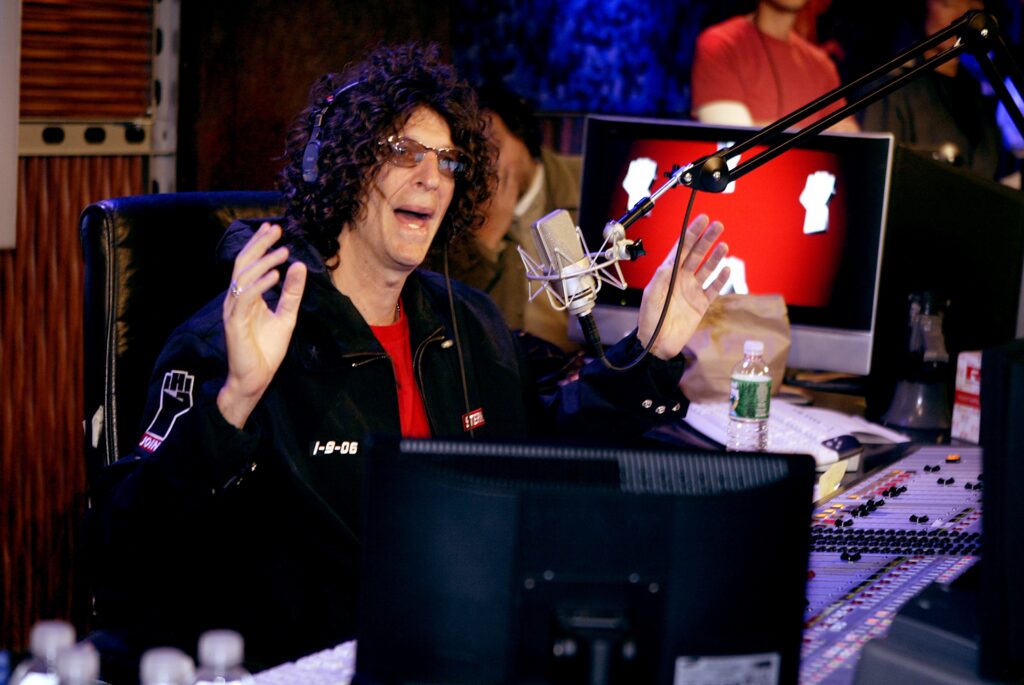
Howard Stern debuts his show on Sirius Satellite Radio on January 9, 2006, at the network’s studios at Rockefeller Center in New York City.
Credit:
Getty Images
Feld said the Carr FCC’s guidance “says the exact opposite” of what the FCC’s 2003 ruling on Howard Stern stated “with regard to how this process is supposed to work. The Howard Stern decision expressly states that licensees don’t need to seek permission first.”
The 2003 FCC’s Stern ruling said, “Although we take this action in response to [broadcaster] Infinity’s request, we emphasize that licensees airing programs that meet the statutory news exemption, as clarified in our case law, need not seek formal declaration from the Commission that such programs qualify as news exempt programming under Section 315(a).”
By contrast, the Carr FCC encouraged TV programs and stations “to promptly file a petition for declaratory ruling” if they want “formal assurance” that they are exempt from the equal-time rule. “Importantly, the FCC has not been presented with any evidence that the interview portion of any late night or daytime television talk show program on air presently would qualify for the bona fide news exemption,” the notice said.
The Lerman Senter law firm said that before the Carr FCC issued its public notice, broadcasters that met the criteria for the bona fide news interview exemption generally did not seek an FCC ruling. Because of the public notice, “stations can no longer rely on FCC precedent as to applicability of the bona fide news interview exemption,” the law firm said. “Only by obtaining a declaratory ruling, in advance, from the FCC can a station be assured that it will not face regulatory action for interviewing a candidate without providing equal opportunities to opposing candidates.”
This is “quite a switch,” Feld said. If this is the new standard, “then conservative talk radio hosts should also be required to affirmatively seek declaratory rulings,” he said.
FCC is “licensing speech”
Berin Szóka, president of think tank TechFreedom, told Ars that “the FCC is effectively creating a system of prior restraints, that is, licensing speech. This is the greatest of all First Amendment problems. What’s worse, the FCC is doing this selectively, discriminating on the basis of speakers.”