dailynewsnblog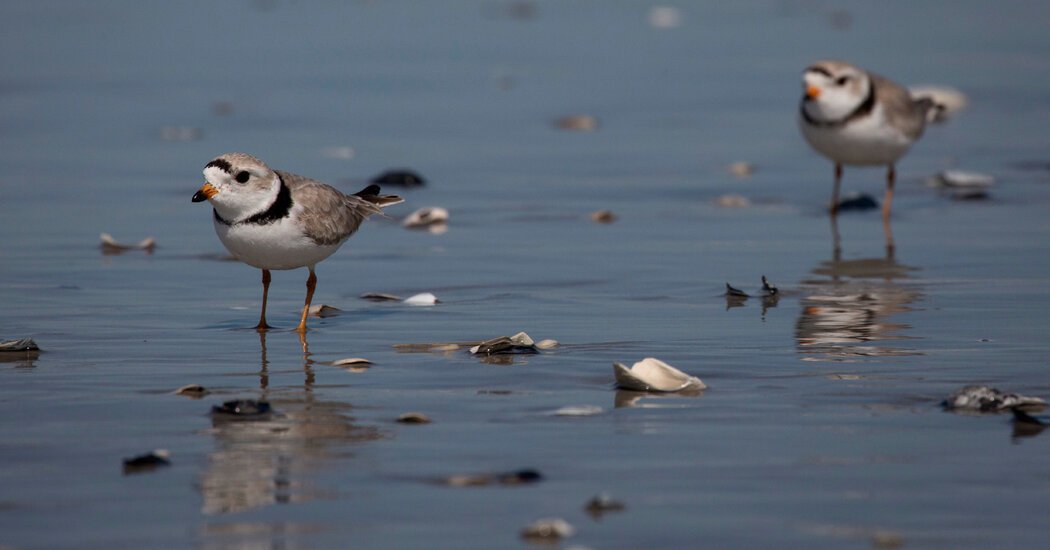
The Trump administration on Friday moved to open the habitats of imperiled animals to farming, drilling, mining, real estate development and other activities in what environmentalists characterized as the most severe erosion of protections for wildlife in half a century.
It did so by recasting a single word, “harm.”
For more than 50 years, the federal government has used a broader definition of harm to animals under the Endangered Species Act, a bedrock environmental law. It included any significant “modification or degradation” of habitat that kills or injures animals by impairing their ability to eat, shelter or breed.
The Supreme Court upheld this interpretation in 1995, ruling against property owners who argued that harm should only mean directly killing or injuring an endangered animal.
But on Friday, the Interior Department and the Commerce Department announced a final rule that rescinded this longstanding interpretation. Under the rule, destroying an endangered species’ nest or habitat would no longer be considered illegal.
The change could open the door for fossil fuel companies, agricultural interests, land developers and others to disturb or even destroy the habitats of vulnerable species. Many species are already running out of places to live, and the new rule is likely to add extreme pressure, experts said.
Earthjustice, an environmental law firm, said it planned a legal challenge. But if the case were to reach the current Supreme Court, its conservative supermajority could enshrine the change, preventing future administrations from reversing it, said Karrigan Börk, an environmental law professor at University of California Davis.
The move on Friday was the latest in a series of extraordinary efforts by the Trump administration to weaken environmental regulations designed to fight climate change and prevent species extinction. In March, a panel of administration officials voted to exempt oil and gas drilling in the Gulf of Mexico from measures to protect endangered whales and other imperiled species.
In a news release, the Interior and Commerce Departments said they were taking action to restore the Endangered Species Act to its original intent. They argued that in recent years, environmentalists and Democratic administrations had weaponized the act to block drilling and other development nationwide.
“For years, federal agencies abused the E.S.A. to obstruct lawful land use and burden American families and businesses,” Interior Secretary Doug Burgum said in a statement. “That approach turned routine activity into a regulatory trap, drove up costs that impacted people’s lives, and expanded federal authority beyond what Congress intended.”
The National Mining Association, a trade group, applauded the announcement.
“Our industry is absolutely committed to the conservation and recovery of threatened and endangered species — and their habitats — but the definition of ‘harm’ has long been abused to serve as a punitive obstacle impeding critical projects” Tawny Bridgeford, the group’s general counsel and senior vice president, said in a statement.
Legal scholars said the government was acting without conducting scientific research into the impact of the change, a step that would typically precede a move of this kind.
The change is “undermining the fundamental purpose of the Endangered Species Act,” said Lynn Scarlett, who served as deputy interior secretary under President George W. Bush.
Habitat modification or degradation caused by human activity is often the main reason that species face extinction. An intergovernmental body of leading scientists has found it to be the top driver of biodiversity loss worldwide.
Modifying habitat can easily harm individual animals without intentionally or immediately killing or injuring them, said Gary Frazer, who oversaw the U.S. Fish and Wildlife Service’s endangered species program for two decades before retiring in 2025.
Piping plovers, for instance, need undisturbed beaches to nest and raise their young. They return to the same sites year after year, but only occupy them in the spring and summer. During winter, when the birds have migrated south, a property owner could develop a beach without immediately hurting any individual piping plovers. But come spring, the returning plovers would find themselves without a place to feed, nest and raise their chicks.
Or take red-cockaded woodpeckers, which are not migratory but require mature pine trees to hollow out the cavities where extended families roost. Even if a timber company or developer cut down those trees without causing direct injury to any birds, they could not survive without other unoccupied old trees.
Amphibians like California tiger salamanders begin their lives in seasonal ponds but move into upland burrows after metamorphosis. If a pond were drained during the summer, the salamanders that returned to the spot would not have the water they need to produce the next generation.
“We are at the precipice of losing 50 years of progress in the protection of America’s wildlife, because we know that the challenges for most animals are not that they’re getting shot,” said Justin Pidot, a professor of environmental law at the University of Arizona who served as the general counsel at the White House Council on Environmental Quality during the Biden administration.
After the rule was proposed last year, it triggered roughly 220,000 public comments. About 99 percent were against the change, according to an analysis by The New York Times that used artificial intelligence.
Among those asking the administration to reconsider were state wildlife agencies in some Republican-governed states.
“Threatened and endangered species are entirely dependent on healthy habitats,” wrote Bruce Kreft, the chief of the conservation and communications division of the North Dakota Game and Fish Department. The proposed change, he said, “would have dire consequences.”
Ted Will, who was the director of the Georgia Department of Natural Resources Wildlife Resources Division at the time, wrote that “the greatest threat to the vast majority of species of greatest conservation need in Georgia, whether federally listed or not, is habitat loss.”
Attorneys general from 16 states — including Arizona, California, Illinois and New York — said the rationale for the change was “arbitrary, capricious, an abuse of discretion and contrary to law.”
Those supporting the change included industries affected by habitat restrictions. Oil and gas trade groups including the American Petroleum Institute wrote that harm must involve a direct injury to a particular animal.
But the vast majority of commenters appeared to be individuals, often begging the government to reconsider.
“Everyone knows a species cannot live without its habitat,” wrote Ashleigh Smith of Port Angeles, Wash.
Environmental lawyers and activists said that projects are rarely blocked because of habitat restrictions. More often, individuals or companies have to create “habitat conservation plans,” which describe the expected effects on endangered species and detail steps that will be taken to minimize them, they said.
With the change, people and governments will still need permits for actions that would, say, crush or bury endangered animals, but not for felling a tree or polluting a river that the animal relies on, said Jane Davenport, a senior attorney with Defenders of Wildlife, a conservation group. That means landowners would take fewer measures to protect endangered species, and also contribute less to offsetting their actions by helping the species elsewhere.
“A lot of our endangered species are on the edge,” Dr. Börk said. “If you lose that species, it is gone.”
Teresa Mondría Terol and Jacob Meschke contributed research for the analysis of public comments.