dailynewsnblog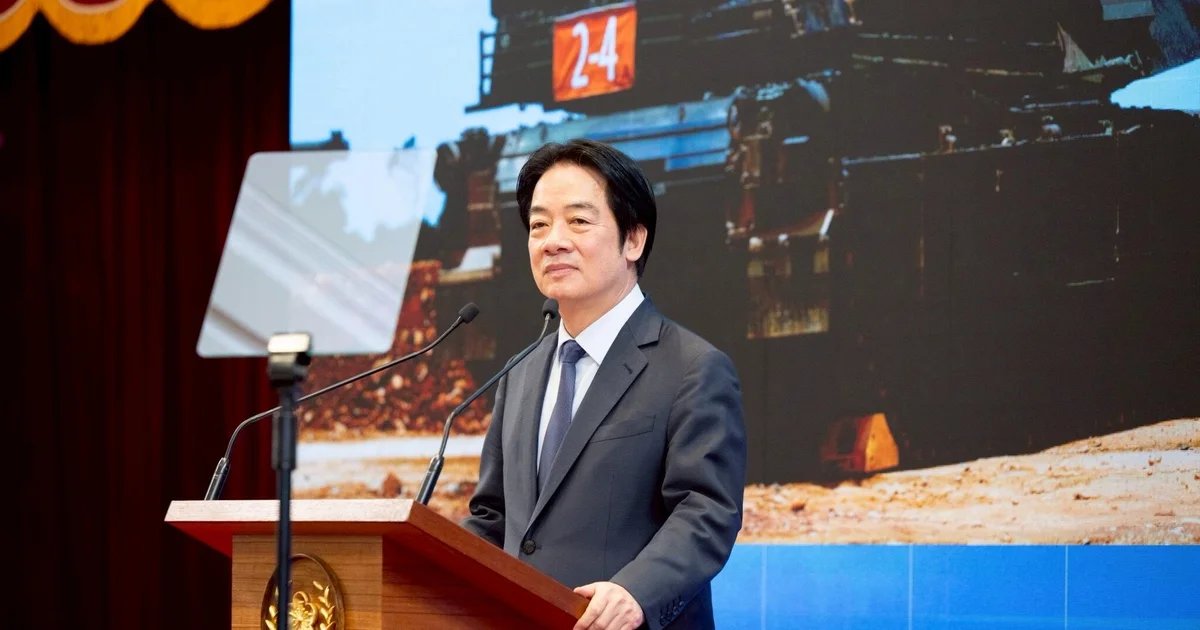
President Trump is no longer expected to speak with Taiwanese President Lai Ching-te before Chinese President Xi Jinping’s potential trip to the United States this fall, multiple sources familiar with the discussions told CBS News.
When Mr. Trump visited China earlier this month, Xi warned him that Taiwan could become a “very dangerous situation” if mishandled.
Mr. Trump twice made international headlines in mid-May when he indicated that he would have a conversation with Lai before making a decision about selling a new package of defensive military weapons to the democratic self-governed island.
“I’ll speak to him,” Mr. Trump told reporters last week when asked if he’d speak to Lai before greenlighting the arms sale.
“I have to speak to the person that right now is — you know who he is — that’s running Taiwan,” Mr. Trump said two weeks ago on Air Force One.
No sitting U.S. president has spoken directly with a Taiwanese leader since 1979 due to diplomatic sensitivities in managing relations with China, although in December 2016, while Mr. Trump was president-elect, he received a congratulatory call from then-Taiwanese President Tsai Ying-wen.
“I think [Lai], if he has time, would love to tell him our side of the story, the Taiwan story, which is one that — of resiliency, of a state staying up against the Chinese aggression,” Alexander Yui, Taiwan’s Representative to the U.S., told “Face the Nation with Margaret Brennan” on May 17.
Taiwan’s de facto embassy in the U.S. told CBS News this week that it’s still waiting to hear from the U.S. about a phone call.
A White House official referred CBS News to the president’s comments.
The Chinese Communist Party has long vowed to “reunify” the island with the Chinese mainland, and the potential for military force remains a risk. After Mr. Trump’s mention of a potential phone call, the Chinese Foreign Ministry spokesperson said Beijing opposed any “official exchanges between the U.S. and China’s Taiwan region, and the U.S.’s arms sales to Taiwan is consistent, clear and rock-firm.”
On Mr. Trump’s two-day visit to Beijing, during which he said he spoke in “great detail” to Xi about the weapons sale to Taipei, the president also told Fox News that he planned to hold the weapons “in abeyance,” depending on what China did. He suggested arming Taiwan could be a “negotiating chip” useful to the U.S., but he did not elaborate.
Under a Reagan-era agreement known as the Six Assurances, the U.S. pledged not to cut off arms sales to Taiwan, and not to consult with Beijing on such sales.
“So, what am I going to do? Say ‘I don’t want to talk to you about it, because I have an agreement that was signed in 1982?’ No. We discussed arms sales,” Trump told reporters during the return trip from China.
The last U.S. arms sale to Taiwan, totaling $11 billion, was announced by the administration in December last year. A subsequent $14 billion package has been under consideration since January but has not yet been greenlit by the State Department and awaits Secretary of State Marco Rubio’s signature.
Acting Navy Secretary Hung Cao told Congress earlier this month that the sale had been put on “pause” to ensure the U.S. military had sufficient munitions for its operations in Iran. A source familiar with the arms sales later told CBS News that the delay was unrelated to Iran and that the president is expected to make a decision “soon.”
“Taiwan and the United States maintain open and smooth communications as the U.S. government reaffirms that its long-standing policy on Taiwan remains unchanged, and supports the status quo and peace and stability across the Taiwan Strait,” the Taipei Economic and Cultural Representative Office (TECRO), Taiwan’s de facto embassy in the U.S., said in a statement to CBS News.
Mr. Trump invited Xi to visit on Sept. 24, the White House announced, though China has not yet accepted the invitation.
Qiu Wenxing, deputy chief of mission and minister at the Chinese Embassy in Washington, D.C., told reporters Wednesday that while Xi had agreed to visit the U.S. in the fall, “the date has to be determined,” and he added that “favorable conditions have to be created prior to such an important state visit.”
While no call with Taipei has been planned, two sources indicated that Mr. Trump always likes to keep options open.