dailynewsnblog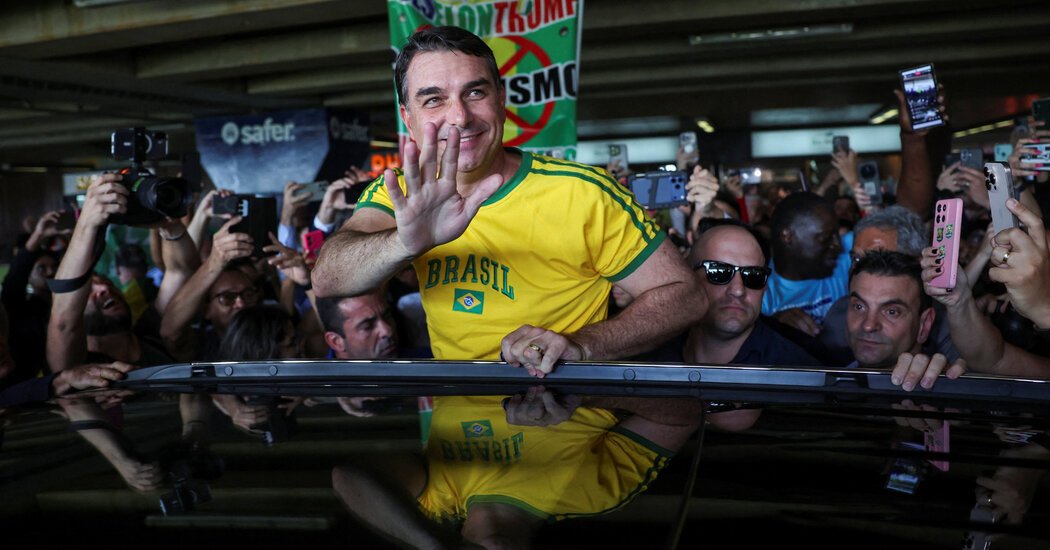
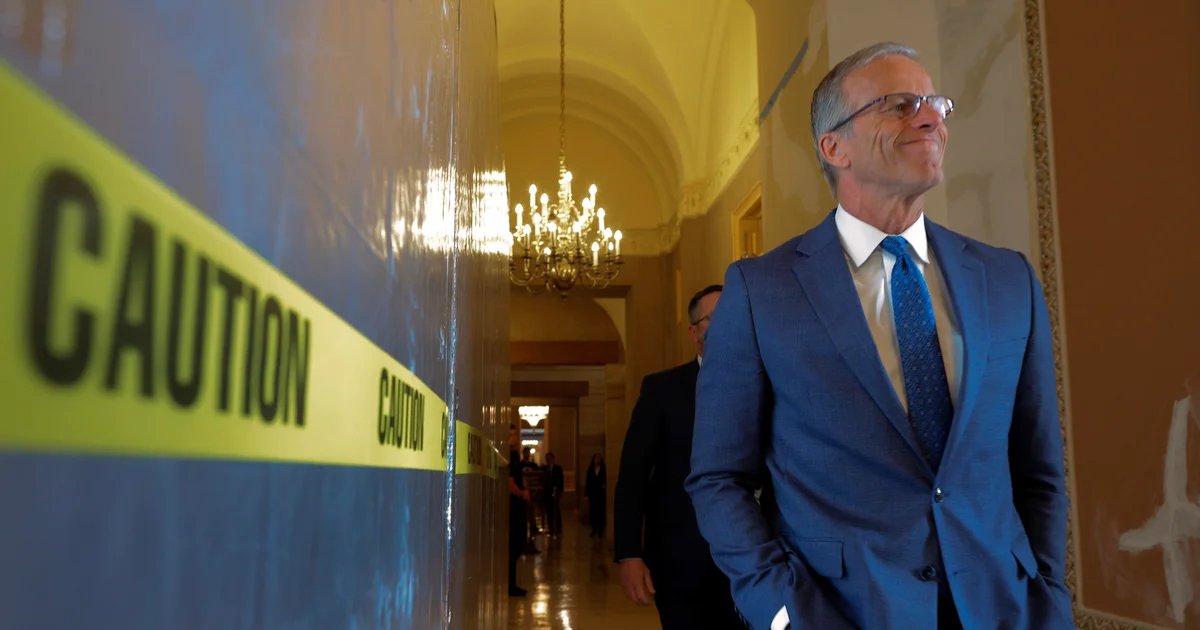
The meeting between President Trump and a son of his jailed Brazilian ally, former president Jair Bolsonaro, lasted just a few minutes. Still, it was enough to derail months of efforts to mend ties between Brazil and the United States.
Just days after Flávio Bolsonaro, who is now seeking the presidency himself, visited Mr. Trump at the White House last week, the American leader designated Brazil’s two biggest drug gangs as terrorist groups.
Mr. Bolsonaro had lobbied for months for such a move.
Then, this week, the United States threatened punishing new tariffs on the Latin American nation and signaled it did not view the government of the leftist president, Luiz Inácio Lula da Silva, as an ally.
And, in a gesture that supporters of Mr. Lula read as a snub, Mr. Trump then posted an Oval Office photo with the younger Bolsonaro. “A smart young man who loves his Country, Brazil, very much!” the caption read.
At a moment when the right is ascendant in Latin America, the left’s biggest test will come in October when Brazil, the region’s largest country, holds elections.
Mr. Bolsonaro plans to challenge Mr. Lula at the polls in lieu of his father, who was convicted and is under house arrest for plotting a coup after losing the last election.
Following the latest round of American measures aimed at Brazil, Mr. Lula was quick to strike back, accusing the United States of encroaching on his nation’s sovereignty yet again and calling the younger Mr. Bolsonaro a “traitor” for seeking Mr. Trump’s help.
“We cannot accept the treatment the United States gave Brazil,” Mr. Lula said on Wednesday. He added that the new tariffs had caught his government by surprise, since Brazilian trade officials were actively negotiating with their U.S. counterparts.
The renewed tensions come just weeks after Mr. Trump hosted Mr. Lula for a lengthy meeting at the White House. The visit, months in the making, was a major step toward repairing a rift that itself stemmed from the American president’s last attempt to meddle in Brazil’s affairs, in an effort to help Jair Bolsonaro avoid a jail sentence.
“There was a sense that the bilateral relationship was moving toward stability,” said Oliver Stuenkel, an expert on international relations and an associate professor at the Getúlio Vargas Foundation, a Brazilian university. “This complicated that.”
Now, in subtle and not-so-subtle ways, Mr. Trump appears to be again propping up a right-wing ally in Brazil, this time giving rise to worries that he may be looking to put his thumb on a highly unpredictable presidential contest between Mr. Lula and another Bolsonaro.
Mr. Trump has shown himself willing to weigh in on elections elsewhere in Latin America, this week moving to endorse the right-wing candidate over his left-wing opponent in Colombia’s volatile presidential race.
The sudden shift in tone from Washington also exposes divisions within the Trump administration on how the United States should approach its relationship with Brazil, Mr. Stuenkel added.
One camp considers Brazil a key partner in U.S. efforts to contain China’s economic influence in the Western Hemisphere, he said.
But there is another group that believes ideology should be the priority, Mr. Stuenkel said. “And that the Trump administration should support a Bolsonaro, elect a Bolsonaro, and make life difficult for Lula.”
The new crisis between the two nations echoed the diplomatic meltdown that occurred last year when Mr. Trump tried to force Brazil, through steep tariffs and sanctions, to drop its case against Jair Bolsonaro.
The American president’s efforts ultimately failed to save Mr. Bolsonaro and he was sentenced to 27 years in prison for trying to subvert democracy after Mr. Lula defeated him in 2022. (He is serving his sentence at home for health reasons.)
This time, it is equally unclear whether more U.S. interventions may ultimately help or hurt Flávio Bolsonaro’s bid for the presidency.
On one hand, the labeling of Brazil’s two largest gangs as terror groups represents a major victory for the presidential hopeful, who has criticized Mr. Lula for being soft on crime and even accused him of shielding criminal organizations.
Mr. Lula has opposed terror labels, asserting there are better ways to combat organized crime, including empowering the police, better coordinating international operations, including with the United States, and going after the financial assets of gangs.
Following the designation last week, Mr. Bolsonaro was eager to take credit for swaying Mr. Trump on the issue. With organized crime a major concern for many Brazilians, this could help win over voters.
Yet the possibility of new U.S. tariffs could bring political costs for Mr. Bolsonaro, analysts say. On Tuesday, Mr. Lula and his allies rushed to blame the new levies on aggressive lobbying by Mr. Bolsonaro and his brother, Eduardo, in Washington over the last year.
On Tuesday, Mr. Bolsonaro was quick to distance himself from the new tariffs. Instead, he blamed Mr. Lula’s handling of trade relations and said that, during his visit to the White House, he had asked Mr. Trump not to tax Brazilian products.
It is too early to tell what, if any, impact the latest round of U.S. measures targeting Brazil may have on the country’s politics. Early polls show a tight race between Mr. Lula and Mr. Bolsonaro with the vote is more than four months out, an eternity in a campaign cycle with likely more twists to come.
If history is a guide, a feud between Mr. Lula and Mr. Trump could ultimately give the Brazilian leader an electoral edge. Last year, Mr. Lula saw his popularity surge amid the trade spat, lifted by what has become known around the world as the anti-Trump bump.
“Lula knows how to react well to this type of threat,” Mr. Stuenkel said. “The ‘sovereignty card’ is very powerful in Brazil.”