dailynewsnblog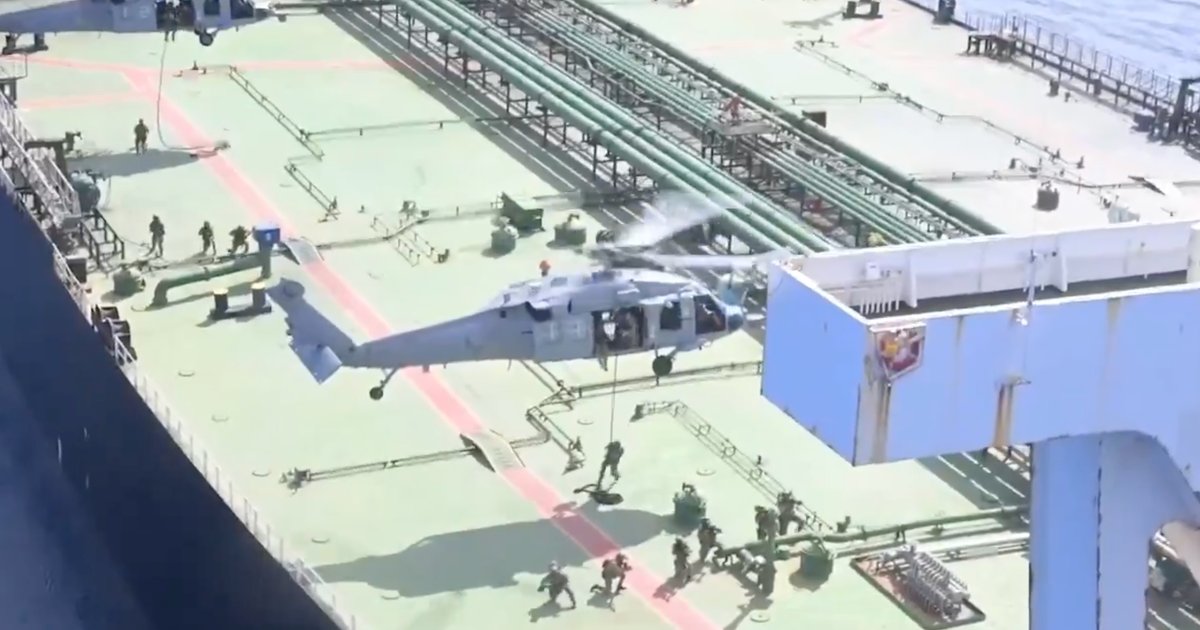
The Justice Department is attempting to revive a centuries-old law to speed up efforts to claim Iranian oil tankers seized during the war with Iran, but maritime law experts say the plan could face hurdles.
The top federal prosecutor in southern Texas confirmed last month that his office is involved in the effort to revive the use of prize law, a specialized legal regime that has not been used regularly since the Spanish-American War. Now, the department plans to utilize the laws in arguments about whether ships and tankers captured at sea since the start of the Trump administration were taken legally.
“Our national security interests may require the United States military to seize vessels or cargo supporting the enemy during military conflict,” Aaron Reitz, the U.S. attorney in the Southern District of Texas, said in a statement. “If that happens, our federal courts must be ready to adjudicate the disposition of these captured vessels and cargo.”
“Prize law is an ancient body of maritime law — already codified in statute but which we are now reviving — that sets the rules for how seized maritime property is condemned, returned, or disposed of,” Reitz continued.
The formal use of prize law, which first began in the early 17th century, would allow the administration to end-run civil asset forfeiture laws — which can often be bogged down in court — in favor of a streamlined process to force the handover of captured Iran-linked ships to the U.S. A judge overseeing the boat capture would have to rule that the U.S. met a specific standard to be awarded the ship’s prize.
File: U.S. forces board MT Davina in Indian Ocean, June 5, 2026. Video from INDOPACOM, via X.
Under current law, U.S. district courts have jurisdiction over prize law cases once vessels are seized by the military. The Justice Department and Pentagon would have to establish that a seized boat is carrying contraband goods, transporting enemy soldiers, operating under enemy control, using fake documents or attempting to circumvent a blockade.
If the department’s efforts survive legal challenges, the court could award the U.S. the prize of oil or other cargo aboard seized Iran-linked ships. The prize could then be sold, and funds would likely be transferred to the Treasury Department.
The plan to revive prize law was first reported by Bloomberg Law. It is the third time that the Trump administration has attempted to use a dormant or defunct mechanism to attempt to expedite the administration’s priorities. In July, the Justice Department attempted to use the Alien Terrorist Removal Court, created in 1996 and which had never been used before, to speed up deportations of suspected “alien terrorists.” Last year, the Trump administration deported Venezuelan migrants accused of belonging to the gang Tren de Aragua under the Alien Enemies Act of 1798, which had not been invoked since World War II.
But international and maritime law experts say the administration’s potential application of the centuries-old laws could backfire in the short term and the long term.
INDOPACOM / screengrab 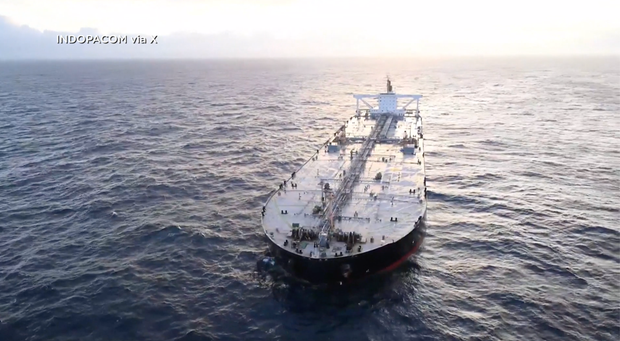
Michael Sturley, a maritime law professor at the University of Texas School of Law, said that 1789 federal law gives district courts and judges in the U.S. jurisdiction over potential prize law cases, but the seized vessel would have to be physically moved to the district — in this case, potentially the port of Houston.
“You know, you go back to the Revolutionary War and the War of 1812, prize courts were huge,” Sturley said. “Back when we didn’t have much of a navy, we sort of outsourced a lot of the functions that you would expect a navy to serve, and would issue letters of embark to private individuals, authorizing them to go out and harass enemy shipping. And the incentive for the private individuals was they got to keep what they killed.”
Sturley said in previous iterations, the prize would be split between the government, which commissioned the privateers, and the captains and crews who operated the boat that had seized the belligerent vessel — a ship belonging to a nation that was actively engaged in conflict with the United States.
Ian Ralby, a maritime law and security expert, says he doesn’t see “any problem with reviving the law of capture and prize.”
“We’ve already seen the revival of blockade. We’ve seen the revival of the law of contraband. So all of these, like naval warfare doctrines that were seemingly collecting dust on the shelf, are available and applicable,” said Ralby, the president of Auxilium Worldwide, a charitable nonprofit that in-part focuses on ocean governance.
But he believes the Trump administration’s attempt to apply prize law poses “some pretty significant domestic and international legal challenges,” specifically in the Middle East, and South America, where the Trump administration has seized Iranian and Venezuelan-linked tankers that are carrying what the administration could argue is contraband worth seizing.
“The question is more of a domestic issue for the United States and a consistency issue in articulating what it’s actually doing,” given President Trump’s repeated reversals on military and economic positions in dealing with the ongoing conflict with Iran, Ralby said.
He pointed to the U.S. seizure of an Iranian-flagged cargo ship known as the Touska in May, after it attempted to bypass the U.S. blockade of Iranian ports and vessels. Iran condemned the ship’s seizure as “piracy” and urged the United Nations to intervene.
“The claims were simultaneous — that this was sanctions enforcement, which is a peacetime construct — and blockade enforcement, which is a law of naval warfare construct. You can’t have both,” Ralby said.
Thomas Lee, an international law professor at Fordham University School of Law said that while it’s possible using prize law could streamline the process, prosecutors may run aground in cases involving vessels that the U.S. has alleged are affiliated with countries like Iran or Venezuela but sail under the flag of a different country. He suggested that the third nation could challenge the legality of the seizure because Congress has not authorized a war with Iran.
Lee added that if the U.S. were to reactivate prize law, it’s likely that adversaries could attempt to interdict American-flagged ships in the future.
“Twenty, 30, 40, 50 years from now, definitely, right?” Lee said. “I mean, the Chinese could be doing it in the South China Sea, and it just doesn’t seem like a very prudent idea for the long term.”
Another challenge, Lee said, is physically bringing the vessels to a U.S. port.
“The whole premise of the prize jurisdiction was that you actually had the ship and the cargo physically present in the jurisdiction of the court that condemned it as enemy property, and so I don’t know how they’re getting around that,” Lee said, adding that the boats would need to be docked in southern Texas if that is where the U.S. is going to open up prize court proceedings.
It is unclear what a prize law case will look like since no U.S. court has seen a prize case brought by the United States since the Spanish-American War, experts said. There is also uncertainty around the number of vessels that would be subject to the laws.
“I think we’re in a little bit of a make-it-up-as-we-go-along kind of situation here, partly because no one alive has been involved in a prize court in the United States,” Ralby said.