dailynewsnblog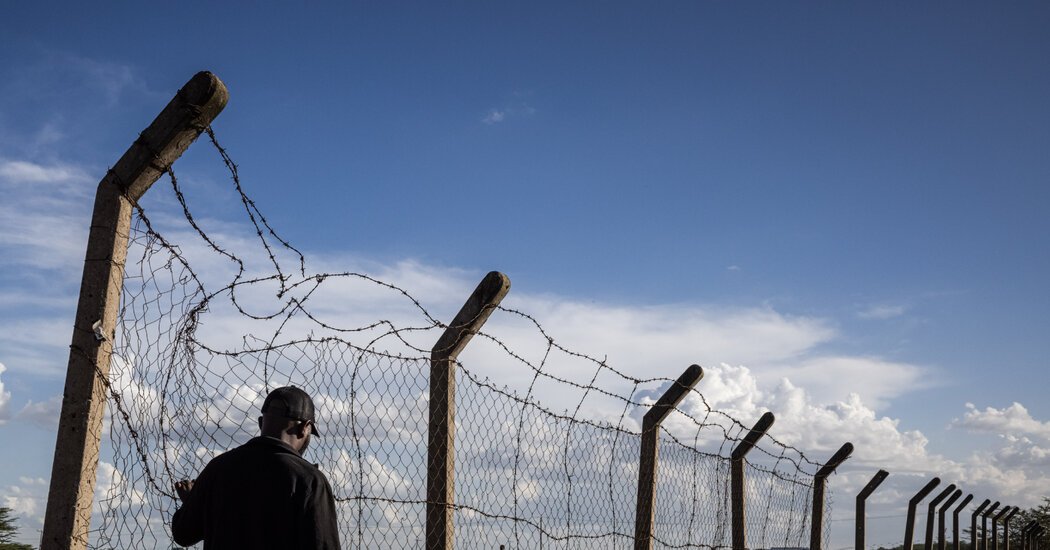
About two years ago when North Korean soldiers were spotted fighting in Russia’s war against Ukraine, it was a sign that Moscow was growing concerned about its shrinking reserve of soldiers.
Russia has been losing about 1,000 soldiers a day to death or injury, according to Western estimates. To make up the numbers, it has enlisted prisoners, offered cash incentives to students and expanded the age range for conscription. And it has started recruiting more aggressively abroad, most recently in Africa.
A team of my colleagues wrote a remarkable story about how many of the Africans who end up on the front line in Ukraine never actually signed up for war. Today, our East Africa bureau chief, Matthew Mpoke Bigg, explains why so many end up fighting, and dying, anyway.
Why young Africans end up on the front line in Ukraine

Russia needs troops to feed its war machine in Ukraine. Young people in Africa need well-paid work. The collision of these two needs carried Vincent Awiti, 29, from his home in Kenya to a battlefield in Kharkiv province in Ukraine last year.
As Awiti described it, he was promised a job as a shop worker in Russia by a recruiter on the streets of Nairobi. But after he arrived in St. Petersburg, he was coerced into signing a military contract. He was shipped off to an army camp and, after four days of training, was sent into battle. He had never even seen a map of Ukraine.
One morning last July, Russian commanders ordered Awiti and his squad to advance across two rivers to a frontline trench outside the city of Vovchansk. Drones armed with small bombs prowled the skies above him. Uncollected corpses littered the fields and in the rivers the dead floated “like water lilies,” as he put it. By the time he reached the second river, he said, he was virtually alone; the rest of his squad had been killed. He spent 20 days in the trench before escaping with a Russian deserter who shot himself in the leg to avoid being sent back to the front.
On the front line, Awiti said, he was overpowered by terror, but he also felt guilt. He had come to Russia to earn money for his family in Kenya. If he was killed — and he assumed he would be — he could no longer be a breadwinner.
Not enough jobs
Africa is undergoing a demographic boom. The continent is home to 1.5 billion people with a median age of around 19. That means one of the most important challenges facing African policymakers is creating enough jobs for young people — a deluge that joins the labor market every year, often moving to cities where work is more plentiful.
The continent’s economies are growing. The International Monetary Fund projects that sub-Saharan Africa’s average G.D.P. growth will stand at 4.3 percent in 2026, though it says the war in Iran has clouded that outlook. Despite the growth, countries can’t keep pace with the demand for meaningful jobs. The vast majority of young people can’t find full-time work and have to find alternative ways to earn money, such as selling cheap goods or providing one-off services. This work is often underpaid, unregulated and insecure.
The inevitable consequence is that many young people in Africa look for work abroad. A majority head to other African countries with bigger job markets, but others go to Europe, the Gulf states, North America, Asia — and also Russia.
Many fall prey to exploitative agencies, which use social media to recruit them.
It is not just Russia. I recently spoke to a young Kenyan who, after answering a job ad for work in Thailand, found himself trapped at a Cambodian cyberscam center, where he was forced to work in abusive conditions. And some African women sent to the Gulf to work as maids find themselves locked into abusive contracts and subjected to cruel treatment from employers.
Many Africans lured to fight in Russia, like Awiti, fall for false promises of well-paid civilian work and are then effectively forced into service. Social media posts touting Russian military service promise lump-sum payments of $18,000 and monthly salaries of up to $3,000. For many people in Africa, those sums would be a financial bonanza.
Few protections
Russian military recruitment has prompted a backlash in some countries. Kenya’s foreign minister, Musalia Mudavadi, traveled to Moscow in March for talks on the issue with his Russian counterpart, Sergey Lavrov. And South Africa’s president, Cyril Ramaphosa, held a phone conversation with President Vladimir Putin of Russia. Afterward, Ramaphosa said 17 South Africans would be returning from Russia.
But many countries appear to have done little to protect their citizens from being ensnared. It’s also not clear how incentivized they are to do so. The Kenyan government has made sending workers abroad an explicit part of its economic strategy — a means of bringing foreign currency back into a struggling economy.
As for Awiti, he was wounded but survived his ordeal. He’s now back in Kenya, deeply scarred by what he went through. He advises friends not to answer advertisements for well-paying work in Russia. But despite his hard-won wisdom, he still has a problem: He needs a job.
For more: Read my full story about how Russia is luring Africans to Ukraine, which I reported alongside my colleagues John Eligon and Zimasa Matiwane.
Attacks threaten a return to war
Violence strained the fragile Middle East cease-fire to the breaking point, as the United Arab Emirates said Iran had fired missiles and drones at a major oil port and an oil tanker in the Strait of Hormuz. Oman also reported an attack near Emirati territory, without identifying the perpetrator. Iran did not confirm or deny that it had resumed attacks.
The U.S. said it shot down Iranian cruise missiles and drones fired at ships it was guiding through the strait, and that Army helicopters also sank six Iranian military speedboats.
A senior military official in Tehran denied on state media that any Iranian ships had been sunk. Iranian officials have threatened to retaliate against U.S. warships or other vessels that seek to run their blockade.
Follow our live updates.
OTHER NEWS
-
India’s Hindu nationalist party took control of West Bengal, an opposition bastion, for the first time in a state election.
-
With the world distracted by the Iran war, Israeli settlers have intensified attacks on Palestinians in the West Bank, killing 13 and displacing hundreds.
-
The U.S. secretary of state, Marco Rubio, will meet with Pope Leo XIV and Prime Minister Giorgia Meloni in Italy, after Trump feuded with the two.
-
A driver in Leipzig, Germany, plowed through a crowded pedestrian zone, killing at least two people and severely injuring two others.
-
At a summit of European leaders, Canada’s prime minister offered deals and friendship to jittery U.S. allies.
WHAT ELSE IS HAPPENING
Top of The World
The most clicked link in your newsletter yesterday was about a deadly suspected hantavirus outbreak on a cruise ship.
SPORTS
Basketball: Rudy Gobert mentored Victor Wembanyama for years. In the N.B.A. playoffs, they stand in each other’s way.
Football: This tiny Swiss club had never won a trophy in 128 years — until now.
MANSION OF THE DAY
First you get the money, then you get the power, then you get the $237 million waterfront estate. The property where part of the 1983 movie “Scarface” was filmed is up for sale, at a price that would set a record for Miami. The abode has a saltwater pool and a unique detail: the glass elevator where Al Pacino’s character, Tony, got his first glimpse of Michelle Pfeiffer’s Elvira.
Few conservative media figures are more closely identified with the Trump era than Tucker Carlson. Over the past decade, he has promoted Trump on his hugely popular Fox News show, on his independent podcast and at campaign rallies.
But when Trump attacked Iran, Carlson changed his tune. He now says he regrets supporting the president and has become a vocal critic. He spoke to us about why he thinks Trump took the U.S. to war, which he calls “the single most foolish thing any American president has ever done.” Read more.
AROUND THE WORLD
Fighting to stay in Thailand
Some foreign visitors to Thailand come to study martial arts. Now, it can be a reason for them to stay.
The Destination Thailand Visa is a five-year, multiple-entry visa available to foreigners who sign up for “Thai soft power” activities like Muay Thai fighting or Thai cooking classes. Digital nomads, remote workers and people seeking specialized or long-term medical care are also eligible.
The new visa gives tourists a much easier method to stay longer in Thailand, where the cost of living is cheaper than at home. For Thailand, it is yet another way to attract tourists. Read more.
RECOMMENDATIONS
Upgrade: Take a look at how this owner of a tiny home expanded her space.
Unplug: Struggling with phone addiction? Our tech columnist has tips.