dailynewsnblog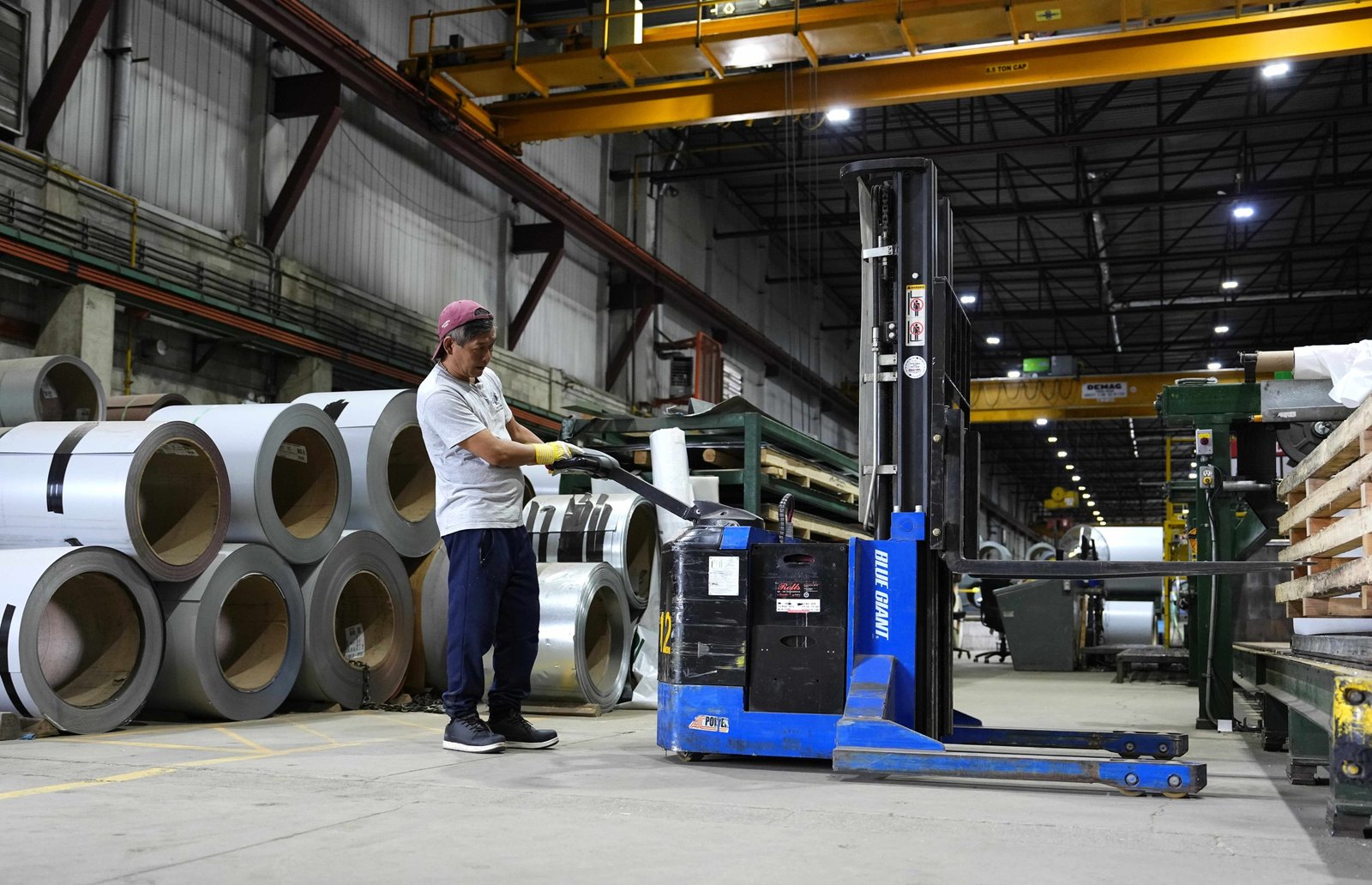
At a round table discussion hosted by the Association of Equipment Manufacturers, companies producing everything from agricultural machineries to truck-mounted forklifts are demanding greater certainty over tariffs and the future of the Canada-U.S.-Mexico Agreement before making long-term decisions on productions and investment.
A group of equipment manufacturers say uncertainty over the future of Canada-U.S. trade is making it difficult to commit to major investments, even as Ottawa rolls out new tax incentives aimed at getting businesses to spend.
At a round table discussion hosted by the Association of Equipment Manufacturers, companies producing everything from agricultural machineries to truck-mounted forklifts are demanding greater certainty over tariffs and the future of the Canada-U.S.-Mexico Agreement before making long-term decisions on productions and investment.
“We need the certainty of a renegotiated CUSMA,” Kip Eideberg, senior vice-president of government and industry relations of AEM said.
This comes as Prime Minister Mark Carney’s government touts the productivity mega deduction, a tax incentive designed to make things cheaper for businesses to invest in machinery, equipment and facilities in Canada.
READ MORE: ‘Significant headwinds’ ahead for Canada, even as Ottawa touts investment gains
While AEM applauded the measure, manufacturers at the roundtable said tax incentives alone aren’t enough to overcome uncertainty about demand and whether Canadian-made equipment will remain competitive in the U.S. market.
“I’m not going to commit millions of dollars to these projects when I don’t know what’s going to happen in the next two months,” Colin Sellick, president and CEO of Sellick Equipment said.
Eideberg added that tax incentives can help companies that are already in a position to invest, but businesses first need the confidence that there will be a market for additional production.
For manufacturers at the roundtable, certainty isn’t simply knowing whether tariffs will remain. They also want any new trade arrangements to leave Canadian-made equipment competitive against U.S. and overseas manufacturers.
Since the U.S. expanded its Section 232 tariffs, equipment manufacturers have been grappling with the rising cost of selling Canadian-made machinery south of the border. Companies at the roundtable said they were better able to absorb earlier tariffs when duties were assessed against the steel content of their products, but subsequent measures applying tariffs to the full value of certain equipment have made it considerably more difficult to complete.
“We all build equipment that’s six figures and you know get 25 per cent tariff as soon as it crosses the border that didn’t exist two months ago – so it’s pretty significant,” Sellick said.
They added that applying a tariff to the full value of a finished product means Canadian labour and other value added during production can also be caught by the duty, making their equipment more expensive for the U.S. customers compared with American-made alternatives.
“There’s not only a cost of the tariff; it’s the cost to administrate a business, because now you need to know where every single component came from,” Christian Stang, vice-president of GINCOR Werx said.
Of course, to remain competitive, the manufacturers noted that some lower-cost equipment from overseas could gain an advantage in the Canadian market, as companies contend with tariffs.
Sellick said that if Canada is unable to reach a new trade arrangement with the U.S., Ottawa should consider counter-tariffs on equipment imported from overseas markets to help level the playing field.
“We’re trying to grow in Canada, and you’ve got products coming in below our costs,” he said, adding that foreign competitors don’t necessarily face the same pressures currently confronting Canadian manufacturers.
Finance Minister Francois-Philippe Champagne said Tuesday that Ottawa is trying to strike a balance between protecting Canadian producers from unfair foreign competition and ensuring businesses can still access products that aren’t readily available domestically.
The government has introduced measures aimed at preventing dumping and excess foreign supply from flooding the Canadian market, alongside its Buy Canada policy intended to boost domestic demand. This includes the government’s $7.5 billion package to protect Canadian workers and businesses, and the regional tariff response initiative.
However, Champagne acknowledged there are limits to how far Ottawa can restrict imports.
“You need to put protection in order to make sure that more of the steel produced in Canada is consumed in Canada, but you also have to understand that there’s certain type of steel, for example, that’s not made in Canada,” he said.
Champagne said Canada’s size and regional markets mean companies will sometimes still need imported steel to ensure they have the necessary supply “at the time needed in the location needed in the country.”