dailynewsnblog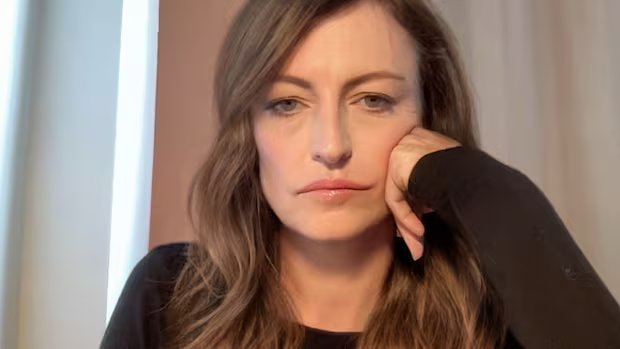
Warning: This story references suicide.
Claire Elyse Brosseau has been waiting years for the Canadian government to let her die.
The 49-year-old has struggled for decades with a laundry list of mental diagnoses, including Bipolar 1 disorder, post-traumatic stress disorder and disordered eating. All of this has made her life unbearable, she says.
“I wake up in the morning and the minute I open my eyes, I feel just a sense of … dread and panic,” she said.
It’s why the Toronto woman wants to end her life, but under current Canadian legislation she’s not eligible for medical assistance in dying (MAID) because she only suffers from mental illnesses. Next year, that’s supposed to change — though the federal government has already delayed twice.
The Special Joint Committee on Medical Assistance in Dying (AMAD) is currently working to advise the government on the eligibility of people like Brosseau. But Brosseau and some experts say AMAD is not adhering to its mandate, which is to undertake a “comprehensive review” of the topic. Some experts in favour of expanding MAID eligibility also say bias in the committee might lead to unfair recommendations.
Most MAID deaths in Canada due to cancer
Since assisted dying became legal across Canada in 2016, more than 76,000 people have used it, according to a Health Canada report — the vast majority owing to cancer.
Initially, the legislation said that a person’s natural death had to be “reasonably foreseeable.” Following a ruling by the Superior Court of Quebec in 2019, which found that criterion unconstitutional, the Canadian government approved new legislation in 2021, which is in place today and includes the following two tracks:
- Track 1: when a person’s natural death is reasonably foreseeable.
- Track 2: when a person’s natural death is not reasonably foreseeable.
It also temporarily delayed expanding eligibility to those suffering only from mental disorders.
Committee’s work is contentious
While MAID itself has been controversial, increasing eligibility to those whose sole condition is mental illness has been a major point of contention.
Among the countries that allow MAID for people who are not near death, Canada is the only one that excludes people with mental illness.
One of the delays in opening up access in Canada partly came from AMAD’s 2024 recommendation opposing expansion. They said that while there had been “considerable progress,” it shouldn’t happen until the health-care system can “safely and adequately” provide MAID in these instances.
Three senators disagreed with that recommendation, accusing their peers of bias and urging the government to reject the conclusion because “the committee failed to do its work objectively and in an unbiased manner.”
This time, Brosseau says it’s crucial AMAD hears from the people this legislation impacts.
“It’s unbelievable that we’re not part of this conversation at all,” said Brosseau. “I don’t understand how they can just build this policy about us, without us.”
Psychiatrist Mona Gupta, a clinical professor in psychiatry and addiction at the University of Montreal who has testified before AMAD, said she’s not aware of anyone with a severe mental disorder who would consider MAID being called as a witness to the committee.

“If you’re making policy for a group of people that concerns them directly, then their perspective must be brought to bear on the question,” she said.
According to Brosseau, it’s not for lack of trying. She said she reached out to the committee asking to testify earlier this year, and while they’ve confirmed receipt, she said she hasn’t been invited.
‘A lot of lived experience out there’
AMAD has heard from dozens of witnesses, including family members of people who have accessed MAID, disability advocates and mental health advocates, some with lived experience of severe mental disorder.
Co-chair Marcus Powlowski, who is also the Liberal MP for Thunder Bay—Rainy River, confirmed that since the committee restarted this year, they haven’t had a witness with lived experience.

“We only have so many hours in the day, and there’s a lot of lived experience out there,” he said.
Powlowski said he’s not dismissing the importance of that perspective. He noted the committee does accept written submissions, and that he has read ones from people who might be impacted by new legislation.
Committee needs ‘to hear it directly’: Brosseau
According to Powlowski, the committee could still call a witness with lived experience because they haven’t yet secured all of their witnesses for the upcoming meetings.
When asked whether he would push for that, he said: “At whose expense?” Suggesting that to hear from someone like Brosseau could mean the committee ends up not having enough time to hear from international experts from countries that currently allow MAID for mental illness.
Brosseau, who has tried to end her life before but wants to do so legally so that she can die surrounded by family, sees this as a massive oversight.
“If their goal is to understand risk and suffering and safeguards, they can’t rely on second-hand perspectives alone,” said Brosseau.
“They need to hear it directly from the people who live with that reality, with severe and persistent mental illness.”

Kerry Bowman, who works at the University of Toronto, says he thinks the health-care system is ready for MAID, but thinks society needs to bolster its supports for people with mental disorders.
Committee hearing ‘incomplete evidence’
As of April 21, most of the witnesses called to testify so far this year have been opposed to the expansion, according to both Gupta and Jocelyn Downie, a professor emeritus of law at Dalhousie University who has studied medical assistance in dying for decades.
“The risk is that they will make their decision based on an incomplete set of evidence, and that’s inappropriate for public policy,” said Downie.
At the April 21 AMAD meeting, a committee member and a witness openly expressed concerns.
Daphne Gilbert, a law professor at the University of Ottawa and board chair of the advocacy group Dying with Dignity, began her remarks by noting she was “the odd person out” among witnesses.
Gilbert said she had planned to focus her testimony on MAID where mental illness is the sole underlying condition, “as I understand this committee’s mandate to be limited to that issue and not to all of Track 2 MAID.”
Toward the end of the three-hour meeting, Sen. Pamela Wallin said, “The testimony has been quite imbalanced.”
Is the witness list stacked against expansion?
Wallin, one of the three senators who dissented against AMAD’s 2024 recommendation, said she agreed that Gilbert was the sole witness that evening “on the other side of the issue.”
Co-chair Powlowski later told CBC News that the committee is “listening from both sides” and that members “have not been selectively trying to stack the deck.”
The public can request to speak at committee meetings, as Brosseau did, but they have to then be invited to appear. Committee members will provide the clerk of the committee with a list of suggested witnesses. According to Powlowski, the committee chairs and clerks then choose from the pool identified by members.
When asked whether that could mean the final witnesses are being selectively chosen, Powlowski said, “I think in politics people are going to pick the witnesses they would like to appear.” He added that he has put forward some witness names who are in support of expanding eligibility.
Powlowski, who was appointed co-chair of the committee last month and whose co-chair Sen. Yonah Martin is also personally opposed to expansion, said, “you’d be hard pressed to find a parliamentarian who did not have an opinion on this, whether they had expressed that opinion or not.”
If you or someone you know is struggling, here’s where to look for help: