dailynewsnblog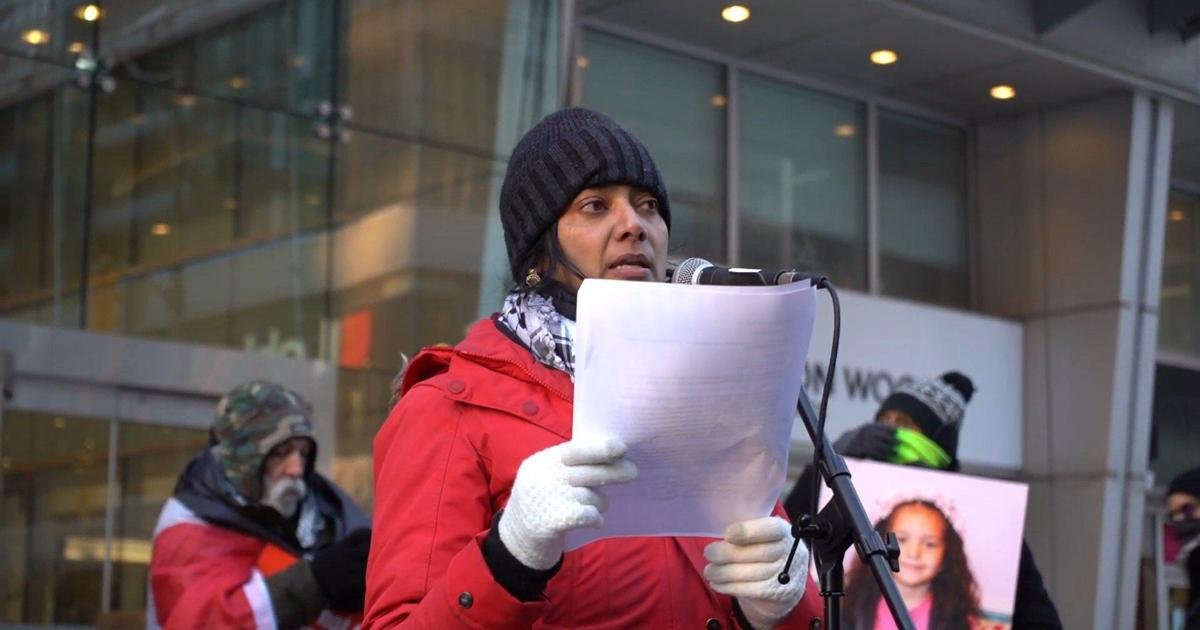
Kavita Algu wasn’t the most experienced public speaker, but she felt she had clarity as she looked down at her notes one last time. She had the day off work and had joined a rally in protest of Israel’s bombing of hospitals in Gaza that had killed patients and staff alike.
As a doctor, she felt obligated to speak out about the destruction of a health-care system.
“It is our ethical duty to speak out against the genocide being committed against the Palestinian people,” she told the crowd assembled that day in March 2024.
At the time, Algu had been a palliative care doctor at Mount Sinai Hospital for almost 10 years. Throughout her career, she had made an effort to advocate on behalf of the marginalized: she led anti-racism initiatives for her department’s health equity committee and was among a small team that successfully applied for government funding for a palliative care program for Indigenous patients.
Within months, after the war had polarized her department, Algu had resigned from the hospital after feeling she was unfairly targeted by management for her Palestinian advocacy.

TMU’s law school, branded as one focused on equity and inclusion, is riven with discord over a petition some say justified Hamas’s Oct. 7 attack.
TMU’s law school, branded as one focused on equity and inclusion, is riven with discord over a petition some say justified Hamas’s Oct. 7 attack.
Internal reports, meeting notes and emails obtained by the Star, along with interviews with current and former employees, reveal how distrust and suspicion spread through Sinai’s palliative care department, and how the Oct. 7 Hamas attack and Israel’s subsequent assault in Gaza tore through the tight knit team of doctors who care for the dying.
To colleagues who supported her, Algu was a principled physician, silenced for speaking out. A workplace investigator brought in after Algu made a discrimination complaint found she was disruptive, unprofessional and had a disproportionately negative impact on the workplace culture. A separate workplace assessment concluded that as divisions within the unit deepened, department leaders failed to communicate clear expectations and boundaries while trying to be fair and supportive.
Some physicians in the unit said they felt antisemitism amid the discord, at a time when Jewish health-care workers elsewhere were reporting rising prejudice and a dismissal of their trauma from the Hamas attack in clinical, academic and social-media settings. Arab and other Palestine-supporting health care workers were also reporting racism and backlash for their criticisms of Israel.
It is a scene that has played out across the country, as the geopolitical crisis has divided teachers, scholars and other professionals — and some workplaces are still grappling with the fallout.
In Sinai’s palliative department, some colleagues were reportedly not even making eye contact with each other. There was a sense of heartbreak at watching the unit, once described as a family, fracture.
Algu, meanwhile, says she was never told specifically what she did wrong. She has concerns that her complaint about a colleague’s post calling her racist was dismissed, and she ultimately felt she had no choice but to leave a career she had spent years building.
A Sinai spokesperson wouldn’t comment on this case but told the Star: “Sinai Health is committed to fostering a respectful, inclusive, and professional workplace where all our people feel supported, and patient care remains our top priority.”
When advocacy becomes a workplace battleground
In early January 2024, an administrator at Sinai’s Temmy Latner Palliative Care unit invited Algu and five other doctors to a meeting.
The Israel-Palestine crisis had already ratcheted up deep divisions among some hospital staff.

IDF vehicles are seen driving into Gaza from the Israeli side of the border on December 13, 2023, in Southern Israel.
Alexi J. Rosenfeld Getty Images
A few doctors from the palliative care department — including Algu’s supervisor — had signed an open letter that said accusing Israel of “apartheid” or “genocide” was untruthful and antisemitic. The word ‘genocide’ had become one of the most contested terms in public debate over Gaza; in September 2025, a UN independent commission concluded Israel was committing genocide in Gaza, a finding Israel rejected.
Algu penned her own open letter, calling on the Canadian government to help broker a ceasefire and support access to medical aid.
“I was born in apartheid South Africa where my family were lesser humans under the law,” Algu told the Star. She was six when Nelson Mandela was freed from prison, 13 when he said in Pretoria: “Our freedom is incomplete without freedom for the Palestinians.”
The letter Algu wrote garnered more than 950 cosignatories, including five doctors on Algu’s palliative care unit.
These six, invited to the meeting, were wary of the motivations of the unit leadership’s invitation to discuss “the tangible local impacts of our current global context” and a “check in” on everyone’s safety. “My political opinions on this war [are] not relevant to my practice of palliative care,” one of them told their boss by email. Three declined the invitation.
Days prior to the meeting, a group of doctors at the palliative care unit had raised concerns with their leadership about Jewish pain not being recognized in their colleagues’ public advocacy for Palestinians. The workplace was being affected by social media posts about Gaza, they told their managers on Jan. 10. The meeting to which Algu and the others were invited was an attempt to address those concerns, according to internal records that would detail the hospital’s navigation of the situation.
The Star reached out to Algu’s supervisor who was present for part of the meeting and another manager who was named in her complaint. Neither responded to questions. The documents do not say, and Algu says she was never told, the identity of the doctors who raised concerns.
The meeting with Algu and the two other doctors quickly turned tense. All three felt their out-of-work advocacy had come under undue scrutiny. According to notes they took at the meeting, they were told an op-ed Algu had authored — in which she questioned why doctors were being prohibited from speaking about a “genocide unfolding against many innocent families in Gaza” — had made colleagues feel unsafe and unable to focus on work.
They were told there was no formal complaint and no specific breaches of policy had been identified, and that the “leadership supports activism.” When they asked if they needed to do anything differently, they were told: “I don’t think you need to do anything differently, but you may choose to.”
The three attendees allege they faced reprisals soon after the meeting. Algu alleges her work environment was made hostile and that her supervisor’s messages minimized her other significant contributions. The two other physicians, who were each on one-year contracts with the palliative unit, were told their contracts would not be renewed due to funding constraints. They told the Star that when they were hired a few months prior, they were given every impression that they would get a permanent job.
All three filed complaints with Sinai Health alleging discrimination based on their advocacy.
To respond to the complaints, Sinai Health retained the law firm Osler, Hoskin and Harcourt. Osler in turn hired workplace investigator Gillian Shearer, who was also asked to conduct a separate assessment of “certain concerns [that have] been raised regarding the physician work environment,” according to an email sent to the department. The investigation concluded the nonrenewals were driven by resourcing issues.
Algu says she was surprised when this workplace assessment ended up putting a target on her back. “I had never had a complaint against me nor was I accused of being toxic in the 10 years I worked there,” she said.
Social media as workplace conduct
In June 2024, as the investigations proceeded, another doctor at the palliative care unit, Hershl Berman, made a post on X that included a screenshot of an earlier tweet by Algu. In that tweet, she had demanded the University of Toronto stop investing in companies profiting off what the International Court of Justice “has already deemed plausible genocide.” Months after the ICJ’s ruling, a judge would clarify that the ruling meant “there was a risk of irreparable harm to the Palestinian right to be protected from genocide.”
Berman’s post showed Algu’s name and profile photo, and part of his caption read: “Just because a loud racist minority is yelling hate and lies does not mean U of T has to bow to their wishes even if those people are doctors.”

Kavita Algu was among a small team at Mount Sinai Hospital that successfully applied for government funding for a palliative care program for Indigenous patients.
Andrew Francis Wallace Toronto Star
Berman had previously posted on social media about the Israel-Palestine issue. In one since-deleted post, he called pro-Palestinian protesters — including then-MPP Sarah Jama and then MP Matthew Green, who were visiting the encampment at the University of Toronto — “modern day Nazis.” In another tweet, later deleted, Berman said that people who didn’t want a Jewish doctor who supported Israel were free to find another doctor as there were plenty of nonracist patients to look after. He added a gif of a door being slammed on someone’s face.
The post featuring the Algu screenshot targeted her specifically, she told Sinai, and created an “unsafe professional and academic environment.”
To Algu, Berman’s post violated Sinai Health’s respectful workplace policy, which forbids “any act of discrimination, harassment, bullying, or incivility towards any of Sinai Health’s people.”
When reached by the Star, Berman declined to comment. Sinai Health did not respond to a question about whether they had asked Berman to change his social media posts.
Unsubstantiated claims, then an unsettling development
The investigation into the complaints by Algu and the two doctors who attended the January meeting found they were unsubstantiated. There was no evidence that the meeting was an effort to silence voices advocating for Palestinians, nor was there evidence that they were working in a poisoned environment, the investigation report said.
It also concluded that Algu’s two colleagues were not rehired at a time when there was a funding crunch as well as overstaffing. Shearer previously noted it was a norm at the centre to overstaff.
She also said their bias claims were tainted by discussions they had among themselves after they filed their complaints. Algu’s lawyer told the investigator during the probe that the complainants’ views “should not be discounted simply because they talked about a very difficult workplace situation with one another.”
A day later, the result of the environment assessment came in.
It found Sinai Health leadership did not effectively manage the challenges relating to the expression of views around Israel-Palestine because the leaders had adopted a “softer, compassionate approach” and did not clearly and decisively communicate expectations and boundaries during a complex geopolitical situation, Sinai Health told palliative care staff in a memo.
The investigator also said the point of the assessment was not to make factual findings about any particular individual. But the report went on to focus on Algu, whom the investigator concluded appeared to have a “disproportionately negative impact” on the workplace culture.
Algu said she felt baffled: Was her advocacy an issue for the hospital or was it not?
The assessment cited “many” unnamed colleagues, defined as at least eight people, as saying Algu’s social media advocacy was “irresponsible” and “offensive,” and not respectful of patient care or safety.
There was a perception that Algu used work time for personal advocacy and solicited colleagues for political causes, those interviewees said.
But no specifics were offered. The assessment did not cite any specific tweet or act of advocacy as an example of wrongdoing, Algu said, it relied on perceptions and feelings. Her complaint, on the other hand, offered specific emails to support her allegations of a poisoned work environment. As for advocating during work, she said she used to sometimes tweet during breaks like other physicians, but she stopped even those sometime in early 2024.
“I did go to a small number of protests on work days but would take vacation days for that.” she said. She also did not identify herself as a Sinai employee in any of her public advocacy, Algu said.
She said did not even know her conduct was being investigated as part of the workplace environment assessment until the final report was given to her.
Labour and Employment lawyer Jackie Esmonde, who represented Algu, declined to comment on the Sinai situation, but said that, in general, it was “extremely unusual and procedurally unfair for a workplace investigation to make negative findings against an employee without giving the opportunity to both know about the allegations and respond.”
The documents the Star reviewed contained no examples in support of the findings. Sinai Health did not offer any details when asked about the specific concerns related to Algu.
“We don’t share details or comment about our employees, physicians, scientists, learners or volunteers,” the Sinai spokesperson said. “Our highest priority is to ensure accessible and safe care for all.”

Hershl Berman’s post on X.
Investigator Gillian Shearer declined to comment, citing lawyer-client confidentiality. She said, “I conducted the investigation fairly and considered all the available relevant evidence.” Osler, Hoskin and Harcourt declined to comment.
Before she was given details of the investigations, Algu was told Sinai had dismissed her complaint about Hershl Berman’s tweet.
Posts on X did not count as workplace conduct in this case, Osler concluded, because the communications were unrelated to Sinai Health and did not become workplace conduct simply because Algu and Berman were both colleagues.
Berman had posted “a picture of my face, my social profile, my tweet, and called me a racist,” Algu said, noting that Sinai had considered his social media as being outside of the workplace. “Yet, somehow my social media was considered workplace,” she said. She also said that she never referenced patients in her social media, while Berman did, yet she was the one called out by the workplace investigator for not considering patient safety.
Concerns over Berman’s social media resurfaced this year during an election to choose the next president of the Ontario Medical Association (OMA). Berman was one of five candidates to lead the prominent advocacy group for a one-year term.
“What is at issue here is not disagreement; it is conduct,” more than 150 doctors told the OMA in a letter in February. Algu, who was by then not a part of Sinai, also signed it. “Publicly branding colleagues as antisemitic, hateful, or aligned with Hamas/extremist groups without due process or evidence crosses from discourse into harassment, intimidation, and reputational attack,” the letter said.
The OMA hired an external evaluator to review the candidates’ social media. While the evaluator found no grounds to exclude Berman from the race, his posts — from late 2024 through December 2025 — were flagged as having used “language frequently characterized by a confrontational and combative tone.” No other candidates’ social media was flagged.
After another candidate soundly won the race, Berman told the National Post his religion was a factor in the treatment he received.
Candidates for OMA presidents and board directors have been subject to social media checks since 2021, and the screening is standard during an election, the OMA told the Star. The vetting “is not focused on personal opinions or positions but on interactions that could impact eligibility to hold office,” a spokesperson said.
The letter that heightened the stakes
In January 2025, the hospital sent Algu a letter outlining her alleged misconduct. It referenced the concerns that she posed a risk to safety and that she may have used work time to pursue her advocacy, and included the investigator’s assessment of unspecified colleagues who said her social media advocacy was “irresponsible” and inconsiderate of the impact it had on them. Once again, Algu said, she was not offered details or examples of her allegedly offensive behaviour.
Sinai’s letter notified her of potential consequences such as sanctions or penalties that could impact the scope of her practice or ability to work in the health system.
A staff member who worked with Algu at that time, who did not support Israel’s actions, and did not want to be named for fear of losing their job called Sinai’s disciplinary threats “dystopian,” and said that it “created a chilling effect.”
Sinai said it takes “any concerns related to workplace culture, professionalism, or discrimination seriously and addresses them through established policies and fair, confidential processes.”
“I could no longer bring myself to give my labour to a workplace where people were targeted for speaking out against a genocide, including the bombing of hospitals and the murder and abduction of our Palestinian colleagues,” she told the Star.
She knew early on in med school that she wanted to care for dying patients and grieving families, and worked hard to get there.
“It was difficult to walk away from a career path I had invested so much into, and a team I genuinely loved. I left accepting that I may no longer get to practice in palliative care,” she said. She gave up her specialization and now works in primary care.
“I lost my job over Palestine, but I found a deeper commitment to life and justice.”