dailynewsnblog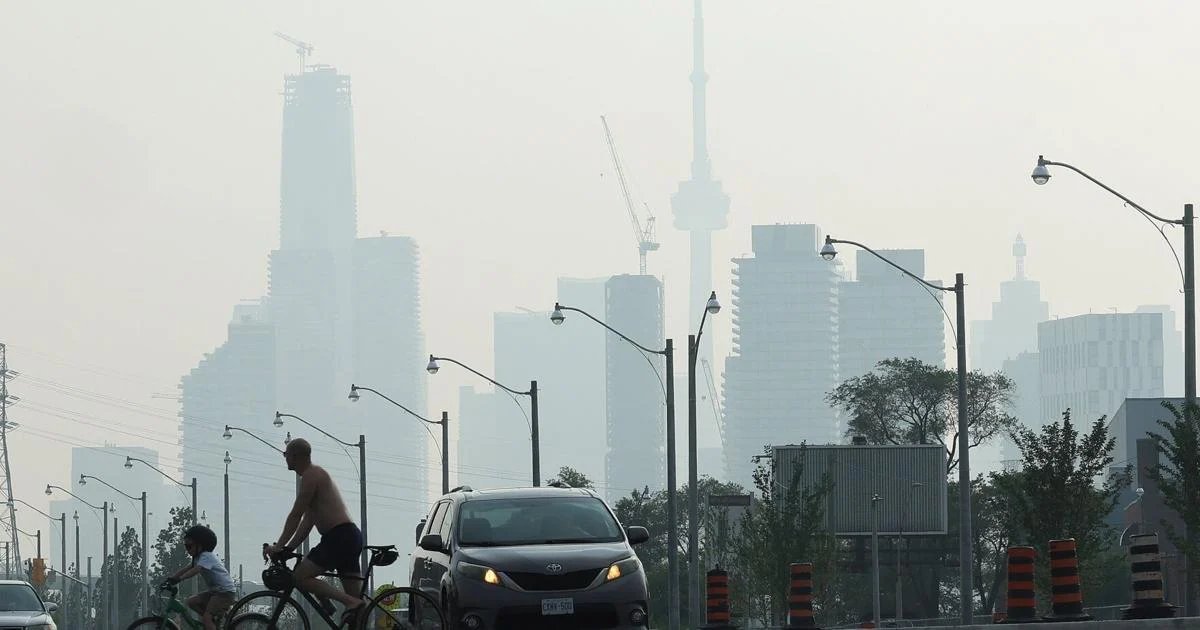
flag wire: false
flag sponsored: false
article_type:
pubinfo.section:
cms.site.custom.site_domain : thestar.com
sWebsitePrimaryPublication : publications/toronto_star
bHasMigratedAvatar : false
firstAuthor.avatar :
By Star Staff
Rain in the GTA area over the weekend could help alleviate poor air quality caused by wildfire smoke in northwestern Ontario. Follow along for live updates.
Environment Canada lifts air quality warnings for Toronto area
By Adshayah Sathiaseelan| Star Staff
After days of hazy skies and some of the worst air quality in the world, Toronto is finally getting a break.
Environment Canada lifted all air quality warnings for the Toronto area on Sunday, after several days of poor air quality caused by smoke from wildfires burning in northern Ontario.
The weather agency said “poor air quality is no longer expected” in an update around 1:30 a.m. Sunday, ending the yellow-level air quality warning.
As of 6 a.m. Sunday, Toronto’s Air Quality Health Index was sitting at 5, indicating moderate risk. Readings are forecast to range between 2, low risk, and 4, moderate risk, over the next 24 hours.
Environment Canada’s air quality warning for Toronto was already downgraded from the orange to the yellow level on Saturday morning as conditions improved.
Flows of fresh southwest air coming into Toronto, along with rain on Saturday were expected to further improve air quality, Environment Canada meteorologist Weiqing Zhang said.
Despite the improvement, Toronto’s U.S. Air Quality Index (AQI) was at 108 on Saturday morning, making it the world’s 12th most polluted city, according to IQAir. On the U.S. AQI scale, Toronto’s reading of 184 is considered unhealthy for sensitive groups.

Wildfires encroaching into the townsite of Jasper in 2024 forced an evacuation of the national park and destroyed more than 300 of the town’s approximately 1,100 structures.
Amber Bracken/The Canadian Press file photo
By Jaime Watt | Contributing Columnist
No matter how many photographs you’ve seen of Jasper, Alberta, after the wildfire, nothing prepares you for the extent of the devastation. It simply silences you. Sadly, I speak from recent experience.
Picture this. You’re driving up what many say is the most beautiful road in the world, Alberta’s Highway 93. There are bears, mountain goats not to be confused with mountain sheep and elk feeding on lush vegetation.
Then you turn toward Jasper and, suddenly, you’re in the middle of the apocalypse. There are charred trees as far as the eye can see because after the wildfire broke out two years ago on July 22, 2024, it raced through so fast it didn’t burn the trees all the way to the ground. They are still standing, a haunting reminder that Canada’s wildfire crisis isn’t going anywhere.
Canadians know this and it frightens them. The Fort McMurray fire was 10 years ago. Slave Lake burned 15 years ago. Yet the federal government has responded with half-measures, moving much slower than the pace of climate change itself.
Our country has been hit with back-to-back-to-back record-breaking wildfire seasons in 2023, 2024, and 2025. And, as I write this column, looking out my window in downtown Toronto the sky has been turned a frighting surreal colour that ought to exist in a science fiction film not in nature caused by fires burning in Northwestern Ontario.
Doug Ford visits evacuees, first responders as wildfires — and questions about Ontario and Ottawa’s response — rage
Mark Ramzy | Ottawa Bureau
Amarachi Amadik | Staff Reporter
THUNDER BAY, Ont. — Premier Doug Ford landed in smoky northwestern Ontario on Saturday, finding a city stretched to the limits at the front line of the battle against raging wildfires, while questions mount over Queen’s Park’s and Ottawa’s responses to the crisis.
The devastation from those wildfires is on display as close as 150 kilometres west of Thunder Bay, where hundreds of metres of forest area have been burnt to the ground, with countless charred, broken tree branches lying on the scorched earth.
“I understand it’s a terrible scenario right now,” Ford told reporters in the city of just over 130,000 on the shore of Lake Superior. “There’s 655,000 hectares that are burning across our province, but we’re doing absolutely every resource we can possibly throw at this.”
But is Ontario — and is Canada — ready for a new normal of raging seasonal fires? For Linda Debassige, the answer is a resounding no.
“I think it’s bleak. I think it’s concerning,” said Debassige, grand chief of the Anishinabek Nation, which represents 39 First Nations.
Air quality in Toronto to improve significantly on Sunday
By Gabiel Hilty | Star staff
Environment Canada predicts that most of Sunday will see air quality improve to “low risk” conditions on the Air Quality Health Index (AQHI), meaning that the air is typical and everyone is able to “enjoy your usual outdoor activities” according to the index.
The forecast is a significant improvement from the past days, when the air in Toronto was often at high or very high risk levels and posed a health threat to the general population as well as people at high risk.
The sky is expected to clear Sunday morning for a mainly sunny day with temperatures reaching a high of 25 C. The evening is predicted to drop to a low of 15 C.
Check our smoke forecast map
Ford warns wildfire evacuees: ‘Do not go home’
By Mark Ramzy | Ottawa Bureau
As wildfires in northern Ontario continue to burn, 10 communities have been evacuated as of Saturday morning and three others are still under warning for potential evacuation, Premier Doug Ford said in an update.
“Do not go back to your homes, if they’re saying not to go back, don’t go back,” Ford stressed at a press conference in Thunder Bay.
Provincial support centres have opened, including in Thunder Bay, to support the evacuation efforts, according to Ford. They provide essential supports like sleeping accommodations, food, hygiene products and access to medical services.
“We will find you a place, a hotel room, we’ll get you food, we’ll make sure you’re taken care of,” Ford said. The provincial government came under fire from First Nations communities earlier in the week for issuing evacuation orders too late.
Speaking at a press conference in Thunder Bay on Saturday, Premier Ford said the fight to contain wildfires in northern Ontario is ongoing, stressing the collaborative nature of the operation.
“The total number of active wild land fires in Ontario is now 191, which is seven more than yesterday. 73 of those are not under control,” Ford said. Around 155 fire crews and 80 water bombers and helicopters are currently in service.
“Collaboration, co-operation and communication, we’re all working together … our focus continues to be sending resources to areas where fire suppression is most likely to be successful,” Ford said.
Towering infernos. Zombie blazes. What the battle against wildfires can look like in the era of climate change
Walls of flames sweeping through forest at 200 kilometres an hour. Infernos so powerful they spawn dry lightning and burning tornadoes. Zombie fires that smoulder underground, surviving multiple winters.
In the era of climate change, wildfires like the ones raging in northern Ontario this week aren’t what they used to be. Often, they’re bigger and more intense — creating new challenges for firefighters working to douse them.
Festivals on across Toronto as air quality starts to improve
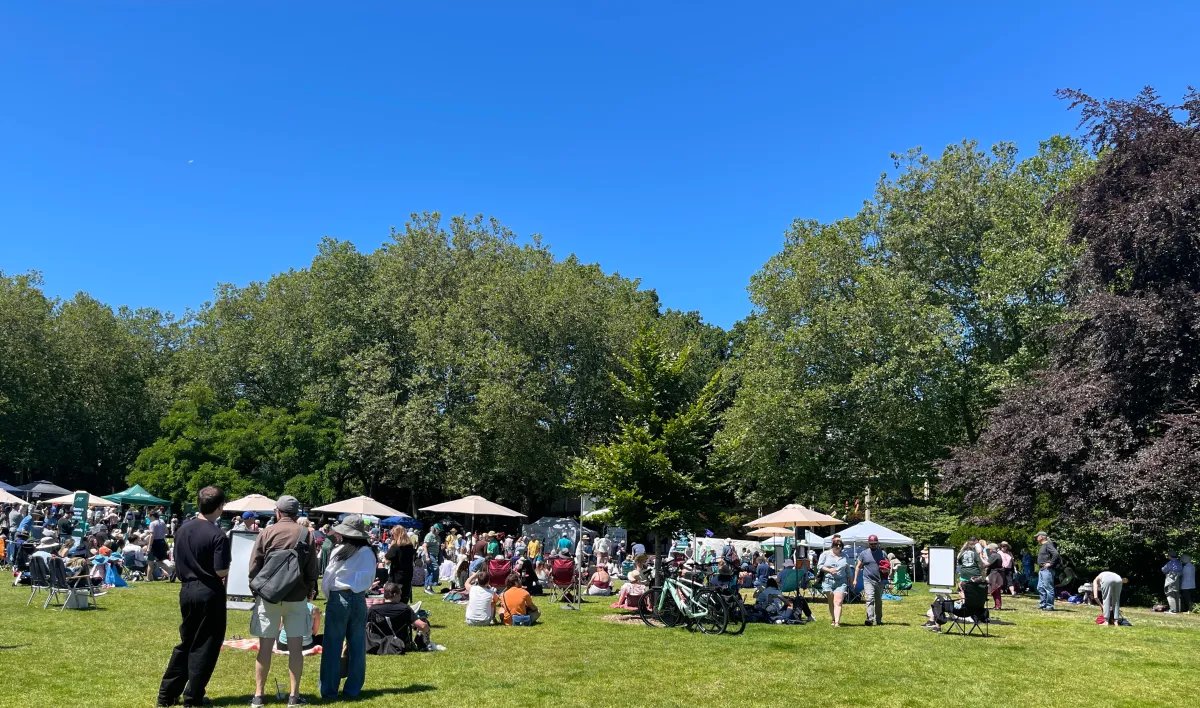
As the air quality is expected to improve slowly throughout Saturday, festivals are taking place across Toronto this weekend.
Big on Bloor returns for its 20th edition with music, vendors and arts and crafts activities on Bloor Street West, which will be car-free between Dufferin St. and Lansdowne Ave. from noon to midnight on Saturday and noon to 9 p.m. Sunday.