dailynewsnblog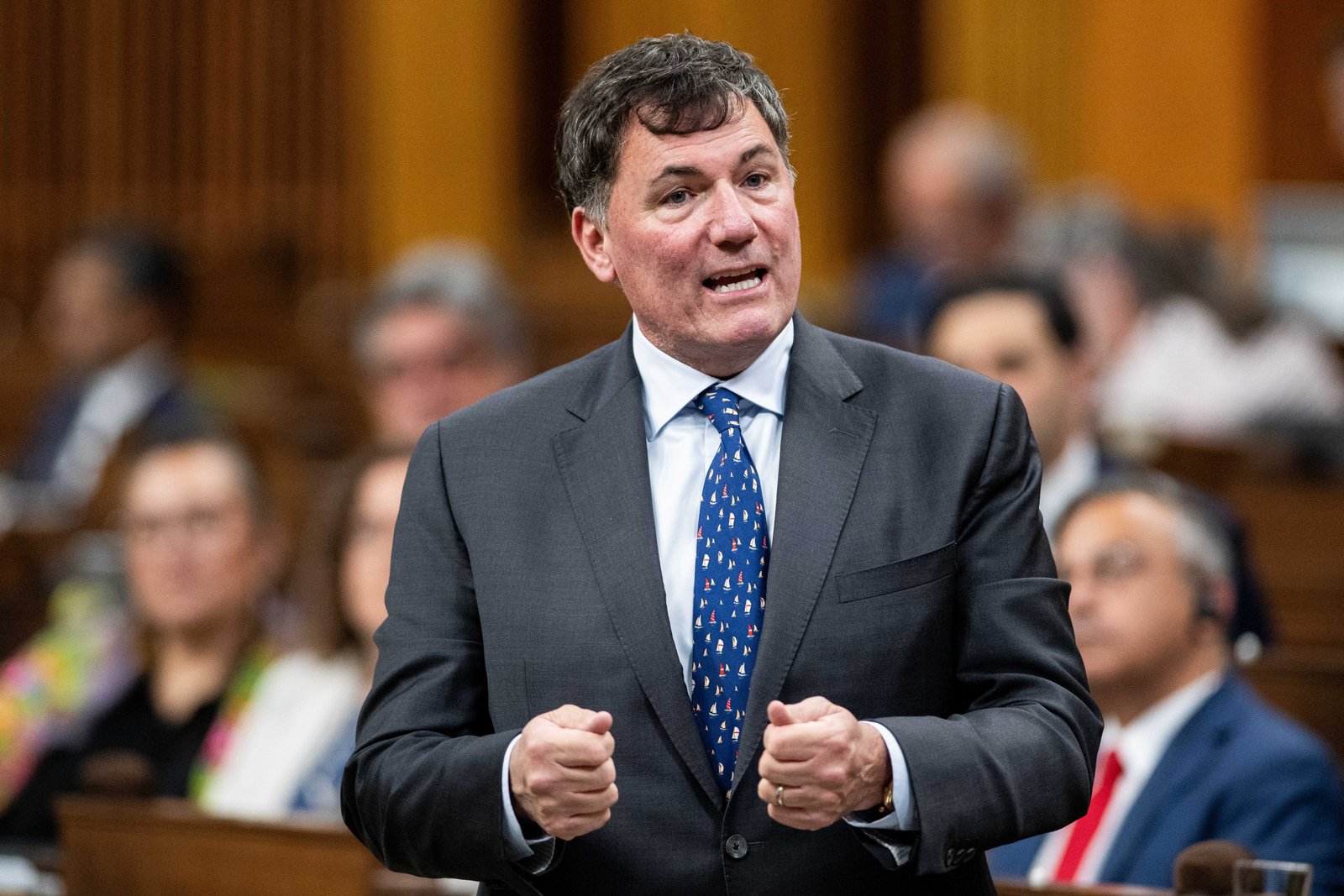
We’re starting out this evening with some news on trade as tariff deadline looms.
Canada-U.S. Trade Minister Dominic LeBlanc was set to meet with United States Trade Representative Jamieson Greer Thursday as U.S. President Donald Trump’s latest tariff deadline approaches.
A new round of 50 per cent tariffs on a range of Canadian goods is set to take effect Aug. 19.
Unlike most of Trump’s other tariffs, these would have no exemptions for goods that comply with the Canada-U.S.-Mexico agreement on trade, widely known as CUSMA.
LeBlanc and Janice Charette, Canada’s chief trade negotiator, have been in Washington since Monday and Thursday’s meeting will be their second with Greer this week.
Greer has said the threatened tariffs are a response to provincial bans on U.S. liquor, Canada’s supply managed dairy system and quotas on certain U.S. vehicles.
The Canadian Press has more.

Premier Doug Ford is opening the door to putting American alcohol back on Ontario shelves as part of a potential Canada-U.S. trade agreement, but says any deal must first protect key Canadian industries from U.S. tariffs.
With reports that Canada could use the return of U.S. alcohol as a bargaining chip in ongoing trade negotiations, Ford said Thursday he would be willing to end Ontario’s boycott early, but only if Ottawa reaches what he considers a fair agreement with Washington.
“If we get a fair deal that will protect our steel sector, our auto sector, our forestry sector, agriculture sector, manufacturing sector, then we’d be more than happy to bring booze back on the shelves earlier,” Ford told reporters.
Ford has been among the more hawkish premiers on the issue, repeatedly insisting American alcohol will not return to LCBO shelves without a fair trade deal.
Prime Minister Mark Carney said at this summer’s Council of the Federation meeting that keeping the boycott of U.S. alcohol are is a decision made by each province.
Barbara Patrocinio reports.

Some experts are also warning that Trump’s new tariffs could drive wedges between Canadian provinces, allowing the U.S. to exploit regional grievances to force trade concessions.
The tariffs would have particularly heavy impacts on industries concentrated in B.C. and in small towns across Quebec.
“There’s an awareness that Canada can be a punching bag for the United States, but different parts of the country can be treated differently,” said University of British Columbia political scientist Stewart Prest.
“At the extreme, that does lend itself to a divide-and-conquer strategy, which Canadians really have to be aware of.”
A new round of 50 per cent American tariffs on a range of Canadian goods is set to take effect on Aug. 19.
Unlike most of Trump’s other tariffs, these would have no exemptions for goods that comply with CUSMA.
University of Calgary economics professor Trevor Tombe has reported that the threatened tariffs would hit B.C. the hardest while largely sparing the Prairie provinces.
CP has more.
In Other Headlines
Internationally
Meanwhile, Donald Trump signed an executive order pushing for revisions to how children in the US are vaccinated on Monday.
The executive order calls for several changes. These include fewer vaccinations overall and a recommendation that the combined measles, mumps and rubella (MMR) vaccine be replaced with separate shots for each disease administered during separate medical visits. The latter direction is currently impossible to implement because no stand-alone shots for these diseases are licensed in the US.
“I think the biggest impact of this executive order is that it’s going to cause more confusion,” says Dr David Diemert, a professor of medicine and director of the George Washington University Vaccine Research Unit. “And confusion for things like vaccination schedules for kids is never a good thing.”
Critically, the executive order does not actually “change anything about current recommendations”, says Dr James Campbell, chair of the committee on infectious diseases for the American Academy of Pediatrics (AAP). While the executive order puts pressure on states to change their vaccine policies, it is the Centers for Disease Control and Prevention (CDC) rather than the president that sets federal recommendations.
Read more from the Guardian.
Elsewhere, Loui Ridi began building a home in his native town of Qusra, in the occupied West Bank, for his two daughters. The girls grew up in Ohio, but family trips made them fall in love with their father’s Palestinian roots.
“Can we have a home where grandmother lives, where you were born and raised?” his daughters had asked him, Ridi told CNN.
That dream is now on hold as a group of Israeli settlers lay siege to the hilltop where Ridi’s and two other homes sit in a bid to kick out the Palestinian residents.
The settlers pitched a tent, cut off water and electricity lines and blocked roads, preventing anyone from reaching the residents.
Trapped inside are Ridi’s brother, Qusai, and Qusai’s son, with only enough food to last two or three more days.
“They have their eyes set on the house and on this hilltop; they want to take it,” Qusai said.
More from CNN.
In Other International Headlines
The Kicker
In case you missed the partial solar eclipse, there will be a near total lunar eclipse that will turn the moon red at the end of this month.
From Aug. 27 to the early morning hours of Aug. 28, Earth’s shadow will cover 96 per cent of the moon—turning the lunar surface a coppery red.
The event happens every two years, and will be the most visible in the Western Hemisphere.
Read more here.