dailynewsnblog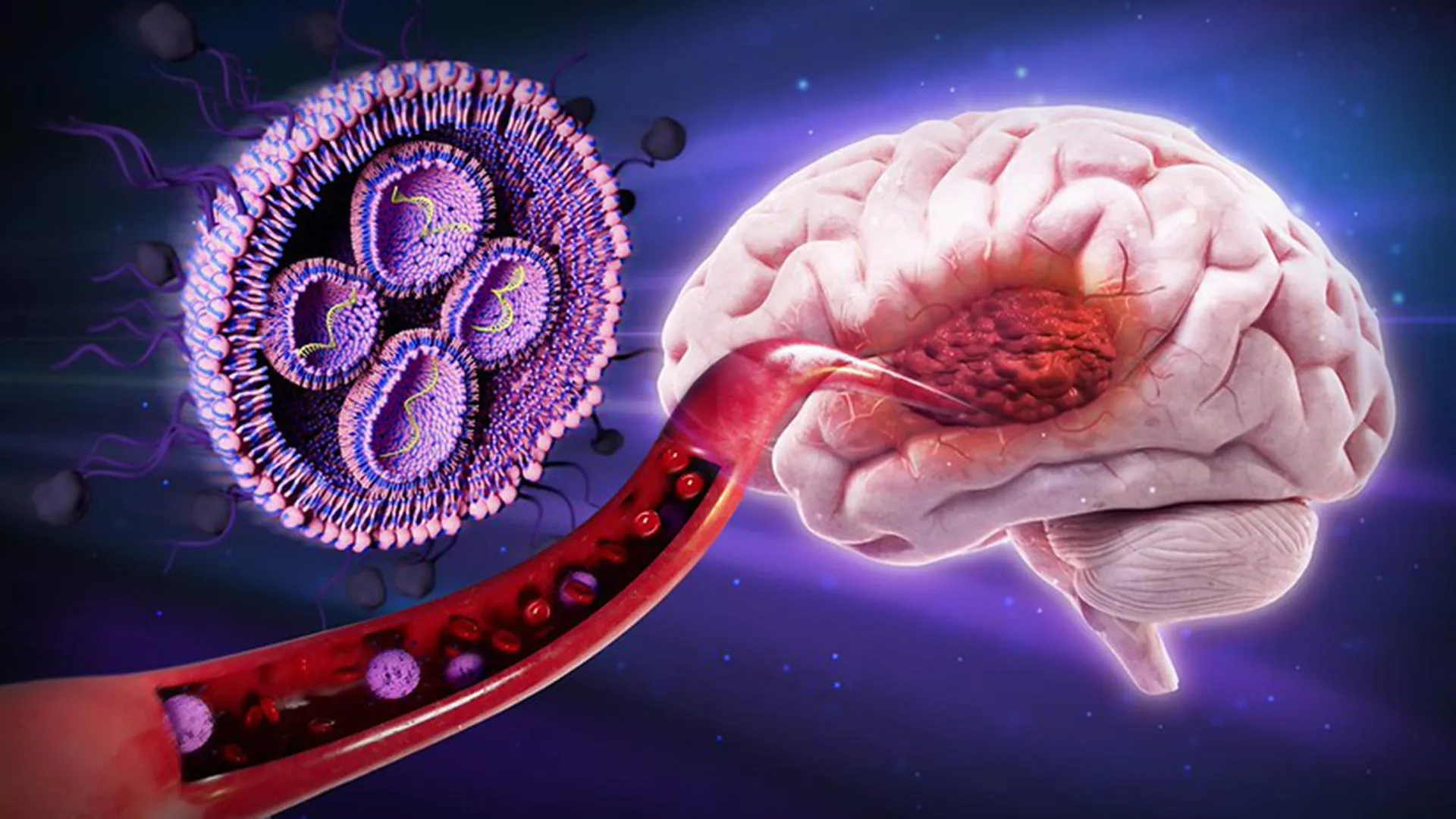
Researchers at Oregon State University have developed a promising experimental strategy for treating glioblastoma, the most aggressive form of brain cancer. Fewer than 30% of patients survive for two years after diagnosis.
The work, led by Oleh Taratula, Olena Taratula and Yoon Tae Goo of the OSU College of Pharmacy, focuses on two major problems that have long limited glioblastoma treatment. First, therapies must cross the blood-brain barrier, a tightly controlled network of cells that protects the central nervous system from substances circulating in the bloodstream. Second, the treatment must reach tumor cells without affecting healthy tissue.
Sugar-Coated Nanoparticles Target Brain Tumors
In a mouse model, the researchers tested lipid nanoparticles filled with genetic material designed to restore the body’s ability to suppress tumor growth. The particles were then covered with a sugar coating that helped them enter the brain and concentrate inside tumors.
According to findings published in the Journal of Controlled Release, the approach increased median survival time by 50% in mice with glioblastoma.
The sugar used in the coating was mannose, which is closely related to glucose, the body’s main energy source. Cells lining blood vessels in the brain contain a transporter called GLUT1 that normally carries glucose into the central nervous system. GLUT1 can also recognize mannose, allowing the coated nanoparticles to use the same pathway to cross the blood-brain barrier.
“Blood contains relatively high concentrations of glucose, and that’s what the nanoparticles are competing against for GLUT1’s attention,” Oleh Taratula said. “For the nanoparticles to get it, they need a densely coated sugar surface, and that’s our central innovation. By chemically connecting mannose to cholesterol, a major structural component of the nanoparticles, we improved surface coverage sixfold.”
Delivering Tumor-Suppressing mRNA
The nanoparticles carried messenger RNA that directs cells to produce PTEN, a protein that helps prevent uncontrolled tumor growth. PTEN is often missing or inactive in glioblastoma cells.
To protect the mRNA from breaking down before it reached its target, the researchers added a positively charged cholesterol derivative that helped keep the genetic material securely enclosed inside the nanoparticles.
Glioblastoma cells also produce unusually high levels of GLUT1. That difference helped the sugar-coated particles accumulate more heavily in tumors after crossing into the brain.
“Glioblastoma is metabolically reprogrammed and expresses GLUT1 at three times the levels of normal brain tissue, so the particles preferentially accumulate in tumor tissue after crossing the blood-brain barrier,” Olena Taratula said. “And restoring PTEN expression in tumor cells reinstates growth control. Across repeated dosing, tumor shrinkage occurred without any measurable organ toxicity.”
A Deadly and Difficult-to-Treat Cancer
Glioblastoma affects about 3.19 people per 100,000 in the United States. It occurs more often in males than females, and the median age at diagnosis is 64. More than 95% of patients die within five years of being diagnosed.
Vincent Cataldi, Vladislav Grigoriev, Neera Yadav, Tetiana Korzun, Chao Wang and Adam Alani of the College of Pharmacy also contributed to the study.
The research was supported by the National Cancer Institute of the National Institutes of Health, the Eunice Kennedy Shriver National Institute of Child Health and Human Development, and the National Research Foundation of Korea.