dailynewsnblog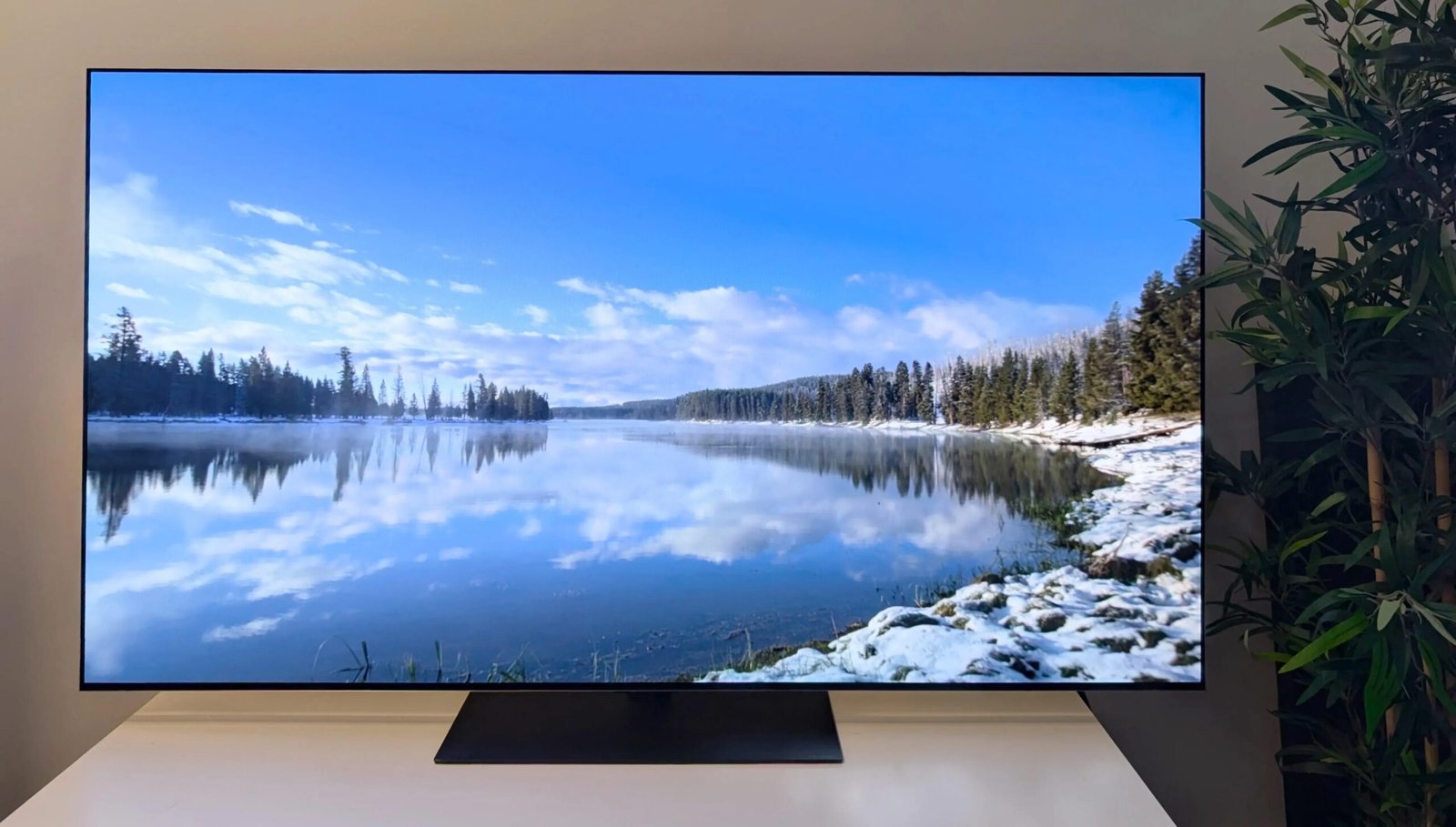

Pros & Cons
-
Excellent contrast -
Improved antireflective coating -
Brightness is great for gaming
-
Green tinge on off-axis viewing -
Not as color accurate as the LG G5
Update, Sept. 26: The LG G6 has been reevaluated since this review first appeared in May, and its picture has been remeasured using Calman software. Its score remains at 8.7.
For the past two years, OLED technology has kept up with LCD in one of the most crucial components of picture quality: brightness. OLED already had contrast and color in the bag, but it took LG to start sandwiching multiple OLED panels together to complete the trio. The new G6 OLED TV features the latest version of this “tandem” upgrade, which boasts up to a 20% brighter screen and improvements to its color system. And thanks to recent software updates, it’s better than ever.
In a head-to-head comparison, I found the G6 to be demonstrably better than the G5 in terms of shadow detail, antireflectivity and brightness in games. Though when I first tested the G6 in May, I found that the 2026 TV didn’t yet have its predecessor’s knack for color — something I had singled the G5 out for with its own Lab Award for Color Accuracy. However, a number of G6 software updates appear to have fixed this issue while also making shadow detail look more natural. In short, the G6 boasts picture quality that is just as good as the G5’s, while in bright rooms it’s even better.
As a result, the G6 is now a great TV and well-suited to anyone who wants to step up from LED technology, in particular. The LG isn’t the first, or last, word in value — and value isn’t really any of the words you can use to describe the ultraspendy G6. Yet, this new TV manages to maintain the manufacturer’s hefty OLED legacy, and that’s worth it for the right buyer. Compared to the Samsung S95H, the G6 has a more involving picture, and when you combine this with better lit-room performance, the LG G6 is the high-end OLED TV to choose in 2026.
Read more: Best TVs of 2026
LG G5 OLED TV sizes and series comparison
I performed a hands-on evaluation of the 65-inch LG G6, but this review also applies to the other screen sizes in the series. All sizes have very similar specs and should provide comparable picture quality.
The G6 is the best LG OLED screen for 2026 — the W6 exists, but it’s basically the wireless version of this TV. Yet, to muddy the waters for 2026, there is now a step between the C6 and G6 ranges — the C6H — which combines some elements of the G6, including the Tandem OLED tech, but only in larger sizes.
Same sharp looks

While the C series goes for a slim profile, the G series has traditionally been a lot chunkier, with the latest version measuring an inch thick. It goes without saying that when you’re watching TV on either of these models, the differences in thickness don’t matter. The G6’s bezel design is classy with a thin, black border and a faint metallic edge.
One thing I appreciate about the G6 is the slim wall mount in the box — no more flailing around on Amazon for a suitable mount — it’s right there. Meanwhile, I used the gunmetal “desktop stand,” which is available separately, and found it easy to attach.
In 2025, LG updated its wand remote with a more traditional candybar shape, and a refined version comes with the G6. It’s still a “magic” remote with a mouse-like cursor you can wave around the screen. The remote has fewer buttons than before, yet more with AI functions, and if, like me, you miss the dedicated input button, you can hold down the Home button instead.
A kick in the specs
LG’s second-best TV of 2026 (after the pie-in-the-sky W6) has added a number of upgrades to last year’s G5, starting with the company’s new Tandem technology, which stacks two OLED panels. LG says its Brightness Booster Ultra enables the G6 to be up to 20% brighter than the G5, while also updating its system to Hyper Radiant Color and Perfect Color, which the company says improves color consistency.
LG has really taken strides to reduce glare in 2026 and says the “Reflection Free” G6 has the lowest reflectance among LG TVs, which is designed to improve watchability in lit rooms. This feature makes it super competitive with the Samsung S95H, although that TV also adds antiburn-in tech that lets it act as one of the company’s Frame TVs.
- 120Hz native refresh rate (variable refresh rate of 165Hz)
- Four HDMI 2.1 inputs, including one eARC
- Three USB 2.0 ports
- Optical digital audio output
- RF (antenna) input
- RS-232 port (minijack, for service only)
- Ethernet (LAN) port
- Wi-Fi 5
While LG was one of the first adopters of the NextGen TV (ATSC 3.0) standard, the company has not included compatible tuners in its TVs since 2023.
Interestingly, the G6 uses the lower-bandwidth 802.11ac Wi-Fi rather than the fancier Wi-Fi 7 found in many new devices. If you don’t have a Wi-Fi 7 router, though, it’s not a problem, as I found the TV’s connection to be relatively fast.
Gamers are catered to with dedicated Gaming modes, a high 165Hz refresh rate (120Hz native), as well as PC-centric Nvidia G-Sync and AMD FreeSync Premium support.
Aiiiiiiiiiiii, that smarts

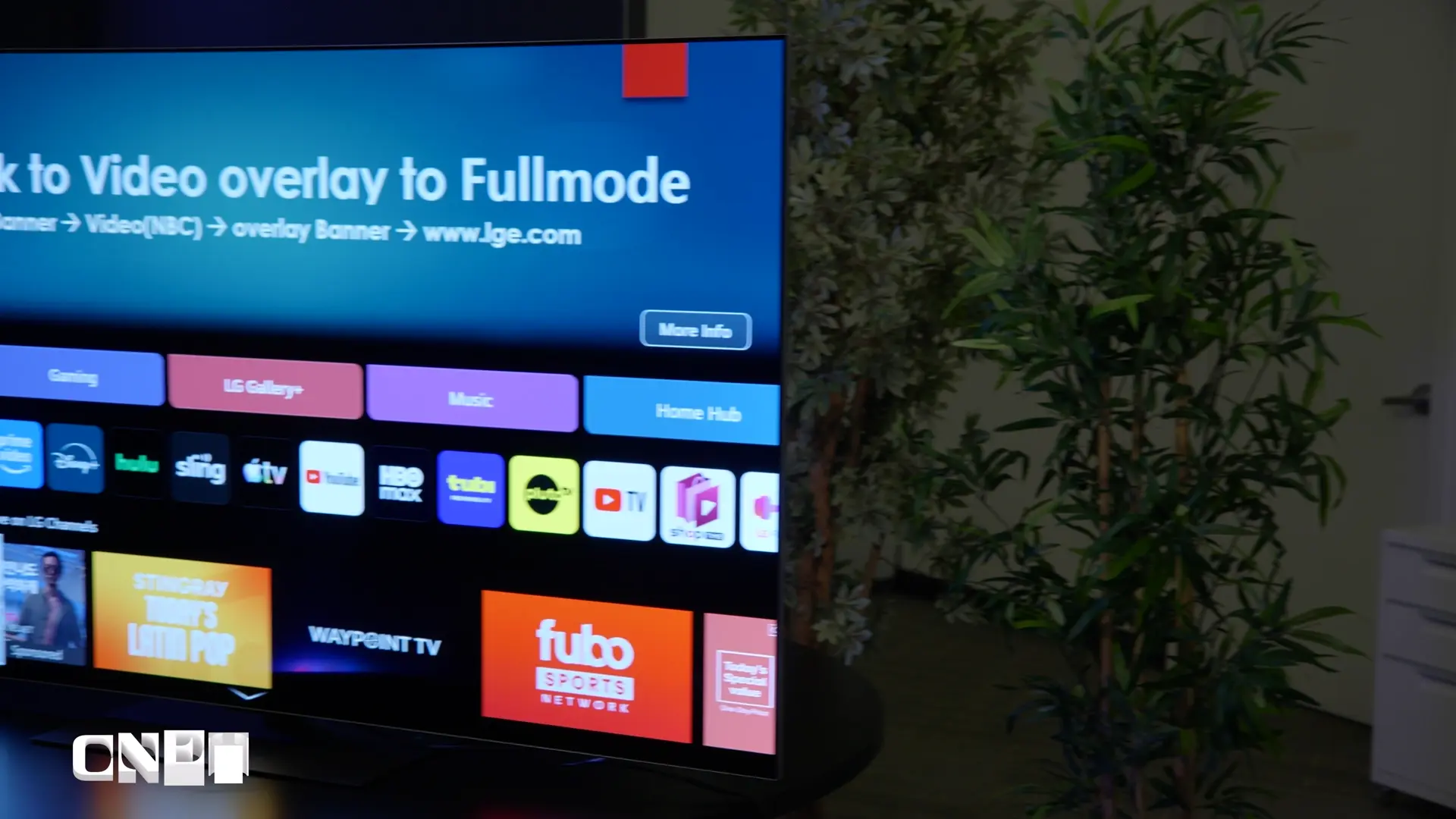
LG’s smart TV interface has all of the charm and whimsy of a Staples catalog; it’s usable, but it’s not very inspiring. To my mind, the main issue is the amount of wasted space: Half the screen is given over to a static “terms and conditions” banner. It’s like beginning your much-anticipated space wars movie with a taxation screed. Yet, if you don’t like the interface, you can easily fix it by adding a $50 streaming stick of your choice to a spare HDMI port.
Though the smart TV interface is uninspiring, I do appreciate the “speech bubble” settings menu, which puts picture settings front and center. This is especially great for switching between modes, like alternating between Game Optimizer and Filmmaker, for gamers who want to watch some TV.

The LG desktop stand is a $100 extra.
Ty Pendlebury/CNET
LG has shoehorned AI into its TV product names since 2025, so it tracks that the “LG evo AI” makes chatbots at your disposal if you want some slop-making opportunities. You can plan trips, make art, do AI… stuff. You even have a choice of an AI chatbot, Copilot or Google Gemini, but most people will likely use a different AI device like their phone or a Google Nest. There is a mic button on the remote, but there’s no “always listening” assistant onboard.
High-end OLED comparison: LG G6 vs. LG G5 vs. Samsung S95H vs. Hisense U7
TV and movies
While I found the G5 to be a big improvement over the G4, especially in brightness, the upgrades to the G6 aren’t as significant, though there are some. As I found when comparing the two TVs, LG’s claim that the TV is 20% brighter than the G5 was not quite borne out.
With most material, both the G5 and G6 looked remarkably similar. While the G6 TV does follows after the Hisense U7 and Samsung S95H for shadow detail, the G6 has better color saturation than both of those TVs.
When I first tested the G6 in May, I felt the G6 displayed a little too much shadow detail — such as during the opening sequence of It as Georgie hesitates at the top of the basement stairs. The open space beside him, with all its wooden beams, was very green on the G6, and this was compared with the G5, which had too little detail, while the S95H had just a little more than it. I retested the scene, streaming via Fandango at Home, and I found that the G6’s colors were better and any apparent “raised blacks” were no longer an issue. While the mid tones of light on the wall showed up green on the Samsung, they were more natural looking on both of the LGs. Against the S95H and G5, the G6 now had the best shadow detail with this scene, but didn’t feel overblown.
I then switched to a streaming copy of the latest Superman movie, and during the opening scenes of snow and ice, I found that the Samsung S95H, G5 and G6 looked very similar. Yet, some of the detailed areas in the Fortress of Solitude looked a little greener on the Samsung. It was on this title that I noticed some off-angle discoloration on the G6.
Lastly, using the Spears and Munsil test disc, I found that it illustrated the differences in color reproduction between the two high-end 2026 TVs. The oranges in the Munsil test disc, in particular, tended toward yellow on the Samsung, whereas they were nearly identical on the two LGs. I also found that the G6 was closer in color to G5 than before, and better than the Samsung, especially the reds, blues and oranges of the Yosemite hot springs. Lastly, the G6 showed the punchiest near-white detail in a snow scene of horses.
Light output in nits
| TV | Brightest mode (HDR) | Accurate mode (HDR) | Brightest mode (SDR) | Accurate mode (SDR) |
|---|---|---|---|---|
| Samsung S95H | 2,930 | 2,700 | 301 | 177 |
| LG G6 | 2,613 | 2,232 | 1,070 | 530 |
| TCL X11K | 3,743 | 2,302 | — | — |
| TCL QM9K | 4,520 | 2,520 | 3,930 | 262 |
| Samsung S90F | 1,466 | 1,466 | 633 | 305 |
| Samsung S95F | 2,150 | 2,150 | 391 | 297 |
| Hisense U8Q | 4,080 | 4,070 | 4,107 | 436 |
| LG G5 | 2,813 | 2,297 | 1,030 | 412 |
| LG C5 | 1,434 | 1,187 | 480 | 288 |
Bright room
I compared the LG G5, LG G6, Samsung S95H and Hisense U7 and found that the Samsung S95H had the best light rejection. Light sources, even direct ones, were not easily discernible on the very diffuse S95H screen. This light-rejection capability was followed closely by the U7, then the G6 and then the G5. I found that overhead lights were still visible on the G6, but much reduced. However, I preferred the G6’s coating versus any of the others, as it preserved black levels in a lit room while also being better at managing reflections than before.
Gaming
Though I saw little difference in brightness between the G6 and G5, in most materials, it was in HDR gaming that the boost was noticeable, with the G6 a little bit brighter. Both are a blast to play video games on, though.
Even so, the Samsung was significantly different to the two LGs — its picture was highly saturated and very bright compared with the other two. It was also harder to get out of gaming mode, unless you set it to auto; there was no changing pic mode as with the LGs.
In terms of lag response times, the G6 is a little slower than the G5 with 1080p when using the Leo Bodnar lag testers: 9.87ms versus 13.57ms. It’s not a huge gulf, but some gamers want every crumb of advantage they can get.
Uniformity and viewing angles
When viewed off-axis, the G6 showed a green color shift, especially noticeable on a lighter or white background. While the G5 has a little bit of that, it wasn’t as noticeable as on the G6. For instance, when looking at the white landscapes of Superman, a green tint appeared on either side of the image, shifting as I moved. Even from 8 feet away, I could still see the green discoloration at all times, and I imagine this effect would be even more pronounced on larger sizes than 65 inches. The G5 did this only when extremely off-axis. Do you watch a lot of content with all-white images? I doubt many do, but this effect is there all the same.
Picture settings and testing notes
As you can see in the table above, the G6 was around 200 nits dimmer in movie mode than the older G5. While this didn’t really translate into a huge real-world difference, it does suggest to me that the current technology isn’t capable of the claimed 20% increase. Meanwhile, the Samsung S95H is about as bright as the G5 was (2,930 nits versus 2,813). Compare this with the 4,240 nits I measured of the 2026 TCL QM8L.
While the G6 originally scored Average to Poor a number of times using Calman, including in ColorMatch HDR. The latter’s result of just over 5 means it’s something that should be visible to the naked eye. The TV also scored an average in my new test, the BT.2020 gamut percentage, but as it’s a difficult color space to achieve, this is actually a decent result. A number of 2026 TVs have been able to achieve scores of 90% or more, thanks to Micro-RGB backlights, but large amounts of BT.2020 native content aren’t really available yet, anyway. The benefits are still dubious.
G6 test measurements
| Test | Result | Score |
|---|---|---|
| 1080p | ||
| Black luminance (0%) | 0.000 | Good |
| Peak white luminance (SDR) | 1064 | Good |
| Avg. gamma (10-100%) | 2.21 | Good |
| Avg. grayscale error (10-100%) | 0.80 | Good |
| Dark gray error (30%) | 0.71 | Good |
| Bright gray error (80%) | 0.85 | Good |
| Avg. color checker error | 3.13 | Average |
| Avg. saturation sweeps error | 2.24 | Good |
| Avg. color error | 1.17 | Good |
| 1080p/24 Cadence (IAL) | Pass | Good |
| Input lag (Game mode) | 13.57 | Good |
| HDR10 | ||
| Black luminance (0%) | 0.000 | Good |
| Peak white luminance (10% win) | 2655 | Good |
| Gamut % UHDA/P3 (CIE 1976) | 99.21 | Good |
| ColorMatch HDR error | 3.41 | Average |
| Avg. color checker error | 1.77 | Good |
| Input lag (Game mode, 4K HDR) | 12.90 | Good |
| Gamut % BT.2020 (CIE 1976) | 83.44 | Average |
Portrait Displays Calman calibration software was used in this review.

See full bio