dailynewsnblog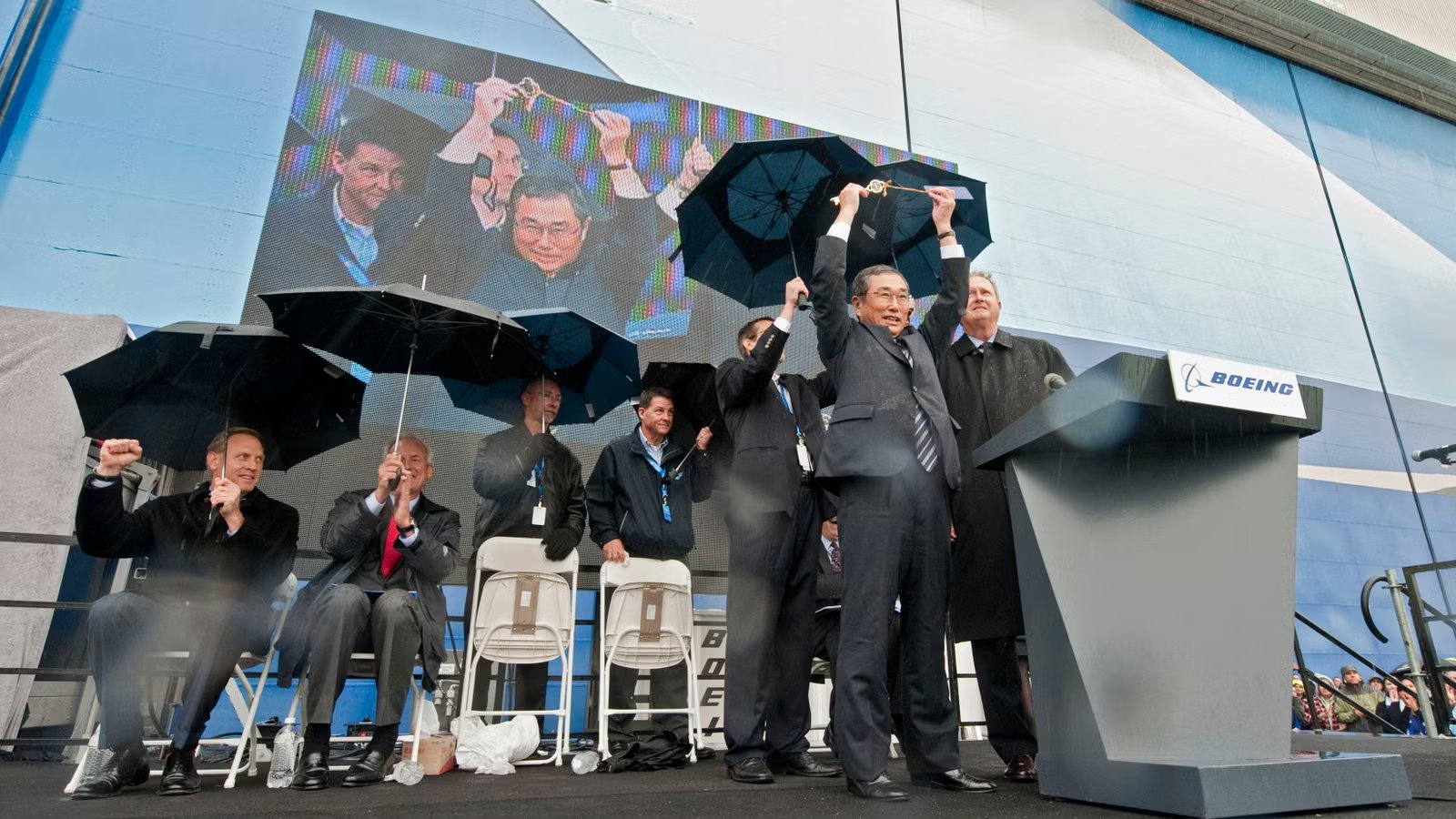
The Boeing 787 Dreamliner was never meant to be just another widebody: rather, it was designed to change how airlines operate long-haul flights fundamentally. At a time when the industry still leaned toward large hub-and-spoke networks and ever-bigger aircraft, Boeing bet on a different future: one built around efficiency, flexibility, and direct connections between cities that had previously been overlooked. The result was an aircraft that promised not only lower operating costs, but a reshaping of global travel patterns.
More than a decade on, that vision has largely been realized. The 787 now sits at the center of countless long-haul networks, quietly enabling routes that would have been unthinkable a generation ago. Its journey from concept to dominance has been anything but straightforward, but its impact on the aviation industry is undeniable. Understanding how it reached this point requires looking beyond its headline achievements and examining the path that led to it.
A Bold Vision That Stretched Too Far

When the 787 Dreamliner was first announced in the early 2000s, it represented one of the most ambitious commercial aviation projects ever undertaken by Boeing. Originally marketed as the ‘7E7,’ the aircraft promised a step change in efficiency, passenger comfort, and airline economics. Its most radical feature was its construction: roughly 50% of the primary structure would be made from carbon-fiber-reinforced polymer composites, compared to about 12% in earlier aircraft like the Boeing 767.
This alone was expected to reduce weight dramatically, improving fuel burn by around 20% compared to similarly sized jets. However, the innovation extended beyond materials. The 787 replaced traditional pneumatic bleed-air systems with electrically driven systems, making it the first large commercial aircraft to adopt a ‘more-electric’ architecture. It also introduced advanced aerodynamics, including raked wingtips and a highly efficient wing design.
Boeing projected that these innovations would allow airlines to open long, thin routes, direct flights between secondary cities that had previously been uneconomical. Early demand validated this vision, with over 800 orders placed before the aircraft even entered commercial use. However, this ambitious design came at a cost. Boeing adopted an unprecedented global outsourcing strategy, relying on suppliers across multiple continents to build large sections of the aircraft.
While intended to reduce costs and speed development, this approach instead led to severe integration issues. Suppliers struggled with quality control, timelines slipped, and Boeing ultimately had to bring much of the work back in-house. The program suffered delays of more than three years, pushing the first delivery from the originally planned 2008 to late 2011, an early sign of the challenges that would define the Dreamliner’s journey.
Early Success Was Shadowed By Technical Issues

When the 787 finally entered service in October 2011 with All Nippon Airways, it was hailed as a technological triumph. Airlines quickly deployed it on long-haul routes, and passengers praised its larger windows, improved cabin pressure, equivalent to about 6,000 feet (1,828 m) instead of the usual 8,000 feet (2,438 m), and higher humidity levels. These features reduced fatigue and dehydration, offering a noticeably better long-haul experience.
Within its first year, the aircraft demonstrated strong operational performance and quickly became a flagship for airlines worldwide. However, beneath this success, technical challenges began to surface. Early operators reported problems ranging from electrical system glitches to brake faults and fuel leaks.
While many of these were relatively minor and expected in a new aircraft program, they raised concerns about the complexity of the Dreamliner’s systems. The aircraft’s reliance on electrical architecture, in particular, introduced new failure modes that engineers were still learning to manage. Despite these teething problems, the 787 continued to gain traction commercially.
By 2012, Boeing had delivered dozens of aircraft and maintained a massive backlog. Airlines were willing to tolerate early issues because the economic benefits were already clear. Fuel savings of approximately 20% compared to older aircraft like the 767 and A330 translate into millions of dollars in annual savings per aircraft. At this stage, it seemed that the Dreamliner’s revolutionary design would ultimately outweigh its early reliability concerns, though a major crisis was just around the corner.

Why The Boeing 787 Dreamliner Has Such Unparalleled Fuel Efficiency & Range Flexibility
The Dreamliner achieves its fuel efficiency and range flexibility through advanced materials, aerodynamics, and smart design.
The 2013 Global Grounding

In January 2013, the 787 program faced its first existential crisis. Two separate incidents involving lithium-ion batteries, one on a Japan Airlines aircraft in Boston and another on an All Nippon Airways flight in Japan, resulted in fires and emergency landings. Investigations revealed that the batteries had experienced thermal runaway, a dangerous chain reaction that could lead to overheating and fire. Given the severity of the risk, aviation regulators took unprecedented action.
The US Federal Aviation Administration followed by authorities worldwide, grounded the entire global 787 fleet. At the time, around 50 Dreamliners were in service, and all were pulled from operations for several months. The grounding was a significant blow to Boeing’s reputation and raised broader questions about the safety of lithium-ion batteries in aviation. Boeing responded with a comprehensive redesign of the battery system.
The solution included improved insulation, enhanced monitoring, and a stainless-steel containment box designed to prevent fires from spreading beyond the battery unit. After approximately three months, regulators approved the fix, and the aircraft returned to service. While the crisis was resolved relatively quickly, it left a lasting mark on the program. Confidence was shaken, and the 787’s reputation as a cutting-edge aircraft was now intertwined with concerns about reliability and risk.
Production Problems & Delivery Halts

While the battery crisis was dramatic, the 2020s brought a more prolonged and financially damaging challenge: production quality issues. Starting in 2020, Boeing identified manufacturing defects related to fuselage joins, where sections of the aircraft did not meet precise tolerance standards. Additional problems were later found in areas such as the horizontal stabilizer and composite skin smoothness. These were not immediate safety threats but required thorough inspection and rework.
As a result, Boeing halted deliveries of the 787 multiple times between 2020 and 2023. At one point, deliveries were paused for nearly a full year, creating a backlog of over 100 undelivered aircraft. Airlines were forced to adjust fleet plans, and Boeing incurred billions of dollars in costs related to inspections, repairs, and compensation. The company’s production rate dropped significantly, from a planned 14 aircraft per month to as few as two to three at certain points.
These issues highlighted ongoing challenges with quality control and manufacturing consistency. Regulators, particularly the FAA, increased oversight of  Boeing’s processes, requiring more rigorous inspections before approving deliveries. Although deliveries eventually resumed, the cumulative effect of these disruptions amounted to roughly three years of intermittent halts. This period represented one of the most difficult chapters in the 787 program, testing both Boeing’s finances and its relationships with airline customers.

The Real Reason Why Aircraft Recyclers Dread The Retirement Of The Airbus A350 & Boeing 787
A closer look at the challenges of recycling composite airliners.
The 2025 Air India Crash

For more than a decade after entering service, the 787 maintained a remarkable safety record, with no fatal accidents. That changed in 2025 with the crash of an aircraft operated by Air India, when flight AI171 crashed shortly after takeoff, resulting in significant loss of life. The incident marked the first fatal crash involving a Dreamliner and immediately drew global attention.
In the aftermath, aviation authorities launched a comprehensive investigation to determine the cause. Early findings indicated that there was no immediate evidence of a systemic design flaw affecting the entire fleet. As a result, regulators did not ground the 787, distinguishing this situation from crises like the Boeing 737 MAX. Nonetheless, the crash intensified scrutiny of Boeing and reignited public concerns about aircraft safety.
Despite the tragedy, industry response remained measured. Airlines continued operating the 787, and no widespread cancellations followed. This reflected both confidence in the aircraft’s overall safety record and recognition that a single incident, while tragic, does not necessarily indicate a broader design issue. The event remains a somber chapter in the Dreamliner’s history, underscoring the inherent risks of aviation while also highlighting the robustness of modern safety systems and investigative processes.
Why The 787 Became A Best-Seller

Despite its turbulent history, the 787 Dreamliner has become one of the most commercially successful widebody aircraft of its generation. By the mid-2020s, Boeing had received over 1,800 orders for the Dreamliner, with more than 1,100 delivered. In 2025, it stood out as the best-selling widebody aircraft globally, reflecting sustained demand from airlines across all regions. This success is rooted in the aircraft’s unique combination of efficiency, flexibility, and passenger appeal.
One of the key factors driving this popularity is its fuel efficiency. Compared to older aircraft like the 767 and early A330 models, the 787 offers approximately 20–25% lower fuel consumption per seat. This translates into substantial cost savings, particularly on long-haul routes where fuel is the largest operating expense. The aircraft’s range, up to 8,700 miles (14,000 km) depending on the variant, also enables airlines to operate direct flights between city pairs that previously required connections, improving both convenience and profitability.
Equally important is the shift in airline strategy toward smaller, more versatile widebodies. The 787 fits perfectly into this trend, offering capacity for 240–330 passengers depending on the variant, compared to much larger aircraft like the 747 or A380. Combined with its passenger-friendly features, such as larger windows, quieter cabins, and improved air quality, the Dreamliner has become a favorite among both airlines and travelers. Even an aircraft with significant challenges can thrive if it delivers unmatched value in the areas that matter most.