dailynewsnblog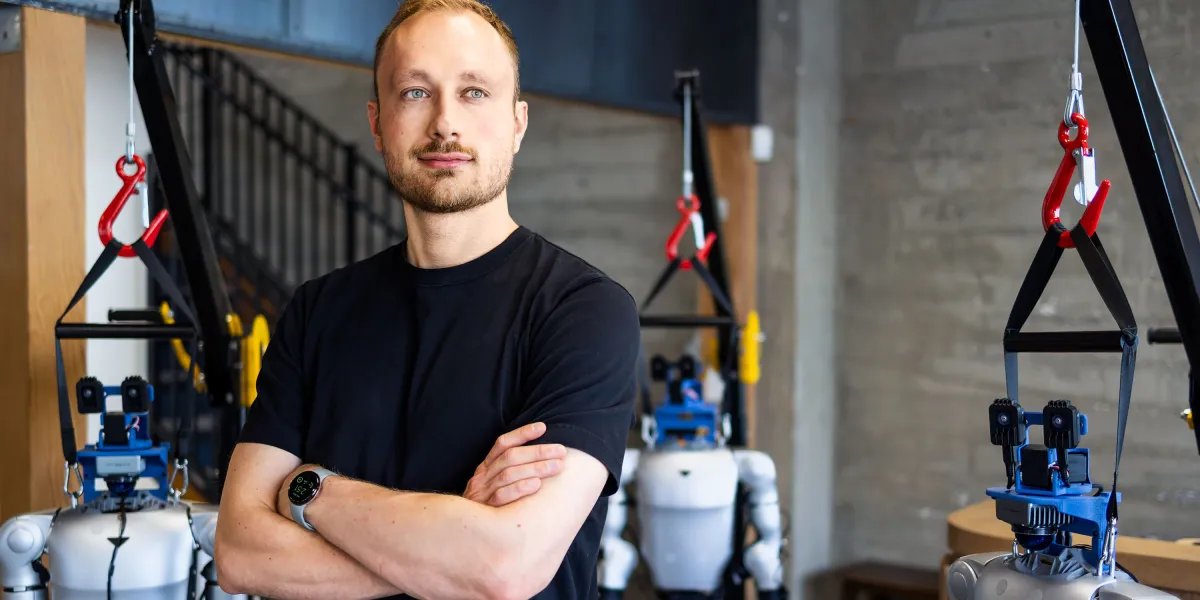
To achieve this, Hafner relies on something called model-based reinforcement learning. He develops world models—AI models designed to emulate physical reality—and trains agents within them. The agent essentially treats the model as a real-world simulation and learns how to act there. It then uses those experiences to make predictions (to dream or imagine, Hafner might say) about future outcomes. That allows agents—or the robots they’re embedded in—to navigate unfamiliar situations IRL.
“I get to interact with a lot of really smart people in research at Google, and he easily sits in the top half of 1%.”
Timothy Lillicrap, Google DeepMind
Unlike other efforts, Hafner’s technique enables agents and the robots they control to execute massively complicated tasks without the real-world trial-and-error training that’s traditionally been used in robotics.
Hafner grew up in a rural town in northeastern Germany, where his parents were both classical musicians. He learned programming from a neighbor, and in high school he began taking online courses about AI, which quickly developed into a passion. “I was always fascinated with how thinking works,” he says. AI offered him a way to emulate it on a computer.
In 2015, as a second-year undergraduate studying engineering at Hasso Plattner Institute in Potsdam, he won a role as a student researcher at Google Brain. From there, he went on to a dozen internships and other positions at the company, including stints with Google Brain and Google DeepMind (the two have since merged under DeepMind) in the UK, Canada, and the US. He worked with industry legends including Geoffrey Hinton, who is often referred to as one of the godfathers of AI, and Ashish Vaswani, coauthor of the groundbreaking research paper “Attention Is All You Need,” which described the transformer technology used by today’s large language models.