dailynewsnblog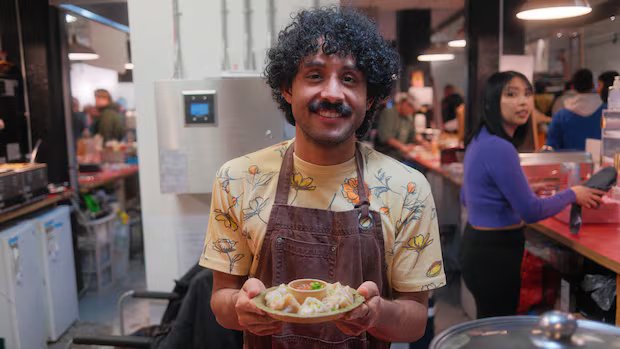
It was the spring of 2023 when Acadia University student Sujit Acharya found himself owing thousands of dollars of tuition, but only had $300 or $400 to his name.
Acharya, whose financial struggles meant his food intake depended on a monthly pickup from a food bank, decided to bet on himself, even though he had lots of doubts.
The bachelor of business administration student from Nepal used what money he had to buy some food steamers and ingredients to make momos, a Nepalese dumpling, and sell them at a mural festival in Kentville, N.S.
“If I did not make that decision, I would have regretted it, so I just did it,” said Acharya, 23.
The items were a hit, selling out in a few hours. Besides the $1,500 the sales generated, the experience left Acharya with something else.
“It was realizing that, ‘OK, I should start believing in myself, right?'” said Acharya.

From its bootstrapped roots, which came at a time when some months’ rent was paid by people with connections to the church he attended, the operation has since grown to become MomoNepal, a business that sells vegetarian dumplings and chutney in four stores and at farmers’ markets.
This was achieved while balancing mental health struggles, his full-time studies and rules that limit how much international students can work, regardless of whether they are working for themselves or someone else.
Acharya, who graduates next month, is one of this year’s eight recipients of the Frank H. Sobey scholarship, a $50,000 prize given to a select group of students studying business at Atlantic Canadian universities.
He plans to use the money to help purchase a kitchen in the Halifax area where the company can make its products and grow.
Acharya said he didn’t cook growing up. As the baby of the family and with lots of relatives living nearby, he never had to cook — nor did he like cooking.

Acharya said he decided on momos because he saw an opening in the market, figuring they would cater to south Asians living in Nova Scotia.
“I came to realize that I was completely wrong after running the business — that my customers are not South Asian,” he said.
With help from YouTube, he refined his recipes. After the mural festival, he next sold his products a few months later at a Kentville multicultural festival. While he again sold out his product, there was a challenge he faced at this particular event.
“I didn’t know how to go back [home],” he said. “I did not know if I could put all [my supplies] on the bus.”
Thankfully, a helpful volunteer drove him home.
From there, Acharya started selling his momos on a trial basis at the Wolfville Farmers’ Market.

“He’s a sponge, you know, just keeps asking questions, listening, absorbing, building on that to ask other questions with more people,” said Kelly Marie Radcliffe, the market’s executive director. “He’s not afraid to put himself out there at all.”
In her 26 years at the market, she said she’s seen other Acadia students with businesses, but the operations were far more casual.
“This is … probably the first time we’ve had a student who has developed a strong business and then moved on even beyond our market to sell at other markets and have a staff team, you know, that kind of a developed business,” said Radcliffe.

Acharya said the business has one full-time employee, the head chef, as well as some part-time employees.
He said he found it hard to get a job early in his studies because he had no experience (and was even fired from a job), so he empathizes with students and prioritizes hiring them.
His experiences with food insecurity are part of what inspires him to include a philanthropic component to his business and give back.
A life-changing opportunity, says professor
Ryan MacNeil, an entrepreneurship professor at Acadia who has taught Acharya in about a half-dozen courses, said winning the Sobey scholarship is going to be life-changing for him.
“International students in Canada don’t have access to entrepreneurial financing the same way permanent residents or Canadian citizens would,” said MacNeil.
“There’s all kinds of support programs for young entrepreneurs in Canada. For most of those, Sujit’s ineligible because he’s here on an international student visa.”
Work rules
During the school year, students can work off campus for up to 24 hours per week, or unlimited hours during scheduled breaks such as summer and winter holidays, according to the federal government.
“We’ve had that conversation multiple times. ‘Ryan, I can only work this much,'” said MacNeil.
Acharya plans to next apply for a work permit and then permanent residency. He recently moved to Halifax and is looking for a kitchen to buy. He said a deal recently fell through, which he believes may have been because of his youth. He’s on the hunt for a replacement, asking everyone (even this reporter) if they have any leads.
But Acharya’s used to facing adversity and he’s not fazed by this latest obstacle.
“I feel like we can fail at any time, any moment,” said Acharya. “I can die tomorrow and I really keep this concept in my pocket that death is inevitable and it has really helped me to really act in life.”
MORE TOP STORIES