dailynewsnblog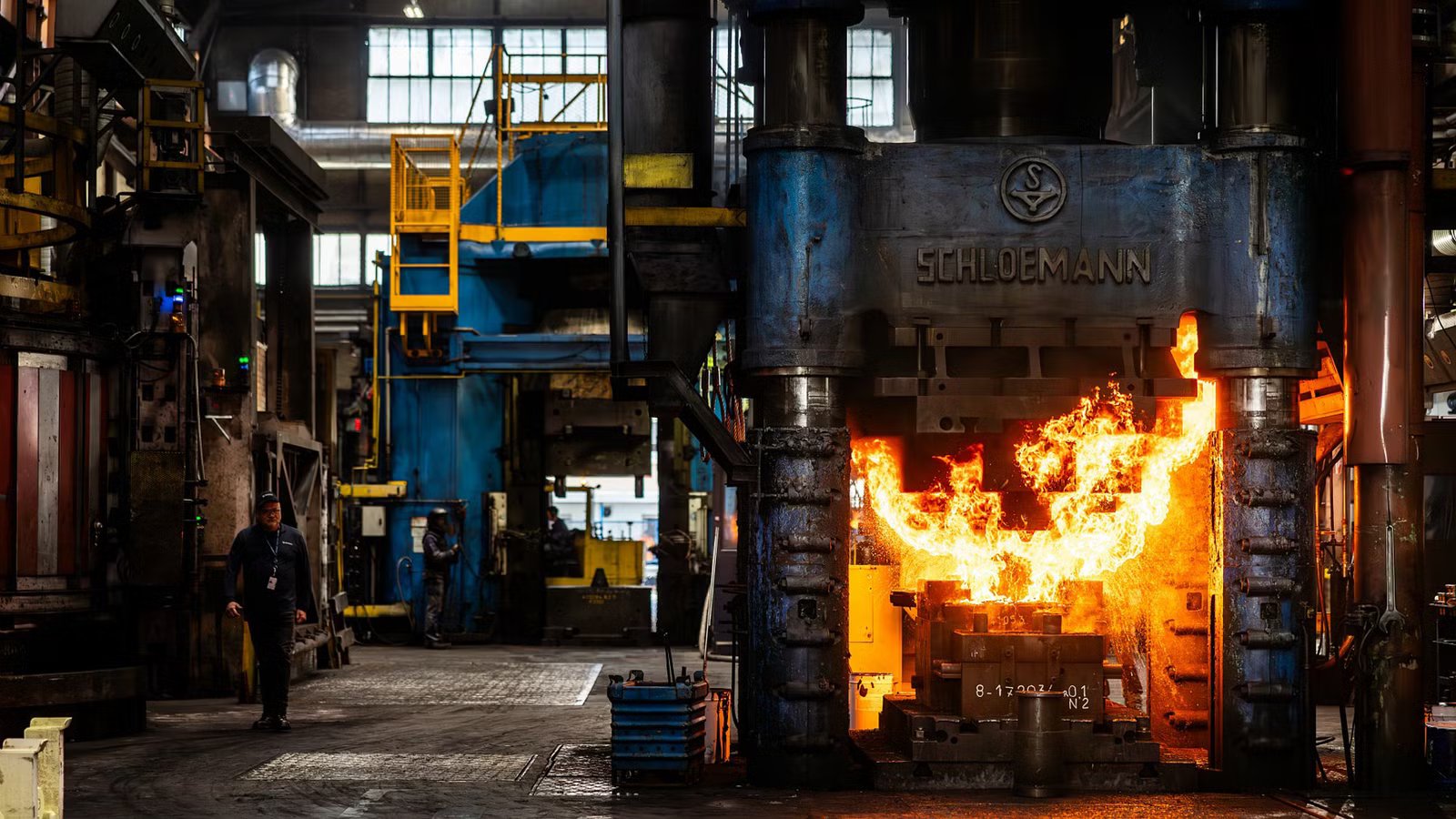
The fact that Safran’s latest $175 million machine will not be operational until 2029 says more about how strained aircraft engine production has become than any earnings report or investor call ever could. In an industry built on precision, scale, and timing, waiting nearly half a decade for one piece of industrial infrastructure to come online highlights just how deep the bottlenecks now run.
For  Boeing, that delay is not just an abstract industrial concern. It feeds directly into the manufacturer’s ongoing struggle to stabilize deliveries, meet airline demand, and rebuild confidence after years of disruption. When one machine can influence the pace of global aircraft production, the margins for error become extraordinarily thin. Let’s take a closer look…
A $175 Million Bet On Aircraft Engine Production Capacity

Channing Reid | Simple Flying
Safran’s decision to invest $175 million (€150 million) in a massive 33,000-ton (30,000-metric-ton) hydraulic press is not just a routine upgrade to its manufacturing base. It represents a deliberate attempt to address one of the most common constraints in modern aircraft engine production – the shortage of high-quality forged components.
Once fully operational, the machine is expected to produce up to 14,000 precision-forged parts annually, many of which are critical components used in next-generation commercial and military engines. These are not interchangeable parts that can be sourced easily elsewhere; they require extreme pressure, precise temperature control, and advanced metallurgy to achieve the strength and durability needed for modern high-bypass turbofan engines.
This is where the scale of the investment becomes particularly telling, as a 30,000-metric-ton press is not something that can be ordered off the shelf or installed quickly. It requires specialized construction, integration into existing production systems, and extensive testing before it can begin producing parts at the required tolerances. The long lead time, extending to 2029, reflects both the technical complexity and the lack of surplus capacity in the global supply chain. For Boeing, which relies heavily on engine manufacturers to keep its production lines moving, this kind of timeline introduces a significant lag that cannot be easily overcome with short-term measures.

The Latest: How Boeing Is Tackling Its Quality Control Issues
Learn more about the Alaska Airlines incident and the resulting quality control developments at Boeing.
Why Forgings Have Become The Bottleneck

The aviation industry’s current supply chain challenges are often described in broad terms, but the issue of castings and forgings stands out as particularly acute. These components form the backbone of engine manufacturing, and their production involves processes that cannot be easily scaled or substituted.
Forging, in particular, requires immense force to shape metal into components that can withstand extreme temperatures and stresses. The specialized equipment needed to do this, such as Safran’s new hydraulic press, is both rare and expensive, and unlike other parts of the supply chain where additional capacity can be added incrementally, forging capacity tends to come online in large, infrequent steps.
Since the pandemic, demand for new aircraft has rebounded faster than many suppliers anticipated. Airlines have rushed to renew fleets, driven by fuel-efficiency goals and strong passenger demand, while manufacturers have sought to ramp up production accordingly. However, the forging sector has struggled to keep pace, creating a choke point that affects everything downstream.
This is particularly problematic for engines like the CFM International LEAP, which powers both the Boeing 737 MAX and Airbus A320neo families. These engines incorporate advanced materials and complex geometries that place even greater demands on forging processes, although issues have directly affected a number of carriers around the world, including  IndiGo and Spirit Airlines. As a result, any limitation in forging capacity translates directly into fewer engines delivered and, therefore, fewer aircraft leaving final assembly lines. For Boeing, which has already faced significant challenges in stabilizing 737 MAX production, this adds another layer of difficulty, largely beyond its direct control.
The 2029 Timeline & Its Implications

The most striking aspect of Safran’s investment is not just its size, but its timeline. A project initiated today that will not reach full operational status until 2029 underscores the long-term nature of industrial recovery in the aerospace industry. Between now and then, aircraft manufacturers will continue to operate in an environment where supply remains constrained. Boeing’s recent delivery figures, including 143 commercial aircraft in the first quarter of 2026, show progress compared to earlier years, with the manufacturer delivering more aircraft than Airbus, but they also highlight how dependent that progress is on a steady flow of engines and components. Even a modest disruption in engine supply can ripple through production schedules, leading to delays that are difficult to recover from.
The delay also means that any benefits from the new press will arrive too late to address current backlogs meaningfully. Airlines waiting for aircraft deliveries in the late 2020s may still feel the effects of today’s shortages, even as new capacity is being built in the background. This creates a persistent mismatch between demand and supply. While Safran’s investment is clearly aimed at doubling production by 2035, the interim period remains constrained, forcing manufacturers like Boeing to navigate a prolonged phase of limited output growth.

737 MAX 10 Solution: Boeing’s Bold Move To Get Its Largest Narrowbody Certified
The American planemaker is on course to the finish line.
Supporting Both Narrowbody & Widebody Programs

One of the key roles of the new hydraulic press will be to support production of components for both narrowbody and widebody engine programs. This dual focus reflects the broad scope of demand across the aviation market, but it also introduces additional complexity in how capacity is allocated.
On the narrowbody side, the LEAP engine remains central to the Boeing 737 MAX program. With airlines continuing to favor single-aisle aircraft for their efficiency and flexibility, demand for LEAP-powered aircraft is expected to remain strong well into the next decade. Ensuring a reliable supply of forged components for these engines is therefore critical to maintaining production rates.
At the same time, the press will also produce parts for high-thrust engines used on the 777 family. These widebody engines require even larger and more robust components, placing additional demands on forging capacity. As long-haul travel continues to recover and expand, the need for these engines is likely to grow, further stretching available resources.
Balancing these competing demands will not be straightforward, and even with the new press operating at full capacity, decisions will need to be made about how to prioritize different programs. For Boeing, this introduces another variable in an already complex production environment, where trade-offs between narrowbody and widebody output can have significant financial implications.
Jobs, Technology, & Industrial Strategy

Safran’s investment is not just about machinery; it is also about people and technology. The company plans to create 130 new jobs starting in 2026, well before the press becomes fully operational, and these roles will be essential for preparing the facility, integrating new systems, and eventually running the equipment at scale.
The press itself will incorporate advanced digital technologies, including sensors and connected systems that monitor temperature, pressure, and material deformation in real time. This level of precision is necessary to meet the stringent requirements of modern engine components, but it also reflects a broader shift toward more data-driven manufacturing processes. Noise-reduction technology is another notable feature, highlighting the challenges of operating such powerful equipment in an urban or semi-urban environment. A 30,000-metric-ton press generates significant forces and vibrations, requiring careful engineering to minimize its impact on surrounding areas.
From a strategic perspective, the investment also aligns with efforts to strengthen industrial sovereignty and supply chain resilience in France and, more broadly, across Europe. By expanding domestic forging capacity, Safran is reducing reliance on external suppliers and creating a more robust production network. For Boeing, however, the benefits of this strategy are indirect. While a more resilient supply chain ultimately supports global aircraft production, the geographic and organizational distance between manufacturers and suppliers make coordination complex.

Safran To Build New Airbus A320 Engine Assembly Line In Morocco
This new assembly line will expand the manufacturer’s capabilities.
Boeing’s Ongoing Exposure To Engine Constraints

Boeing’s reliance on external engine suppliers has always been a defining feature of its business model, but the current environment has made that reliance more visible than ever. The manufacturer does not build its own engines; instead, it relies on partners to deliver parts that meet strict performance and delivery requirements.
This arrangement works efficiently when the supply chain is stable, but it becomes a vulnerability when bottlenecks emerge. The shortage of forged components, combined with other supply chain disruptions, has limited the number of engines available for installation on new aircraft. This, in turn, has slowed Boeing’s ability to deliver completed aircraft to customers.
Even as production rates gradually increase, the underlying constraints remain. The introduction of new capacity, such as Safran’s hydraulic press, offers a path toward alleviating these issues, but the long lead times involved mean that relief will not come quickly. In the meantime, Boeing must continue to manage its production schedules carefully, balancing the need to increase output with the reality of limited component availability. This includes coordinating closely with suppliers, adjusting delivery targets, and maintaining flexibility in resource allocation.
The fact that a single machine, costing $175 million and taking years to bring online, can play such a pivotal role in this process underscores the fragility of the current system. For Boeing, the challenge is not just to navigate these constraints in the short term, but to adapt to a landscape where industrial capacity evolves slowly and unpredictably.