dailynewsnblog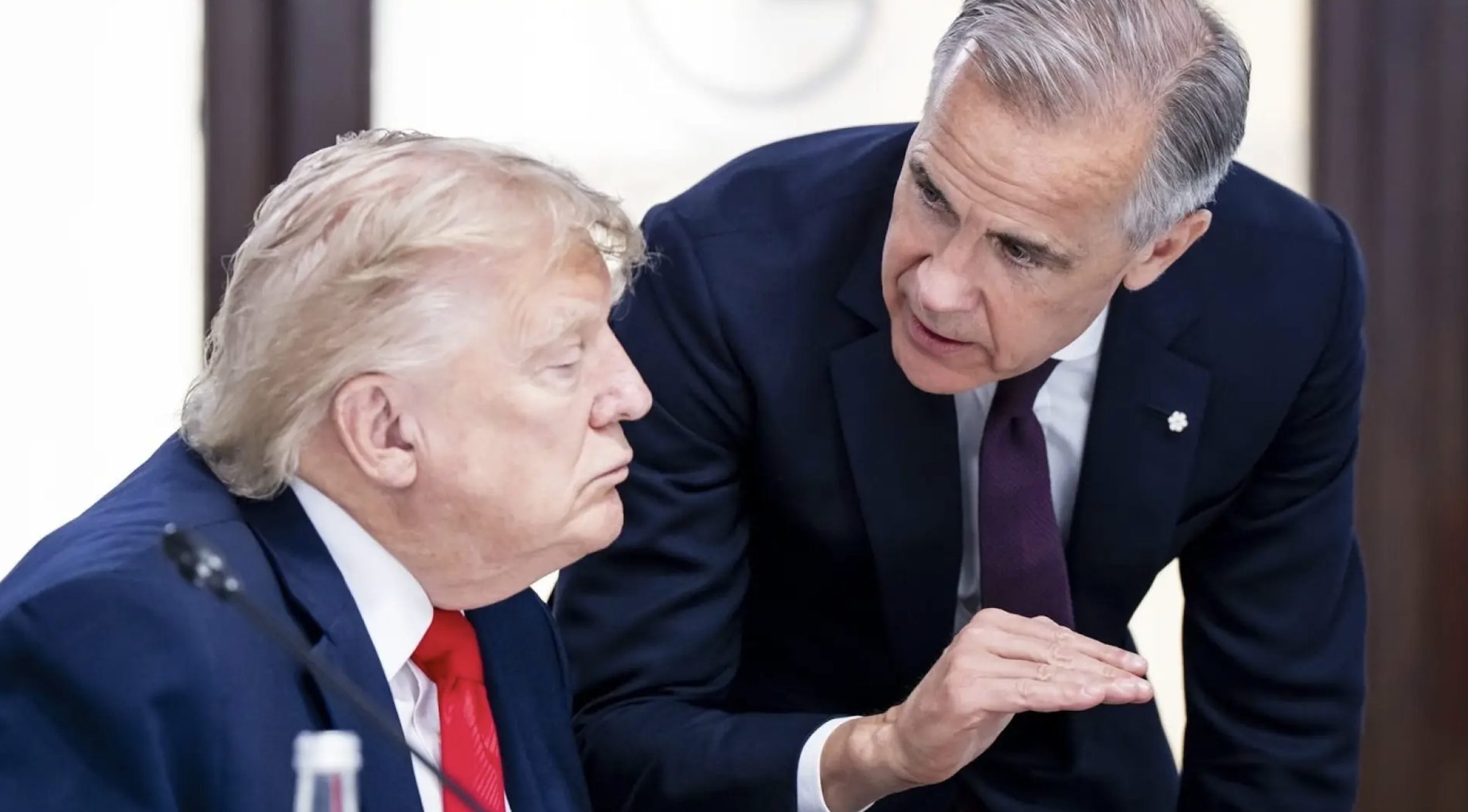
“They 100 percent called our bluff. They know exactly what we’re doing,” a Canadian source familiar with the talks said of the Americans.
The Trump administration’s latest tariffs are punishing Canada for failing to come to the table to broker a trade deal and seek to undermine Prime Minister Mark Carney’s wait and see approach to negotiations, says a Canadian source close to the talks.
The source, who asked not to be identified because they aren’t authorized to speak publicly on these matters, said Canada can’t afford to stick to a strategy that was seemingly predicating on President Donald Trump’s Republicans suffering major losses in this fall’s midterm elections.
“They 100 per cent called our bluff. They know exactly what we’re doing,” the source said of the Americans.
“It’s quite telling that before the [World Cup final] on Sunday, [Carney] had two two main big occasions to speak with the with the president and by his own admission, he did not raise trade. That tells you a lot — that his tactic was just complete avoidance and letting time do its its thing.”
Trump signed orders Monday to hammer certain Canadian products with 50 per cent tariffs, a steep escalation of the American-initiated trade war that had largely remained static since last fall.
“President Trump took decisive action to hold Canada accountable for its retaliation and discrimination,” United States Trade Representative Jamieson Greer said in a statement.
The new tariffs — invoked under Section 338 of the Tariff Act of 1930, otherwise known as the Smoot-Hawley Act — are set to come into force in 30 days on a wide array of goods, ranging from hockey sticks to wine to cement. Unlike previous tariffs, these will apply to even goods that qualify as compliant under the Canada-United States-Mexico Agreement, better known by its acronym, CUSMA.
Greer said the measure is a response to provincial bans on U.S. liquor, Canada’s supply managed dairy system and quotas on certain U.S. vehicles.

In a statement last night, Carney said the move “is the latest in a series of unilateral U.S. trade actions that began with the U.S. imposing a series of tariffs in direct violation of the Canada-United States-Mexico Agreement.”
“In response to these measures and threats to Canadian sovereignty, provinces, territories, and Canadians from coast to coast to coast have stood together, taking the necessary actions to support our economy and defend our workers, farmers, businesses, and families,” Carney said in a statement.
Carney said Ottawa has recognized the U.S. is transforming its trade relationships and his Liberal government has made a series of proposals to resolve disputes and modernize the trilateral trade pact.
But the Canadian trade source said the Carney government hasn’t matched the urgency of the Mexican government in negotiating with Trump, noting the latest tariffs came as Greer was in Mexico for the latest talks.
The source said the tariffs effectively rewarded Mexico for negotiating and ramped up the pressure on Canada to return to the table, which will only intensify if the “Mexicans get a breakthrough” in talks this week.
It’s been rumoured that Mexico and the U.S. could reach a deal during Greer’s latest visit.
The source added that the Trump administration might be using the tariffs as a threat to restart talks, noting the 30-day window before they go into force.
Carney said he spoke to Trump on Tuesday and the two agreed to ramp up trade talks in the wake of the latest tariffs.
The discussion between the leaders came the day after Trump again threatened Canada with punishing tariffs.
“As always, Canadians — governments, business, labour — will stand together to build Canada strong and to have a trading relationship with our North American partners that benefits everyone,” Carney said in Ottawa on Tuesday.
Carney said Canada-U.S. Trade Minister Dominic LeBlanc plans to convene the advisory council he chairs on Tuesday afternoon.
Trump on Tuesday told reporters in the Oval Office that he loves the “people of Canada” but claimed the country needs the United States to survive.
“Canada’s been very, very tough on us over the years, for many years, and no other president’s done anything about it,” Trump said.
Trump added that the new tariffs are separate from his threats to hit Canada with additional levies due to wildfire smoke. He repeated his claim that Canada is not managing its forests properly.
Carney set to meet virtually this afternoon with the premiers, who are responsible for the imposition of the liquor bans.
Ontario Premier Doug Ford has urged Carney to respond with dollar-for-tariffs tariffs and vowed to maintain a ban on U.S. booze from provincial liquor stores until the U.S. remove their tariffs. Sources familiar with talks told iPolitics that other provinces are more flexible.

A source with the U.S. government said the administration understands the provinces imposed the bans but Carney could take use his influence to encourage them to stand down.
The source, who asked not to be identified to speak on internal matters, said the administration was disappointed that Carney appeared to support those efforts in a speech during the Liberal convention in the spring, where he celebrating Canadians for buying domestic liquor over American imports.
Time to adapt?
Trade experts who spoke to iPolitics said Trump’s latest tariffs represent a strong call to adapt to the Canada-U.S. relationship shift that will require long-term strategy, rather than short-term countermeasures.
Carlo Dade, director of international policy at the School of Public Policy at the University of Calgary, said the administration’s strategy appears aimed at putting Canada under sustained pressure rather than simply imposing higher tariffs. By invoking 338, he said, Washington gains the ability to target provinces individually, creating incentives for provinces and industries to seek their own relief rather than present a united front.
“Look at the numbers, not the tweets or the noise is hugely important, because the numbers will likely indicate that these tariffs will be a marginal increase,” Dade said in an interview with iPolitics.
Dade, who has been doing field research on U.S. tariff powers and policy, has anticipated that the administration will move to impose Section 338. He said it’s important to note that the U.S. already exerted provincial pressure through Section 232 tariffs, which already cover 37 per cent of goods that Canada exports to the U.S.
Section 232 tariffs cover product-specific goods like oil and aluminum, but now Section 338 gives the U.S. greater flexibility to target specific provinces with tariffs rather than treating Canada as a single market, Dade explained.
Dade said the move also reflects a Chinese idiom, “killing the chicken to scare the monkey,” or making an example of one target to influence the behaviour of others. In this case, he said, the Trump administration is using Canada to signal to other trading partners the consequences of resisting U.S. trade demands while also creating divisions within Canada.
“The monkeys are the 20 other countries” negotiating reciprocal tariff agreements with the U.S., including the European Union, the United Kingdom and Bangladesh, Dade said.
“This is what I’ve been worried about, and this is why months ago we quietly began the work of going out and trying to figure out what a Canadian response could look like,” he said.
Dade said Canada will likely have to make concessions in trade talks with the U.S. in the coming weeks, but warned against rushing into an agreement simply to avoid “short-term pain.” He added that countries that quickly accepted U.S. demands still ended up facing higher tariffs, showing there are no easy victories in the current negotiations.
David Carment, an international affairs professor at Carleton and fellow of the Canadian Global Affairs Institute, also echoed a similar sentiment.
He said Canada should avoid matching U.S. tariffs with broad retaliatory measures and instead use targeted incentives and leverage in sectors where the country still holds “bargaining chips.”
Carment explains that Trump’s goal is less about the economics of tariffs than demonstrating U.S. leverage over Canada and pushing Ottawa to align more closely with American priorities, including its approach to China.
“He’s more interested in signalling to Canada that ‘you’re not in charge,’” Carment said.
Partisan responses
Conservative U.S.-Canada Relations critic Shuvaloy Majumdar argued that the Liberal government has repeatedly made concessions to Washington without securing a broader trade agreement, while underestimating how entrenched the U.S. position on Canada has become across both Republican and Democratic administrations.
“When it comes to preparedness as a country and the need for our government to actually succeed in a deal for North America, for the U.S. — they’ve been asleep at the switch,” Majumdar said in an interview with iPolitics.

He also called on the government to provide more transparency about its overall negotiating strategy, citing that Canadians deserve to understand Ottawa’s direction even if specific negotiating details remain confidential.
“This is something that I think the Prime Minister should disclose to the opposition, should disclose to the media… and disclose what the plan has been and what have his people been doing,” he said.
He pointed to LeBlanc’s meetings in Washington D.C.
“I don’t think it’s unreasonable to expect some basic transparency on how he has been spending his time,” Majumdar said.
When asked what he thinks should be the next step in the trade talks, Majumdar said Canada should focus on strengthening its bargaining position by accelerating resource development, expanding defence manufacturing and deepening North American industrial cooperation.
“Those are all things that would increase American production and American sales, and that’d be good for Canada because we’d be contributing to it,” he said.
On the other hand, NDP leader Avi Lewis called the announcement the “latest grenade” thrown over the border by the U.S. president.
“It is a direct attack on Canadian workers and industries, putting thousands of jobs at risk,” Lewis said in a statement.
“It will drive up costs for American consumers, who like Canadian consumers, are already feeling pain at the pumps and supermarket checkouts because of Trump’s illegal war on Iran.”
with files from the Canadian Press