dailynewsnblog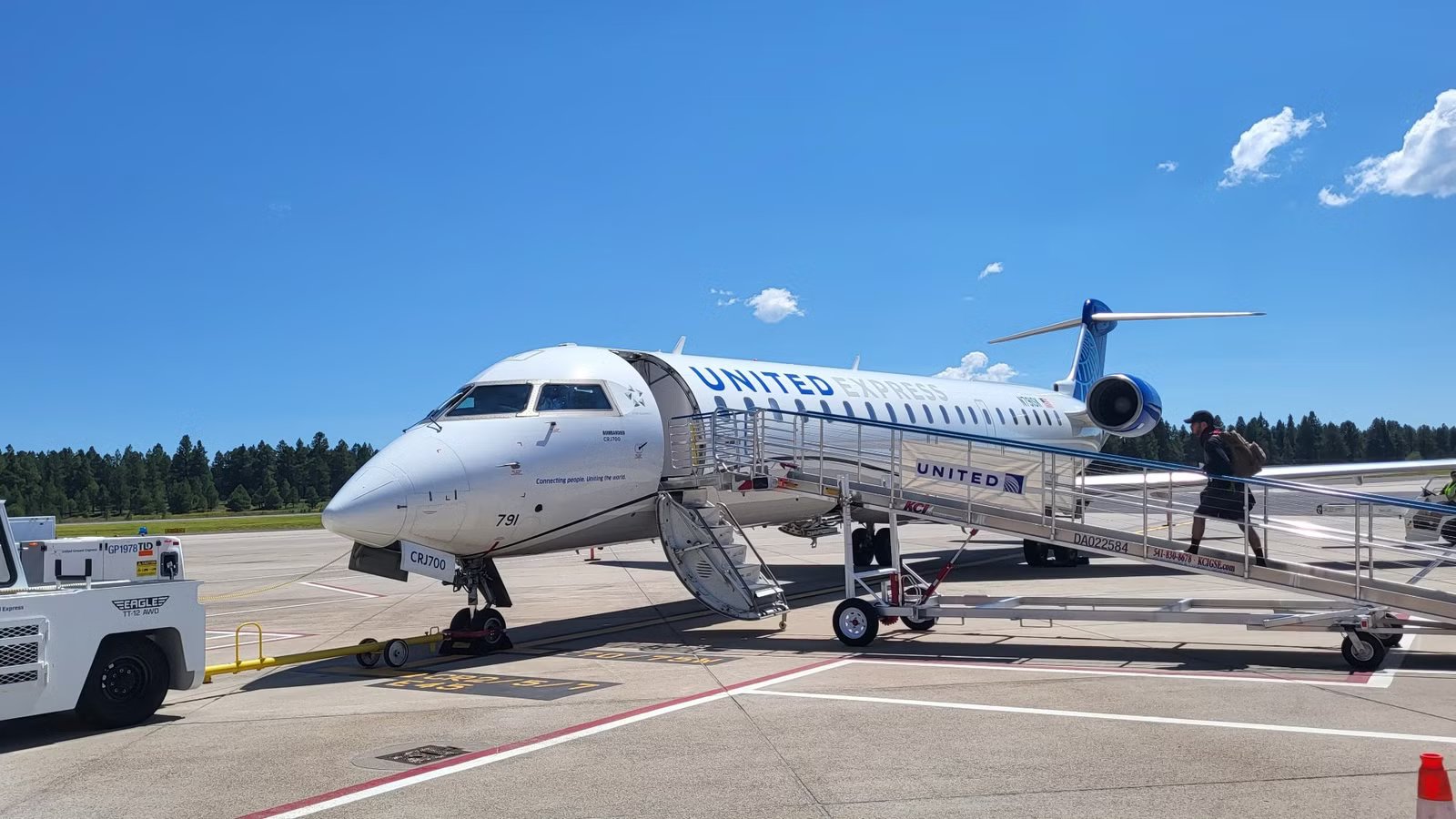
Close to $12 million has been awarded to 14 regional airports across the United States to improve and expand commercial air service. The grants, which were issued through the Small Community Air Service Development Program (SCASDP), are from a federal program that provides funding for airports to undertake initiatives such as revenue guarantees, marketing, or air service studies.
Across the United States, the US Department Of Transportation (DOT) received more than 60 applications from 32 states and territories. Of these submitted, four were ineligible, which left 56 applicants seeking up to $49 million. In a report by Yahoo, a total of 14 projects were selected, with a combined cost of $11.975 million.
How Regional Airports Use SCASDP Grants for Revenue Guarantees

For the majority of recipients, the community plans to use grants for the local airport to provide revenue guarantees to major airlines. This reduces an airline’s overall financial risk when launching new flights, with the airport underwriting the service. While the funding does not guarantee that an airline will commence services to the airport, it will surely help entice new operators.
The 14 communities and their local airports will now enter a grant agreement with the US DOT, and reach separate agreements with airlines. For access to the funding, this is done on a reimbursement basis, which will see the communities first pay for the expenses and then claim reimbursement from the department.
Other grants, which include studies, will remain active for up to three years, and for marketing this is eligible for up to four years. The Revenue Guarantee initiative will subsidize an airline for no longer than three years, but the scheme is available for up to five years to claim reimbursement.
A Look At The 14 Communities Receiving Grants

Receiving the highest award in the grant cycle was that of Tallahassee, Florida, with $1.5 million in funding. The grant is planned to support a revenue guarantee for a restored nonstop flight to  Houston George Bush Intercontinental Airport (IAH). The airport lost this route in 2021, and the community now plans to attempt to have the route resumed, with United or SkyWest already providing letters of support.
The smallest amount awarded was that of Purdue University Airport, serving West Lafayette, Indiana. The plan is to provide marketing-only grants to support existing services on United Express to  Chicago O’Hare International Airport (ORD). United returned to servicing the airport in 2024, after almost two decades.
Airport | IATA Code | Funding |
|---|---|---|
Tallahassee | TLH | $1.5 million |
Cedar Rapids | CID | $1 million |
Wichita | ICT | $1 million |
Baton Rouge | BTR | $1 million |
Jackson | JAN | $1 million |
Grand Junction | GJT | $950,000 |
Mosinee | CWA | $950,000 |
Latrobe | LBE | $850,000 |
Flagstaff | FLG | $800,000 |
Augusta | AGS | $800,000 |
Traverse City | TVC | $750,000 |
New Bern | EWN | $750,000 |
Dutch Harbor | DUT | $375,000 |
West Lafayette | LAF | $250,000 |
Other notable mentions include Flagstaff, which has $800,000 in plans to provide revenue guarantees and marketing support to establish flights to  Denver International Airport (DEN) or Salt Lake City International Airport (SLC). Traverse City in Michigan is aiming high, with plans to entice United to provide nonstop flights to either
  Los Angeles International Airport (LAX) or
  San Francisco International Airport (SFO)
Mosinee is hoping to restore regional flights from Central Wisconsin to  Detroit Metropolitan Wayne County Airport (DTW); this route was lost in 2022. SkyWest has submitted a letter of support that ultimately helped gain the grant for the airport.
Why Are SCASDP Grants So Important For These Airports?

These grants are vital for smaller regional airports, as they provide these communities with flexible federal funding that can attract or expand commercial air services. In some instances, they will underwrite the cost of higher airfares, and this empowers communities to identify their own air service solutions.
The funding provides a vital gap for airports that otherwise could not cover the cost of operational services without direct subsidies, and the grants will reduce airline risk with revenue guarantees. As a result, it can boost regional economic growth, develop new partnerships with business inter-state and grow connectivity to the region.