dailynewsnblog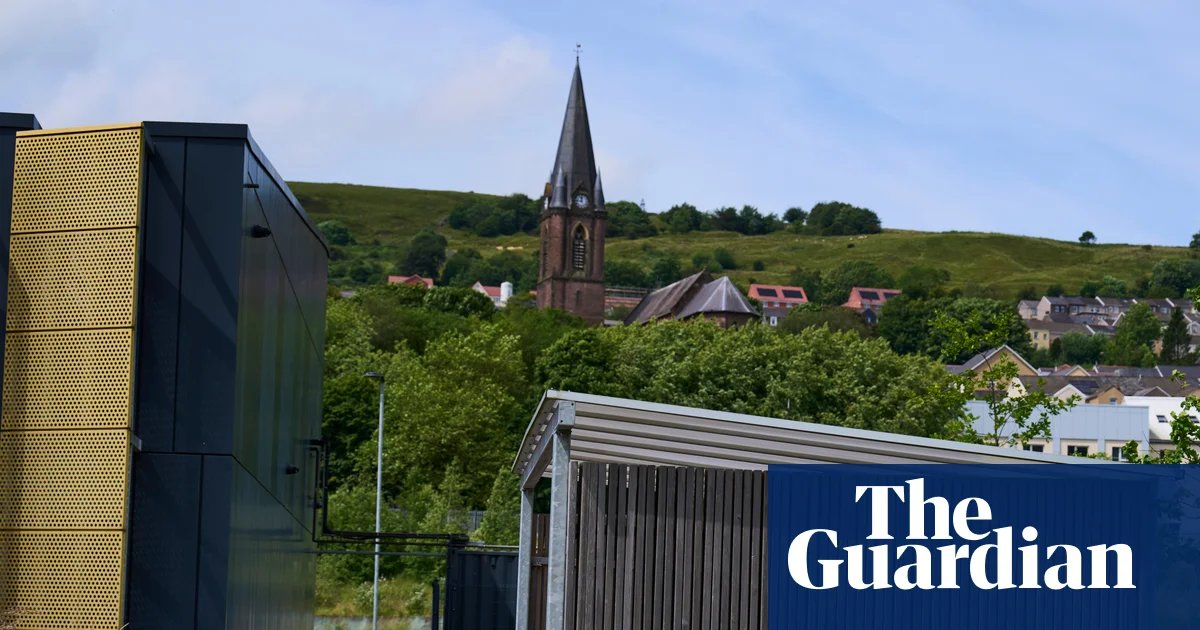
Where Ebbw Vale’s steelworks once stood is now a cluster of gleaming modern buildings including a hospital, a leisure centre and a college. Over the past decade, these public facilities have been joined by a public-private cybersecurity research centre and two tech firms. A new railway station opened at the site in 2015.
Yet, during the Guardian’s visit to the Welsh valleys town last week, the area was quiet. Nearly as many sheep as people appeared to be using the new facilities: a ewe and three lambs, escaped from somewhere, busied themselves in a strip of rewilded land next to the tech buildings.
“We don’t get as many visitors as we would like,” said John Edwards, 77, a volunteer at the Ebbw Vale Works Museum, an archive of the area’s coal, iron and steelmaking past in the steel mill’s former general offices.“The train station is busy in the mornings, it’s packed with people going to Cardiff. We’ve become a commuter town.”
After the Ebbw Vale steelworks closed in 2002, Blaenau Gwent received the maximum amount of EU funding available for structural and regional development programmes. Much of the money went towards the regeneration projects on the old site.
Unlike Scotland and Northern Ireland, Wales voted leave in the 2016 EU referendum, although research suggests the Welsh result may have been skewed by retired English people. In Ebbw Vale, support for Brexit was strong: 62% of voters in the town of 18,000 people voted leave, the highest proportion in Wales, despite the huge amount of EU money the town received.
Out shopping on the high street, Claire Jones, 52, winced as she recalled the Brexit vote. “It was shocking so many people voted leave when you just had to look around to see how much help we got from the EU – the flag was on signs everywhere,” she said. “Either people didn’t care or they didn’t know, or they believed what [the leave campaign] said about immigration.”
Lindsay Whittle, a Plaid Cymru representative for the constituency in the Welsh Senedd, said: “What the Brexit vote showed was the depth of despair and how people felt left behind. I think now, with more information available and a lot more engagement on the subject, a lot of people here now regret that decision.”
Ebbw Vale and the wider Blaenau Gwent area are among the poorest places in the UK. Everyone the Guardian met said the town’s troubles began long before Brexit shrank trade and investment and stalled growth, leaving families across the country on average thousands of pounds a year worse off.
The steel mill closed for good more than two decades ago, taking away the last traditional skilled manufacturing jobs in the area. Despite the area receiving the maximum amount of EU funding, up until the Brexit vote in 2016 the number of jobs in the area steadily declined, as did median wages in real terms.
A report by the Bevan Foundation, a Merthyr Tydfil-based thinktank, said: “It’s pretty clear that whatever else EU funds may have achieved, they didn’t boost the fortunes of Blaenau Gwent and many other parts of Wales. If these towns were ‘showered with cash’, it appears to have gone straight down the drain.”
In the decade since Brexit, the UK has – as predicted – failed to make up the EU funding shortfall in full. Ebbw Vale has become part of the Welsh government’s £100m tech valleys programme, which aims to bring new industry to the area. Three tech companies have opened offices on the old steelworks site, which is also home to the Goldworks, or Gwaithaur, a coworking and business support hub opened in 2024.
According to Blaenau Gwent council, more local businesses have opened over the past 10 years than in the 10 before it – a net gain of 870, up on 511 – and Blaenau Gwent and neighbouring Torfaen have just announced a joint blueprint for growth capitalising on the Welsh government investment and funding pots for deprived areas announced by Labour in Westminster.
None of it, it seems, has yet made a tangible difference to people in town dealing with the cost of living crisis. Nathan Grist, 40, part of the family-owned butchers with the same name, said: “We’re doing OK but some businesses are barely keeping afloat, and people, customers, have to cut back on even little things now. It’s a struggle for everyone.”
A shopper who gave his name as Mike, 62, called the regeneration projects on the former steelworks site “white elephants”. “I worked in the steelworks until I was made redundant, then I worked for myself. But it’s different for my kids and my grandkids,” he said. “There’s no jobs. You have to get the train, and people from other places have realised that and now it’s pushing up house prices.”
Mike, like other people on the high street, said immigration was a problem in the town, although according to Office for National Statistics data, just 3.2% of Blaenau Gwent’s population was born abroad.
Even though Blaenau Gwent is the birthplace of the Labour movement, Brexit has contributed to soaring support for Plaid Cymru, at Labour’s expense.
It was once unthinkable that the area could abandon the party – at times, it has been the safest Labour majority in the country – but in May’s Senedd election Ebbw Vale’s constituency did not elect a single Labour Senedd member. Three of the six seats available under the new, more proportional voting system went to Plaid Cymru, and the other three to Reform UK.
Whittle, the Plaid Cymru MS, said: “More and more, people in Wales are seeing that Westminster doesn’t work for them. The EU referendum and the mess afterwards are a big reason for that.”