dailynewsnblog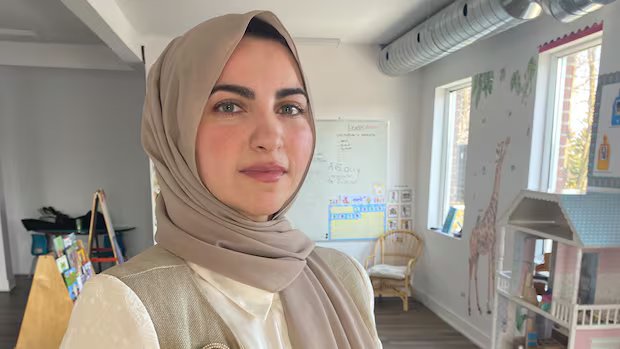
Daycare operators and workers in Quebec say they’re still in the dark about how the province’s sweeping new secularism law, Bill 9, will be applied to them, and say they’re worried it will exacerbate staff shortages and poison work environments.
“I’ve tried reaching out to the ministry for clarification, and everything is very vague. We have not gotten any information. We have not gotten any questions answered,” Alexis Pereira, director of the CPE Les Copains d’Abord daycare in NDG, told CBC.
Bill 9, adopted earlier this month, contains several new secularism measures including limits on praying in public and banning prayer spaces in public institutions.
But the most significant changes will come in publicly funded daycare centres, where workers will now be subject to the same ban on wearing religious symbols that’s in place in schools.
“It’s a devastating law. It’s very upsetting,” said Gaby Kazzaz, director of the Kiddy Kat daycare in Montreal’s West Island.
Kazzaz, who wears a hijab herself, also has two employees who wear hijabs.
“When kids see people from diverse religions and ethnic groups, we teach them respect. We teach them tolerance,” Kazzaz said.
“By limiting the people they’re exposed to, we are also limiting that tolerance and awareness and respect.”

Bill 9 widened the province’s ban on religious symbols to include staff at publicly funded daycares. Those daycares say it’s not clear what impact the legislation will have on the network, with their biggest concern being retaining and recruiting staff.
Staff shortages
The biggest concern for daycare operators is how Bill 9 could make existing staff shortages in the system even worse.
Each of the Coalition Avenir Québec (CAQ) government’s successive secularism laws has increased the pool of people who can no longer wear religious symbols at work, often in professions that are already facing major staffing challenges.
It began with Bill 21 affecting teachers, police officers, prosecutors and judges.
Then Bill 94 expanded the ban to all school staff, which has led to nearly 200 lunch and after school monitors leaving their jobs, including more than a hundred at the province’s largest school service centre. Bill 94 even extended the ban to parent volunteers.
Bill 9 may lead to the largest number of secularism-related job losses yet.
The CAQ government doesn’t have any figures on how many daycare workers currently wear religious symbols, but Geneviève Blanchard, co-director of the Association québécoise des centres de la petite enfance (AQCPE), which represents publicly funded daycares, told CBC it’s a significant number.
“There is already a serious labour shortage in the early childhood education services network. So this is a door closing for some people,” Blanchard said.
And while workers who wear religious symbols and were employed when the law was tabled last November are protected by an acquired rights clause, that clause has limits and doesn’t apply to new hires.
“Recruitment worries me enormously,” Pereira said.
“I think more needs to be done to make the job attractive. And I think that laws like this just make people not apply,” she said.
Anne-Marie Bellerose, president of the Fédération des intervenantes en petite enfance du Québec, says Bill 9 also contradicts the government’s suggestion for daycare operators to address staffing shortages by recruiting staff abroad, including in North African countries where many women wear hijabs.
“International recruitment was encouraged, and now we’re saying: ‘Unfortunately, it won’t be possible for these people to continue working,’” Bellerose said.
Many questions, few answers
Under Bill 21, teachers who receive a promotion or who switch jobs to work at another school service centre lose their acquired rights.
It’s not clear if the acquired rights clause in Bill 9 will work the same way.
“For example, you’re in the three-year-old class and you’re applying for the four or five-year-olds. Will my educator lose her grandfather clause if she applies to a different classroom?” Pereira said.
“Every chance that we’ve had to ask questions on this proposed law and it’s just been flatlined.”
Kazzaz also said she hasn’t received any guidance from the government on how to implement the law, and even Blanchard from the association representing CPEs said they’re still waiting for specific directives from the government.

Along with not being allowed to serve exclusively kosher or halal menus in public institutions, the new law has other implications, including requiring anyone who receives services from a child-care provider to do so with their face uncovered.
This has some daycares wondering if a parent who wears a full niqab face covering would even be allowed to pick up their child at the daycare.
Pereira said the new law has created other tricky situations for her.
“I had an interview yesterday for an intern and it was awkward because she was veiled and I know the law affects interns,” Pereira said, adding she was hesitant to ask certain questions.
“There’s no guidance offered to us for how to apply this. Are we going to be trained? Are we going to have information sessions, webinars on the proper etiquette?” she said.
Secularism inspections, audits
CBC requested an interview with Quebec’s minister responsible for secularism Jean-Francois Roberge and with Family Minister Kateri Champagne Jourdain.
Government spokesperson Marie-Hélène Demers responded with written answers to questions instead.

Demers said that daycare operators with specific questions could address them to the government body responsible for co-ordinating actions related to the reform of democratic institutions, access to information and secularism, which is “available to answer any questions in this regard.”
As for the acquired rights clause, Demers said situations would be assessed on a case-by-case basis, but that generally, educators who change age groups but keep the same position with the same employer would not lose acquired rights.
As for how the law would be enforced, she said any entity targeted by the new measures are responsible for ensuring compliance, and that daycares could be subject to government inspections.
“The minister responsible for secularism may conduct audits, either on its own initiative or following a complaint, by appointing an auditor authorized to enter the premises in question, request information and examine documents,” she said.
Most parents OK with religious symbols
The CAQ government has justified its secularism laws by saying they have broad public support, and opinion polling has generally backed that up.
But Bill 9 may be a turning point.
A recent poll showed 68 per cent of parents surveyed were comfortable with daycare staff wearing religious symbols, even when they supported other religious symbol bans.
“The most important thing is a parent’s trust and confidence in who they’re leaving their children with, not necessarily their faiths, their backgrounds, their culture, their traditions, their holidays,” Pereira said.
“Is my child safe? Is my child being cared for as if it was their own child? That’s what matters when a parent drops off their child.”
As with Quebec’s other secularism laws, Bill 9 pre-emptively invokes the constitutional notwithstanding clause to try to prevent court challenges to the law.
The Supreme Court of Canada is currently deliberating a challenge to the CAQ’s original secularism law, Bill 21, which could have implications for Bill 9.