dailynewsnblog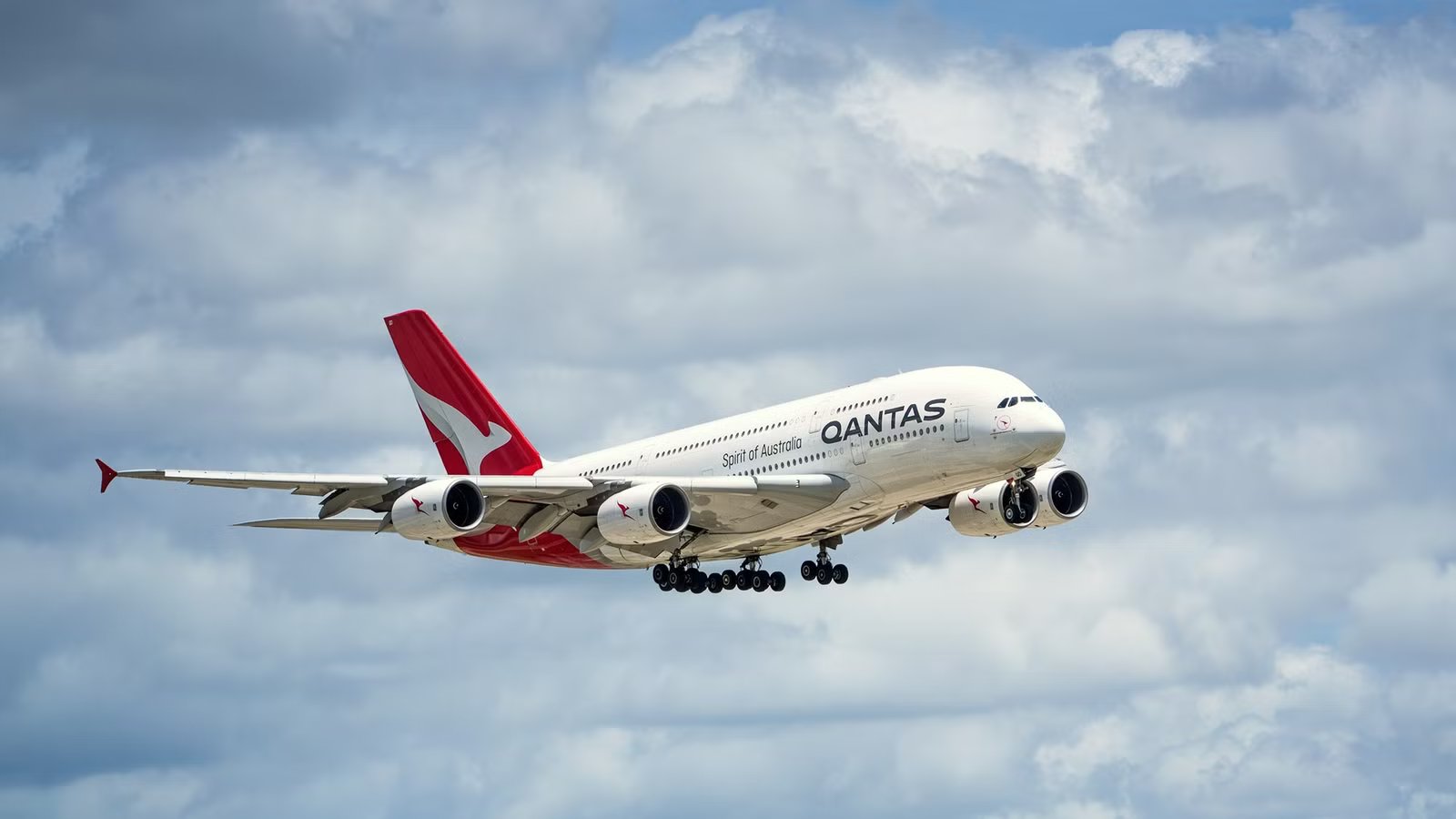
Commercial aviation has made almost every corner of the globe accessible, yet a handful of routes still push aircraft into parts of the world where land virtually disappears beneath the horizon. These flights spend hours crossing immense stretches of ocean or sparsely populated regions, leaving crews with very few realistic diversion options should something unexpected occur. While modern aircraft are designed specifically for these challenges, these routes remain among the most fascinating examples of long-haul flying.
Advances in aircraft reliability, engine technology, and regulations have transformed what was once considered impossible into routine operations. Today, twin-engine airliners regularly venture as far from the mainland as four-engine jets once did, thanks largely to ETOPS – now more accurately referred to as Extended Diversion Time Operations (EDTO) – which governs how far aircraft may fly from a suitable diversion airport following an engine failure. Even so, some routes still stand apart for just how isolated they become. Let’s take a closer look…
What Makes A Flight Truly Remote?

Distance alone does not determine whether a route is considered remote. Many of the world’s longest flights regularly pass over populated land or remain within reasonable range of multiple airports. Instead, the defining characteristic is how far an aircraft travels from a suitable alternate airport, whether that airport is located on an island, another continent, or somewhere along a polar route.
Modern flight planning takes these factors into account before every departure. Airlines calculate suitable diversion airports based on weather, runway length, emergency services, and aircraft performance, while dispatchers constantly monitor conditions throughout the journey. ETOPS transformed long-distance twin-engine flying by allowing aircraft such as the Boeing 787, Boeing 777, Airbus A321XLR, and Airbus A350 to operate several hours from the nearest suitable airport, provided strict maintenance and operational requirements are met.
Four-engine aircraft like the Airbus A380 and the Boeing 747 historically operated without ETOPS restrictions, although they still required detailed diversion planning and careful route management. The result is that the most isolated flights are not necessarily the longest, but those that venture into parts of the Pacific, Southern Ocean, or central oceans where suitable airports are exceptionally scarce.
US Mainland To Hawaii Remains Aviation’s Classic No-Options Route

Perhaps the purest example of an isolated commercial flight is the journey between the continental United States and Hawaii. Flights from  Los Angeles International Airport (LAX) to Honolulu Daniel K. Inouye International Airport (HNL) cover around 2,560 miles (4,120 km), while from
  San Francisco International Airport (SFO, the route is approximately 2,400 miles (3,860 km) long.
Despite being considerably shorter than many ultra-long-haul services, these routes spend several hours crossing the Pacific with virtually no usable diversion airports between departure and destination. As Simple Flying’s flight tracker shows, unlike routes that pass near island chains or continental coastlines, this crossing offers remarkably few alternatives once the aircraft commits to the oceanic portion of the flight.
Although Midway Atoll and a handful of other Pacific islands exist, they are generally unsuitable for modern commercial diversions because of runway limitations, operational restrictions, or lack of emergency infrastructure. For practical airline operations, crews often describe the route as having no realistic options until Hawaii itself comes within range.
The challenges of this route were illustrated dramatically in 1989 when a Trans World Airlines Boeing 767 suffered a fuel leak while flying from Honolulu Daniel K. Inouye International Airport (HNL) to St. Louis Lambert International Airport (STL). The crew diverted successfully to Honolulu after determining the aircraft could not safely continue, eventually landing with only minutes of fuel remaining following an emergency return.
This incident highlighted how quickly options disappear on a route surrounded almost entirely by open ocean and later became one of several cases that reinforced the importance of rigorous ETOPS procedures and fuel management.
Catch what other flight trackers miss
Emergency squawks, holds, NOTAMs — live signals, no signup.
Open tracker
Catch what other flight trackers miss
Emergency squawks, holds, NOTAMs — live signals, no signup.
Open tracker
Australia To South America Crosses One Of Earth’s Emptiest Regions

The South Pacific hosts several of the world’s most isolated scheduled services, particularly between Australia, New Zealand, and South America. Qantas Flight QF27 and QF28 between Sydney Kingsford Smith Airport (SYD) and Santiago de Chile’s Arturo Merino Benítez International Airport (SCL) cover approximately 7,060 miles (11,360 km), crossing enormous areas of the Pacific where diversion airports are exceptionally limited.
Easter Island sometimes features in planning discussions, but its location and operational constraints mean it cannot always serve as a practical alternate, leaving large sections of the route remarkably isolated.
LATAM’s service between Santiago de Chile and Auckland Airport (AKL) spans approximately 6,020 miles (9,690 km). Despite being shorter than the Sydney route, it traverses an equally empty portion of the Pacific where crews rely on carefully selected alternates and continuously updated weather information. Even relatively minor operational changes, such as deteriorating weather at an alternate airport, can require dispatchers to adjust routing or fuel loads before departure.
China Eastern Airlines’ Auckland Airport (AKL) to Buenos Aires Ezeiza International Airport (EZE) service represented another extraordinary South Pacific crossing while it operated, covering approximately 6,440 miles (10,365 km) between New Zealand and Argentina. Flights spent many hours far from continental land, demonstrating how improved aircraft capability has made routes feasible that would once have required technical stops or different aircraft entirely.
These South Pacific crossings remain among the strongest examples of modern airlines routinely operating where the nearest mainland may be several hours away in every direction.
Sydney To Johannesburg Combines Remoteness With ETOPS Strategy

Qantas’ service between Sydney Kingsford Smith Airport (SYD) and Johannesburg O. R. Tambo International Airport (JNB) occupies a unique place among ultra-long oceanic flights because of the vast distances involved across the Southern Indian Ocean. The route measures approximately 6,860 miles (11,040 km) and often follows a great circle path that takes aircraft far south before turning toward Australia, although daily weather and operational considerations frequently influence the exact routing.
Historically, the service was operated by the Boeing 747, whose four engines meant ETOPS restrictions did not apply. When Qantas introduced the Boeing 787-9 on the route, flight planning became more complex because the twin-engine aircraft had to remain within its approved diversion limits.
This occasionally required more northerly routing to remain closer to suitable airports, illustrating how aircraft type can directly influence the path flown even when the origin and destination remain unchanged. The airline later returned the Airbus A380 to the route, once again removing ETOPS constraints while still maintaining comprehensive diversion planning.
The route also demonstrates that remoteness is about much more than engine count. Whether flown by a twin-engine Boeing 787 or a four-engine Airbus A380, dispatchers continuously evaluate weather, airport availability, fuel reserves, and operational conditions before every departure. The regulations may differ, but the planning remains equally meticulous because suitable diversion airports remain widely spaced across the Southern Hemisphere.
Polar Routes Often Have More Options Than Expected

At first glance, flights crossing the Arctic appear even more isolated than oceanic routes. Aircraft traveling between North America and Asia or Europe routinely pass across Greenland, northern Canada, Alaska, and Siberia, where towns are few and weather conditions can be severe. Yet many polar flights actually have more diversion opportunities than passengers realize.
Military bases, regional airports, and communities throughout northern Canada, Iceland, Greenland, Alaska, and Scandinavia provide carefully evaluated alternates that can support emergency landings. While these airports may not see regular widebody airline service, they are incorporated into flight planning and maintained as potential diversion points whenever conditions permit.
The same cannot be said for Antarctica, as scheduled commercial flights avoid crossing the Antarctic continent because of the extreme lack of suitable diversion airports, limited infrastructure, unpredictable weather, and the operational complexity of supporting an emergency landing in one of the world’s harshest environments.
Instead, flights between Australia, South America, and Southern Africa generally remain north of the continent, even if that means longer distances over the Southern Ocean. As a result, some South Pacific and Southern Ocean crossings actually become more isolated than many polar services despite appearing less dramatic on a map.
Technology Has Made Remote Flying Routine

Today’s passengers may spend five or six consecutive hours without seeing land, yet modern aircraft are safer than ever operating in these environments. Advanced satellite communications, real-time weather updates, sophisticated navigation systems, and highly reliable engines have fundamentally changed long-distance flying over the past several decades.
Flight tracking technology has also given aviation enthusiasts unprecedented visibility into these remarkable journeys. Real-time tracking platforms now allow users to follow aircraft across the middle of the Pacific or Southern Ocean, displaying their position even when thousands of miles from the nearest city. Watching a flight inch across vast expanses of blue ocean offers a striking reminder of just how isolated some scheduled airline routes remain despite the remarkable technology supporting them.
For passengers, these crossings may simply feel like another overnight flight. Behind the scenes, however, every route represents thousands of calculations balancing fuel, weather, alternate airports, aircraft performance, and international regulations. The world’s most remote flight paths remain some of commercial aviation’s greatest operational achievements, proving that even the emptiest parts of the planet can now be connected safely and routinely.