dailynewsnblog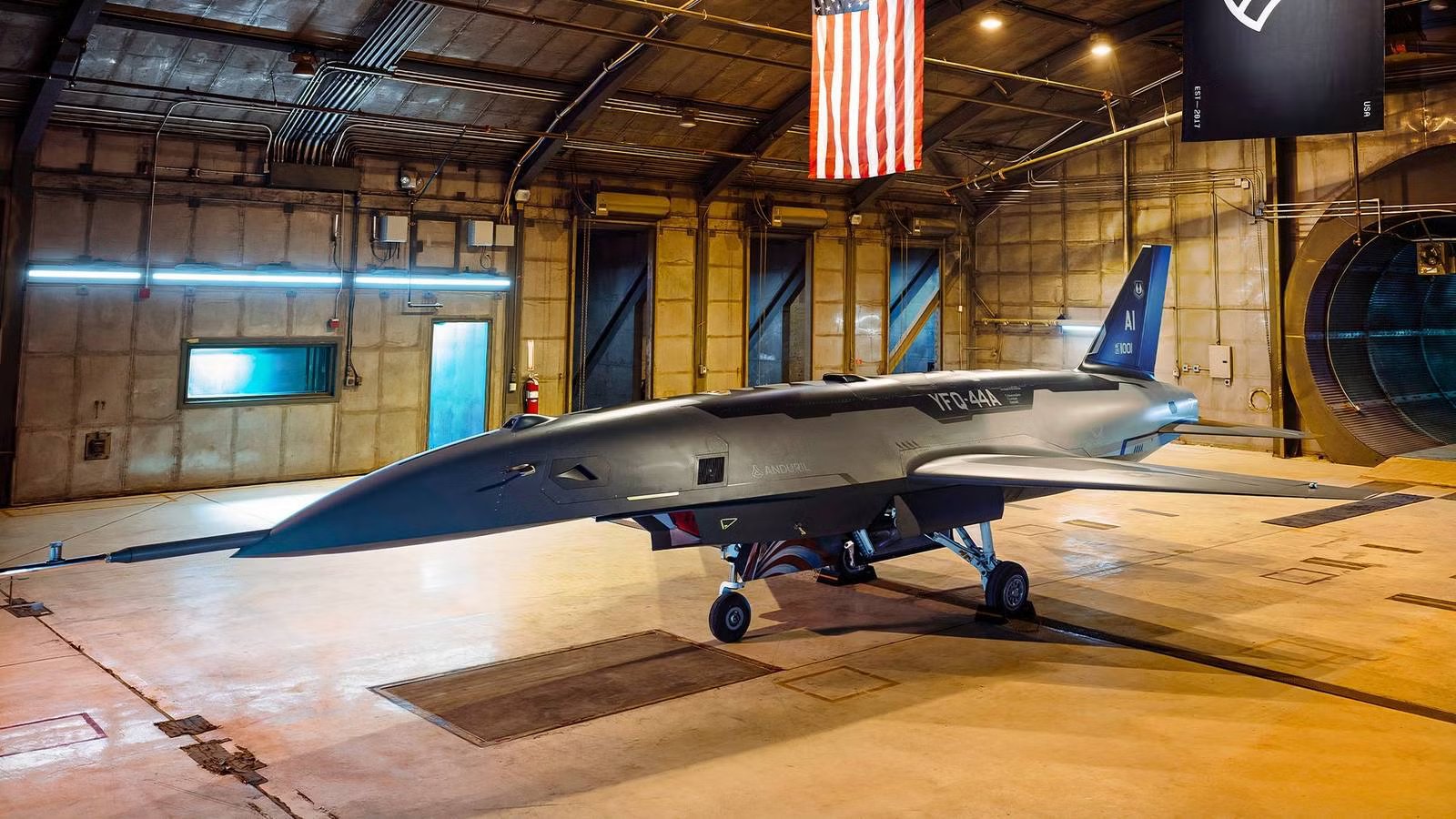
The proliferation of uncrewed aircraft and the development of autonomous weapon systems has ramped up to an exponentially faster pace in the past few years than ever before in history. The conflicts in Ukraine and Iran have made headlines around the world for the shocking success of inexpensive remote-piloted air vehicles against far higher-performance and more expensive conventional combat planes and helicopters. These undeniable results on the battlefield have forced the great powers around the world into a new arms race for drone technology.
The question is, who is currently leading the charts in the competition to build the world’s most fearsome armada of drones? The most widely circulated rankings put the United States at the top of the global combat drone ladder with 444 airframes. The US is followed by Iran at 328, Saudi Arabia at 306, and China way down the list at 160. Yet, just this past May, the US Air Force told senators that its active fleet has actually shrunk by at least 135 airframes.
One of the most important clarifications is that most public fleet counts are exactly what airframes are qualified as uncrewed aircraft, given the growing global industrial capacity to produce man-portable, expendable devices. However, for the purposes of evaluating air power, such small drones are regarded more as an individual weapon system as opposed to an airframe. While that may be contentious depending on perspective, it does serve to provide a clear delineation of fleet composition between the world’s air forces.
How The World’s Top Air Forces Stack Up

The global ranking of uncrewed aerial vehicles (UAVs) varies widely depending on whether analysts count heavy reusable Medium-Altitude Long-Endurance (MALE) platforms, uncrewed combat aerial vehicles (UCAVs), or one-way loitering munitions. Fleet analysis by organizations like the Institute for Defence Studies and Analyses emphasizes that the tactical capabilities and payload must be considered for an accurate count of actual combat-capable, reusable UAVs.
A country’s number of UAVs serves as a primary indicator of its theater-level intelligence, surveillance, reconnaissance (ISR) persistence and stand-off strike capability. The gaps appear obvious when referring to this list from ArmedForces.eu, which shows just a handful of nations are investing:
Rank | Country | Estimated Fleet | Key Platforms |
|---|---|---|---|
1 | USA | 444 | MQ-9A Reaper, MQ-1C Gray Eagle, RQ-4 Global Hawk |
2 | Türkiye | 443 | Bayraktar TB2 / TB3, Akıncı, Anka, Aksungur |
3 | Iran | 328 | Shahed-129, Mohajer-6, Ababil series |
4 | Saudi Arabia | 306 | CH-4 / CH-5, Wing Loong II |
5 | China | 160 | Wing Loong II, GJ-11 Sharp Sword, CH-4 / CH-5 |
6 | Russia | 105 | Orion, Mohajer-6, S-70 Okhotnik-B, licensed Shahed variants |
7 | Pakistan | 95 | Wing Loong II, CH-4, Shahpar-II |
8 | Egypt | 32 | Wing Loong I/II, CH-4 |
9 | Poland | 34 | Bayraktar TB2, FlyEye, Warmate loitering systems |
10 | France | 16 | MQ-9A/B Reaper, Safran Patroller |
Counting reusable UCAVs alongside first-person-view (FPV) drones or loitering munitions would significantly change the ranking, however. Doctrinally, the US treats small loitering munitions as crew-served weapons. Systems like an Anduril Bolt-M or an AeroVironment Switchblade carry an integrated warhead and are destroyed upon impact. The immediate change if these were added to the count would be that Ukraine and Russia surge to the top of the list.
An entry-level UAV can cost anywhere from $1 million to over $15 million, serving as a high-value asset equipped with advanced electronic warfare countermeasures and multi-spectral sensors. Some American drones, like the Global Hawk and Triton, cost over $100 million each. Meanwhile, an infantry FPV drone can cost as little as a few thousand dollars. Combining the two arsenals would be equivalent to combining a nation’s fighter jet count with its inventory of shoulder-fired rockets.
More Drones Are Coming Even As The US Fleet Shrinks

Every day, the global defense landscape is increasingly focused on uncrewed systems, but true airpower analysis requires separating high-performance UAVs from consumable drones. Today, a nation’s strength in reusable combat fleets dictates its theater-level persistence and long-range targeting capability. Platforms like the General Atomics MQ-9 Reaper, CAIG Wing Loong II, or Bayraktar TB2 can carry millions of dollars worth of synthetic aperture radars, signal intelligence sensors, and laser-guided munitions.
These high-value platforms serve as the persistent eyes of battlefield commanders, generating continuous, round-the-clock air patrols over massive strategic distances without risking the lives of human pilots in hostile airspace. More and more also offer weapons payloads that eliminate the need for separate air strikes by crewed platforms altogether.
To maximize the potential of these remotely piloted or autonomous UAVs, the top global powers are investing heavily in a new class designed to fly alongside manned stealth fighters. One of the closest to achieving full-rate production of these initiatives is the US Air Force’s Collaborative Combat Aircraft. The ‘loyal wingman’ drones will carry extra missiles, act as sensor scouts, or jam enemy radars ahead of crewed assets.
The Lesson For America’s Armed Forces

The vulnerability of legacy drones and crewed aircraft exposed by real air warfare in the past few years has forced a complete rewrite of Western defense strategy. It is driving the US to shift away from static tracking and toward a future defined by the CCA program and the new Drone Dominance Plan. America isn’t alone, as Boeing Australia has already debuted the MQ-28 Ghost Bat, the Chinese GJ-11 Sharp Sword is in development, and multiple CCA initiatives are well underway across Europe.
To stay at the leading edge of air power, America’s Collaborative Combat Aircraft program replaces vulnerable standalone platforms with low-cost, AI-driven autonomous stealth wingmen designed to project affordable mass alongside crewed fighters. Simultaneously, Germany’s Cobra 600 introduces an aggressive aerial interceptor concept, transforming jet drones into high-speed ‘missile taxis’ capable of hunting down hostile swarms before they can threaten regional bases.
Instead of waiting for the massive, slow-moving Franco-German-Spanish Future Combat Air System (FCAS),Germany’s Airbus has partnered with Kratos to build the XQ-58A Valkyrie airframe, targeting initial operating capability in the German Air Force by 2029. Meanwhile, the French Air Force, launched Project Hypairion with a target to fly CCA drones by 2028.
Across the channel, the United Kingdom’s BAE Systems is designing the Brontanax as the UK’s first home-grown autonomous CCA. It is slated to expand frontline airpower mass and integrate with the multinational Global Combat Air Programme (GCAP) in development with Italy and Japan. Canada has also joined GCAP as the first Observer, and with the downgrade of the FCAS, there was a real potential for Germany and Spain to join as well.
Türkiye’s Baykar Defense has made some of the greatest progress in the world by pushing its jet-powered, stealthy Kızılelma into mass production. Turkish Aerospace Industries also successfully fielded the Anka-3 flying-wing stealth UCAV. Both platforms are designed from the ground up to autonomously execute kinetic strikes or electronic warfare missions with human command at the tactical level.
Iran’s Asymmetrical Campaign Of Attrition

Looking to the opposite side of the spectrum from CCAs, Iran is frequently referenced as one of the greatest threats to Western Air power due to the asymmetric threat posed by its low-cost, one-way ‘kamikaze’ drones. Iran’s dominance in uncrewed warfare is entirely built on an “aircraft as ammunition” philosophy. The cornerstone of its strategy is the Shahed-136, a low-cost, delta-wing one-way attack drone powered by a noisy, basic piston engine.
Rather than chasing cutting-edge performance, Tehran focuses strictly on mass production. At roughly $35,000 per unit, these drones are cheap enough to launch in massive, radar-saturating swarms. This has been successful in not only hitting high-value targets in coalition bases in the Middle East, but also forcing the coalition to expand far more costly anti-missile and counter-drone interceptor missiles that cost millions of dollars.
A Shahed-136 is fundamentally a pre-programmed, long-range guided artillery shell. It flies along fixed GPS coordinates toward a static target without any real-time situational awareness or flight flexibility. Iran has successfully optimized this low-tech architecture using global commercial supply chains, but it represents the opposite end of the technological spectrum from a high-speed, autonomous stealth wingman.
Iran’s drone attacks severely depleted the US and allied strategic inventory, which has led to a defense industrial crisis over bottlenecks in the supply chain to restock missile arsenals. This strategy is highly effective for waging a war of economic attrition and overwhelming air defenses, but it is an entirely different discipline from building a CCA.
The Evolution Of Drone Warfare By Ukraine’s Defenders

If the conflict with Iran shows how quickly high-end fleets can be depleted, the war in Ukraine reveals a scale of tactical drone attrition that completely defies conventional military classification. On this battlefield, the sheer volume of uncrewed systems has transformed drones into basic infantry gear rather than aviation assets. Ukraine’s decentralized domestic industry has scaled to produce roughly 7 million FPV drones a year.
Russia’s invasion force has ramped up to match that pace, with some observers speculating that it may even reach a point where it now produces the defenders. These tactical drones are not tracked on central air force registries or kept in guarded hangars. They are handed directly to front-line infantry squads to be used as disposable, low-cost precision weapons.
The combat life expectancy of FPV UCAVs is frequently measured in single-digit minutes, with the expected service life to be just one sortie. Rapid attrition has continued to climb as both sides deploy massive electronic warfare jamming networks to knock them out of the sky. To bypass this heavy electronic jamming, Ukraine pioneered specialized fiber-optic-controlled drones that are entirely immune to radio interference. Russia has since created similar drones.
The incoming wave of millions of UAVs has grown so dense that Ukraine had to invent an entirely new class of interceptor drones specifically engineered to hunt down and ram enemy UAVs. The scale of drone warfare has led to recent record-level destruction, like the loss of 33,000 Russian drones in a single month.
Between the breakneck production speed of these disposable infantry drones, global military strength is no longer defined by stable, static inventories. The true measure of power has shifted to a nation’s industrial agility and its capacity to manufacture replacements faster than the modern battlefield can destroy them while simultaneously adapting to changing tactics and technology.