dailynewsnblog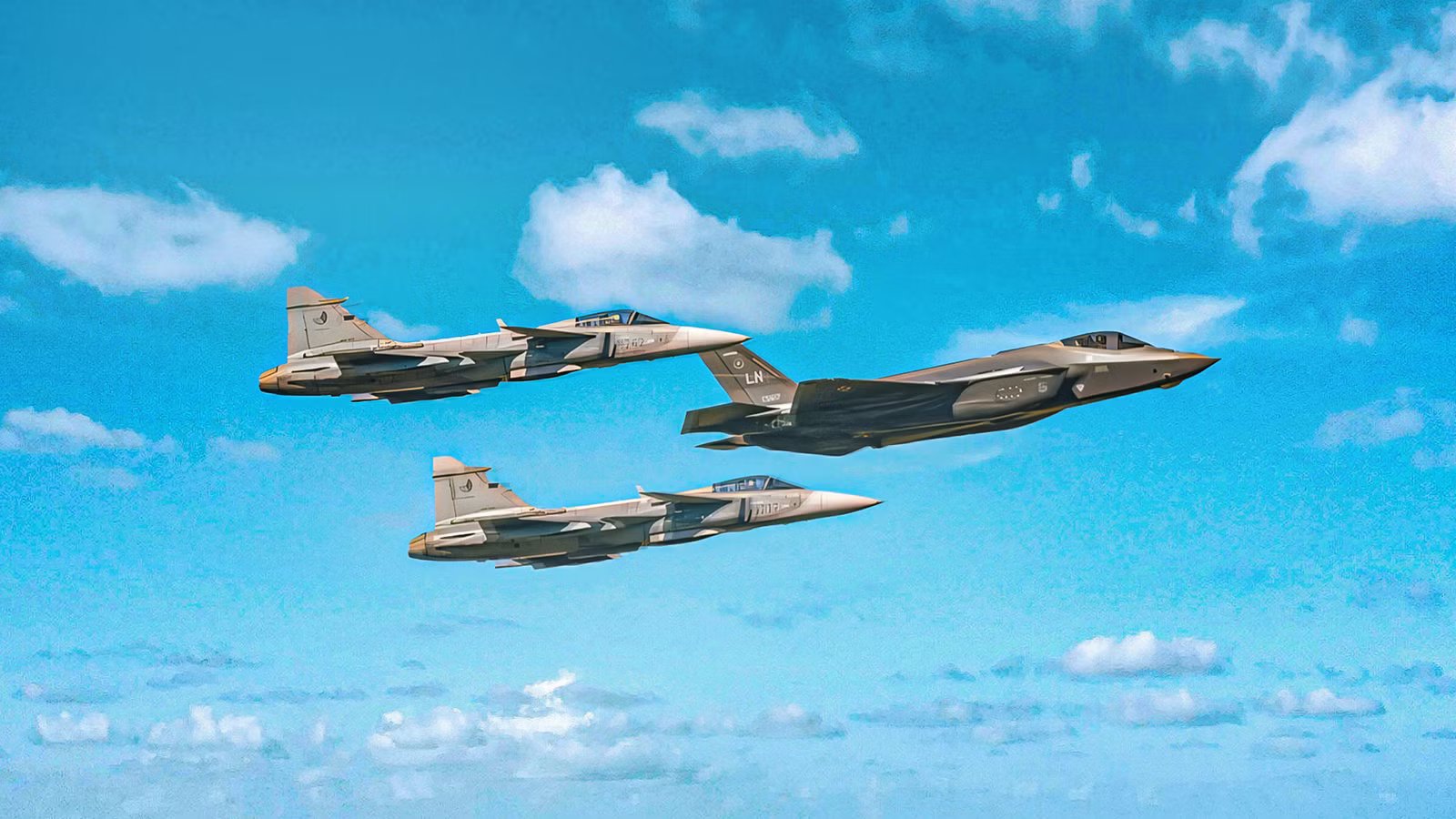
In 2026, the global fighter jets balance is still led by the United States, which fields more than 2,700 combat aircraft across its services, followed by China and Russia with significantly smaller but still formidable fleets, according to the World Air Forces Directory 2026. These headline totals continue to shape defense planning, procurement decisions, and alliance dynamics—particularly for the United States and its allies, who must measure not just scale, but how quickly that scale can be translated into combat power.
Based on 2026 fleet data and defense analysis, this guide ranks the world’s largest fighter forces while examining what sits beneath those totals, from fifth-generation programs like the Lockheed Martin F-35 Lightning II to the legacy aircraft that still make up a large share of global inventories. The key distinction is not simply how many aircraft a country owns, but how those fleets are structured, modernized, and sustained—factors that increasingly determine real-world airpower.
The United States: First In Scale, Technology, And Global Reach

The United States fields the world’s largest and most capable fighter fleet in 2026—but what truly sets it apart is how that power is structured. Based on World Air Forces Directory 2026 data, the US operates more than 2,700 active combat aircraft across the United States Air Force, US Navy, and Marine Corps, followed by China, Russia, and India.
In practice, these three branches function as near-independent air forces, each fielding its own fighter fleets, doctrine, and global mission profile. The US Air Force provides global reach and high-end air dominance, the Navy delivers persistent carrier-based airpower, and the Marine Corps adds expeditionary flexibility.
The F-16C Fighting Falcon remains the most numerous USAF fighter with 700+ aircraft, while the F-35 Lightning II has surpassed 630 aircraft across all variants (A, B, and C), spread across all three services. These are complemented by roughly 180 F-22 Raptors, ensuring that fifth-generation capability is not concentrated in a single branch but distributed across the entire force.
The F-35 Lightning II has become the backbone of American fifth-generation capability, with over 630 operational aircraft across all its variants, complemented by approximately 180 F-22 Raptors. No other air force in the world operates stealth fighters in comparable numbers across multiple service branches simultaneously.
Rather than operating as separate entities, Air Force, Navy, and Marine Corps fighters are linked into a network-centric architecture, where platforms like the F-35 act as data nodes connecting legacy aircraft such as the F-16 and Super Hornet with ISR and support assets. The result is not just the world’s largest fighter fleet, but a system of three interoperable air forces, capable of generating sustained air superiority across multiple theaters simultaneously.
China’s Rise: From Soviet-Derived Designs To Indigenous Stealth

China’s People’s Liberation Army Air Force (PLAAF) represents the most dramatic transformation in military aviation over the past two decades. Once heavily dependent on Soviet-derived airframes, the PLAAF has invested massively in indigenous design, and the results are now visible on the flight line. The centerpiece of China’s fighter fleet is the Chengdu J-20 Mighty Dragon, a stealth fighter often compared to the American F-22, supported by the J-10, J-16, and J-11 types — the latter two being Su-27 derivatives modernized with Chinese radar and electronics.
China has rapidly fielded in service over 200 J-20 units by 2026, making it the world’s second-largest fifth-generation fleet, with production continuing at an accelerated pace supported by indigenous engine development that is overcoming previous reliance on Russian powerplants. Meanwhile, estimates from China-watching OSINT analysts suggest the PLAAF received roughly 200 new fourth and fifth-generation fighters in 2025 alone, with the naval aviation branch receiving an additional 50 platforms.
China’s naval aviation ambitions add another dimension to these numbers. With the Shandong and Fujian carriers now operational, the PLANAF is fielding growing numbers of J-15 variants and, increasingly, J-35 carrier-based stealth fighters. China’s naval aviation branch is expanding fast alongside new aircraft carriers, signaling that the PLAAF’s transformation is not confined to land-based operations.

6 Aircraft That Represent The Future Of Air Combat
Discover six aircraft redefining modern air warfare, from stealth fighters to missile trucks, shaping the balance of air power in 2026 and beyond.
Russia: A Large Inventory With A Serious Readiness Problem

Russia’s air force presents one of the most challenging assessments of any fighter fleet ranking. On paper, the Russian Aerospace Forces (VKS) hold an enormous inventory — Russia ranks second globally in total military aircraft with approximately 4,237 airframes, according to GlobalFirepower 2026 data. But the question of how many of those aircraft are genuinely combat-ready is far more difficult to answer, and far more consequential.
Russia’s fighter jet production over the last five years has likely ranged between just 24 and 35 jets annually, woefully inadequate to replace its on-paper vast combat fleet as aircraft age out — and losses sustained in Ukraine compound that arithmetic considerably. The Sukhoi Su-30, Su-34, and Su-35 form the operational backbone of the modern VKS, while the Su-57 Felon, Russia’s fifth-generation answer to the F-22, has been produced in only limited quantities. The gap between what Russia’s fleet looks like on a satellite image and what it can actually put in the air on a given day is significant.
|
Aircraft |
Role |
Approx. In Service |
|
Sukhoi Su-30SM/SM2 |
Multirole |
~150 |
|
Sukhoi Su-34 |
Strike Fighter |
~130 |
|
Sukhoi Su-35S |
Air Superiority |
~100+ |
|
Mikoyan Gurevich MiG-31 |
Interceptor |
~130 |
|
Sukhoi Su-57 |
5th Gen Stealth |
~30 |
|
Mikoyan Gurevich MiG-29 |
Legacy Fighter |
~200+ (varied readiness) |
Russian aircraft may fall into disuse and be stripped for parts, left parked around airbases and then counted by OSINT accounts, which add up visible combat aircraft at bases from satellite images. That context matters enormously when reading any headline figure about Russian air power. The VKS retains formidable capability in homeland defense and regional operations, but its ability to sustain high-tempo offensive operations against a near-peer adversary is increasingly questioned by Western analysts.
India, South Korea, And Japan: Asia’s Fighter Modernizers

Three Asian democracies, India, South Korea, and Japan, occupy a fascinating middle tier of fighter fleet rankings, each pursuing ambitious modernization programs that will reshape their inventories over the coming decade. Their approaches differ significantly, reflecting distinct strategic environments, industrial ambitions, and threat perceptions.
India’s Air Force operates one of the most diverse fighter fleets in the world, flying jets from the United States, Russia, France, and the United Kingdom alongside its own locally developed aircraft. The Su-30MKI remains the IAF’s most numerous type, while the Dassault Rafale represents its most capable platform today.
Recent border tensions have pushed India to modernize its air force faster, with the country developing an upgraded Tejas Mark 1A and investing in a “Super Sukhoi” program while considering future F-21 or F-35 procurement. At approximately 600–650 modern fighters, India ranks fourth globally, though its operational readiness has historically been constrained by a complex, multi-supplier maintenance system.
Japan and South Korea, both treaty allies of the United States and active F-35 operators, have structured their modernization programs tightly around fifth-generation interoperability. Japan, facing the dual threat of a North Korean missile arsenal and a more assertive Chinese naval posture, has committed to becoming one of the largest F-35 operators outside the United States.
Asian nations prioritizing maritime strike capabilities and air superiority for disputed territory scenarios are increasingly investing in fifth-generation platforms and network-centric architectures. Both Japan and South Korea are also investing in indigenous sixth-generation programs, signaling that their dependence on foreign platforms will eventually give way to domestically developed successors.

The World’s Largest Air Forces By F-35 Numbers
Stealth, advanced sensors, and networked warfare converge in this game-changing fighter. See which countries are leading the charge.
The Mid-Tier Powers: Pakistan, Egypt, Türkiye, And The Middle East

A common question among aviation enthusiasts is where countries like Pakistan, Egypt, Türkiye, and the Gulf states sit in the global fighter hierarchy. The answer is instructive: these mid-tier powers hold inventories ranging from roughly 200 to 450 fighters each, but what makes them strategically significant is the combination of geography, geopolitics, and the quality of their most capable platforms. Pakistan’s Air Force operates a mixed fleet built around the JF-17 Thunder, a jointly developed Sino-Pakistani jet that has become the backbone of the PAF, alongside F-16 Fighting Falcons that remain its most capable Western-supplied aircraft.
Türkiye’s Air Force is currently in transition, shaped by both geopolitical friction and ambitious domestic industrial goals. Its existing combat capability still rests on more than 240 F-16s, many of which are undergoing modernization to remain viable into the 2030s. The long-term trajectory, however, is centered on the KAAN fifth-generation fighter program. Having progressed into early flight testing, KAAN represents a serious attempt to achieve sovereign control over advanced combat aviation. The design incorporates low-observable characteristics, indigenous avionics, and an emphasis on network-centric warfare, though significant development challenges remain before it can reach full operational maturity.
Israel deserves special mention for a reason that goes beyond numbers, on paper equal to those of Türkiye’s Air Force. The Israel Air Force is widely regarded as one of the most combat-experienced and technologically advanced air forces relative to its size, emphasizing precision, intelligence dominance, and preemptive strike doctrine. The IAF’s fleet of F-35I Adir jets, which feature Israeli-developed avionics integrations unique to the Israeli variant, give it a qualitative edge that raw fleet counts entirely fail to capture. In the Middle East, perhaps more than anywhere else, quality and doctrinal sophistication matter far more than numbers.
Egypt, meanwhile, fields one of the most diverse fleets in the world, combining Western, Russian, and European platforms. Its inventory includes large numbers of F-16s, complemented by Rafale multirole fighters and MiG-29M/M2 aircraft.
The Gulf states, often grouped together, in reality exhibit distinct force structures that deserve to be treated individually. Saudi Arabia fields one of the most capable air forces in the region, built around F-15 variants, particularly the advanced F-15SA, alongside Eurofighter Typhoons. Its fleet is relatively modern and heavily oriented toward high-end strike and air superiority missions, with a strong emphasis on long-range precision engagement. The structure is less layered than Pakistan’s and less diverse than Egypt’s, but it is optimized for high-intensity operations with substantial external support.
Why Fighter Jet Numbers Tell Only Half The Story

After walking through the world’s major fighter fleets, the most important takeaway is one that the numbers themselves cannot convey: fleet size is a starting point, not a conclusion. The gap between an aircraft logged in an inventory and an aircraft that can win a fight in contested airspace is wide, and it is shaped by maintenance depth, pilot training hours, logistics infrastructure, and the quality of the supporting system that keeps jets in the air. As we previously explored in detail, the USAF’s sustained strength depends on sustainment, training, and aerial refueling fleets that are just as critical to American air power as frontline combat aircraft.
As a general rule, most large air forces, including India, the US, China, and Russia, are struggling to simply maintain their numbers — the US Air Force has been shrinking since WWII and is likely to continue to do so. That contraction reflects a deliberate trade-off: fewer but more capable platforms, supported by increasingly sophisticated unmanned wingmen and collaborative combat aircraft concepts. The F-47, the USAF’s next-generation fighter, is planned for a procurement run of just 185 aircraft, roughly a tenth of the F-35 buy, reflecting how profoundly the definition of “air power” is shifting.
What the fighter fleet rankings for 2026 ultimately reveal is a world in transition. By 2026, the world’s air forces reflect a blend of tradition, innovation, and strategic necessity, with fighter numbers and combat readiness equally important as fleet size, highlighting that even smaller air forces can wield significant influence with the right mix of technology and strategy.