dailynewsnblog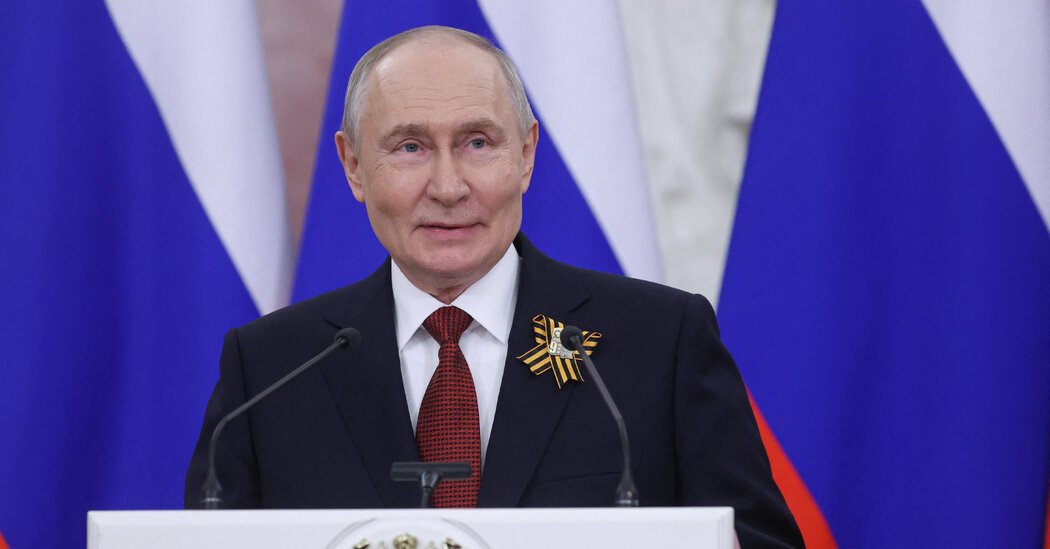
The American and Israeli attack on Iran, a Russian ally, would appear to be another blow to Moscow’s foreign policy and global reach.
Russia is already bogged down in Ukraine, with only modest gains in the fifth year of that war. The war in Iran comes on top of a revolution in Syria that overthrew the Russian ally Bashar al-Assad and the American raid to arrest another Russian ally, Nicolás Maduro, in Venezuela.
Then there is increased American economic pressure on Russia’s ally Cuba and the electoral defeat of Russia’s ally Viktor Orban in Hungary.
Mr. Orban’s loss of power enabled the European Union to agree on an interest-free, $106-billion loan to Ukraine, where Russian troops are suffering huge losses in return for meager territorial gains and there is no clear path to victory for either side.
On Saturday, which saw Russia’s cautious celebration of victory over Nazism, President Vladimir V. Putin suggested that his lengthy “special military operation,” as he calls the war in Ukraine, might soon finish. “I believe the matter is coming to a close,” he said, but gave no specifics. The Kremlin is still insisting on being gifted an unconquered part of Ukraine and negotiating new security arrangements for Europe, demands that are unlikely to be met.
But despite all these apparent setbacks for Russia, the picture for the country is mixed at the very least, with Europe divided over the American-Israeli war in Iran and over American policy in general.
President Trump’s vivid disdain for NATO and America’s European allies has been an enormous benefit to Russia. Since the end of World War II, one of the prime goals of Moscow’s foreign policy has been to break up the trans-Atlantic alliance, divide the United States from Europe, undermine the NATO commitment to collective defense and, if possible, get Washington to bring its troops and missiles home.
Mr. Trump’s bold statement that he intends to take over Greenland, part of a NATO ally, Denmark, shocked the Europeans, even if nothing ever happens. His sudden order to withdraw troops from Germany out of apparent pique over perceived lack of support for the war in Iran has disheartened many.
And his casual and vocal contempt for traditionally pro-American European leaders from the Continent’s largest nations — Britain, France, Germany, Italy and Spain — has engendered quiet rage and further undermined the belief that the United States would come to Europe’s aid if Russia attacked.
Russia may have lost Mr. Orban, but it is not without sympathetic political figures and parties in Slovakia, Bulgaria, Romania, Serbia and elsewhere.
The war in Iran is also a mixed picture for Moscow.
Although its ally was attacked, the conflict has raised the price of oil, natural gas and fertilizer, benefiting Russia hugely, at least for now. The squeeze on global energy prices has been so severe that Washington has even lifted sanctions on the sale of Russian oil, further reducing the pressure on the Kremlin’s coffers.
“The war in Tehran is the gift that keeps on giving,” said Alexander Gabuev, director of the Carnegie Russia Eurasia Center. “Oil prices are elevated and because there is no end of the blockade in sight for now, just to restore the oil market to its level before the war will take time, even if the Strait of Hormuz opens tomorrow,” he said.
The war has also drawn down the number of critical American interceptors for missiles and drones available to be sold for use in Ukraine, Mr. Gabuev said, benefiting Russia. More broadly, it has significantly damaged America’s reputation for strategic and military omnipotence, since the war has hardly gone according to plan.
With the blockage of the Strait of Hormuz, through which China gets much of its oil, Beijing is motivated to approve and help build direct pipelines from Russia for gas and oil. That is one of the possible outcomes of a summit meeting between Mr. Putin and President Xi Jinping of China that is supposed to take place by the end of June and possibly later this month, after Mr. Trump makes his own delayed visit to China to meet Mr. Xi.
Russia’s dependency on China is growing in the face of Western sanctions. But Russia has also been remarkably successful in securing economic lifelines and the ability to continue to export oil and gas with the shadow fleet to new customers, while working around the dollar and maintaining good ties to India.
And it has been adaptive in importing needed Western goods like computer chips and consumer goods through what is known as the Eurasian roundabout trade, whereby sales to unsanctioned countries like Armenia and Kyrgyzstan are then passed on to Russia.
Perhaps as important, said Hanna Notte, director for Eurasia at the James Martin Center for Nonproliferation Studies, Russia has cleverly used the war for propaganda purposes in Africa, Asia and the global south generally.
It has accused the United States of conducting a neocolonial war alongside Israel, whose policies in Gaza, the West Bank and Lebanon are widely condemned in the rest of the world. Russia will also get some credit for standing by its ally as well as it could.
It has provided public support for Tehran and humanitarian aid, as well as targeting information for Iranian attacks on American military bases in the region. Some European and American officials believe Moscow has been supplying drones and drone parts to Iran that are sophisticated Russian versions of the original Iranian design, although the Kremlin denies it.
“Russia is selling a story about the war that resonates with non-Western audiences,” Ms. Notte said, one that works for Ukraine as well as Iran. Russia presents Ukraine, without irony, as “a new anticolonial war, a proxy war waged on Russia by the West, a form of neocolonialism that Russia must win,” she said.
That narrative is attractive, especially in post-colonial societies in Africa and Asia, she said.
Basically, Ms. Notte said, Russia is working to attract populations with grievances, from woke culture to trade, “riding a lot on an anti-American and anti-Western narrative.”
With no clear victory in sight for Mr. Trump in Iran, he seems prepared to leave the Islamic Republic in place, run by hard-liners from the Islamic Revolutionary Guards Corps.
That is likely to damage America’s reputation in the region, as Gulf states like Oman and the United Arab Emirates, along with Saudi Arabia, will have to cope with an undefeated and more radical Iran. These countries fear that Mr. Trump, in his eagerness to exit the war, will continue to ignore renewed Iranian attacks on them, and it seems that the American military bases they host are no longer the surefire deterrent they expected.
As these states hedge their bets, the influence of the United States will likely diminish, with Russia and China being the main beneficiaries. Other countries are watching, too, especially in Asia, making judgments about American staying power and commitment to their security.
After more than four years of war against Ukraine, after what was promised to be a quick victory, Russia faces increased popular unhappiness and enormous economic problems. It is spending 40 percent of national income on the military, with high interest rates that are badly damaging nonstate businesses, Mr. Gabuev said. Mr. Putin’s approval rate is at its lowest since that war began.
But the reputation of the United States has been damaged, too, by its own failure to get a quick victory in Iran. Iran has shown, Mr. Gabuev said, that the country it calls “the Great Satan,” too, “is not so omnipotent, so it really is the end of the unipolar world,” dominated by the United States.