dailynewsnblog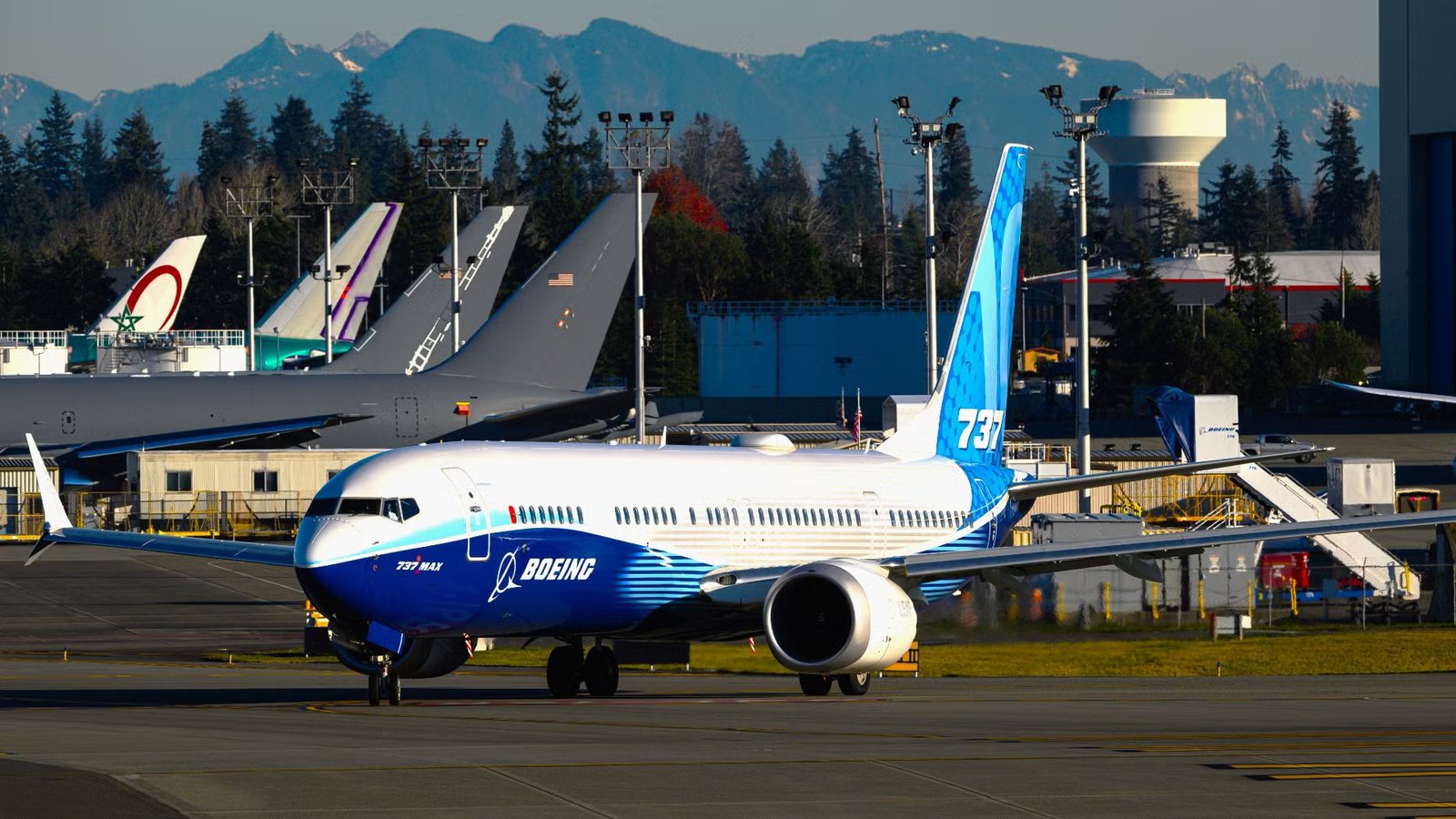
Boeing has just shared the full details of its financial results for the first quarter of 2026. While this thorough report contained all of the various facts and figures that you would expect, it also shed interesting light on the certification processes for the US planemaker’s delayed MAX 7 and MAX 10 narrowbody twinjets.
This new, increased level of clarity on the situation will reassure airlines around the world, which have collectively ordered in excess of 1,700 aircraft when the sales figures for the short-fuselage MAX 7 and stretched-fuselage MAX 10 are combined. With all being well, once certified, the first of these next-generation narrowbody twinjets should be delivered at around the same time as another heavily delayed  Boeing aircraft: the larger 777X.
Certification Is On The Horizon

A key reason behind the fact that Boeing is now able to project the certification and delivery timelines with more certainty is that the “737 MAX 10 began the Type Inspection Authorization 2 and made progress on this final phase of certification flight testing” in the first quarter of 2026. With this milestone in mind, Boeing stated in today’s results report that it is subsequently “[expecting] certification of the 737-7 and 737-10 [later] in 2026.”
Given the various delays that have plagued the development of the smallest and largest variants of the 737 MAX family, this light at the end of the tunnel will serve as a relief to both Boeing and its various airline customers. Following this certification, Boeing says that it “anticipates first delivery in 2027” for the MAX 7 and 10, with next year also being targeted for the 777X’s entry into service. Boeing CEO and President Kelly Ortberg said that:
“We’re delivering high-quality commercial and defense products and services, while increasing production to uphold our customer commitments and get back to the iconic global aerospace company that leads our industry.”
Who Has Ordered The MAX 7 & 10?

Despite the delays that the certification processes for the Boeing 737 MAX 7 and 10 have faced, as seen in the video below, airlines have been keenly adding the two types to their order books ever since they were put on the market. Indeed, ch-aviation notes that even the less popular MAX 7 has still racked up 289 orders. Of these, 257 are with Southwest Airlines, 28 are unassigned, and two apiece are with Ruili Airlines and SkyUp Airlines.
Meanwhile, interest in the larger 737 MAX 10 has boomed in comparison, with this aircraft being the closest alternative that the US planemaker is offering to Airbus’s game-changing long-range A321XLR narrowbody. All in all, ch-aviation lists 1,431 orders for the type, with its largest customers all having bought 100 or more: these include Alaska Airlines, American Airlines, Delta Air Lines, Pegasus Airlines, Ryanair, and United Airlines.
As far as size is concerned, the MAX 7 and 10 sit at opposite ends of the length spectrum. Indeed, Boeing lists the former at 35.56 m (116 ft 8 in) long, compared to 43.8 m (143 ft 8 in) for the latter. Meanwhile, the existing MAX 8 and 9 models slot neatly in between, with respective lengths of 39.52 m (129 ft 8 in) and 42.16 m (138 ft 4 in). Capacity-wise, the 7 can typically seat 138-153 guests across two classes, compared to 188-204 for the 10.

Boeing’s 737 MAX 10 Certification: The Unseen Human Effort To Restore Trust
Testing the uncertified aircraft involves a huge team that stretches way beyond the pilots flying the aircraft.
A Strong First Quarter As A Whole

Boeing’s confirmation that 2026 will finally be the year that the MAX 7 and 10 models receive their long-awaited certifications was one of several reasons to be cheerful that it detailed in its first quarter earnings report. Indeed, elsewhere, its backlog has now grown to a record level of some $695 billion.
This, the company explains, “includes over 6,100 commercial airplanes” that remain on order to its various airline customers worldwide, which will give it a good platform on which to grow going forward. The first quarter was also a strong one for deliveries, with 2026’s figure of 143 representing a 10% increase vs 2025.