dailynewsnblog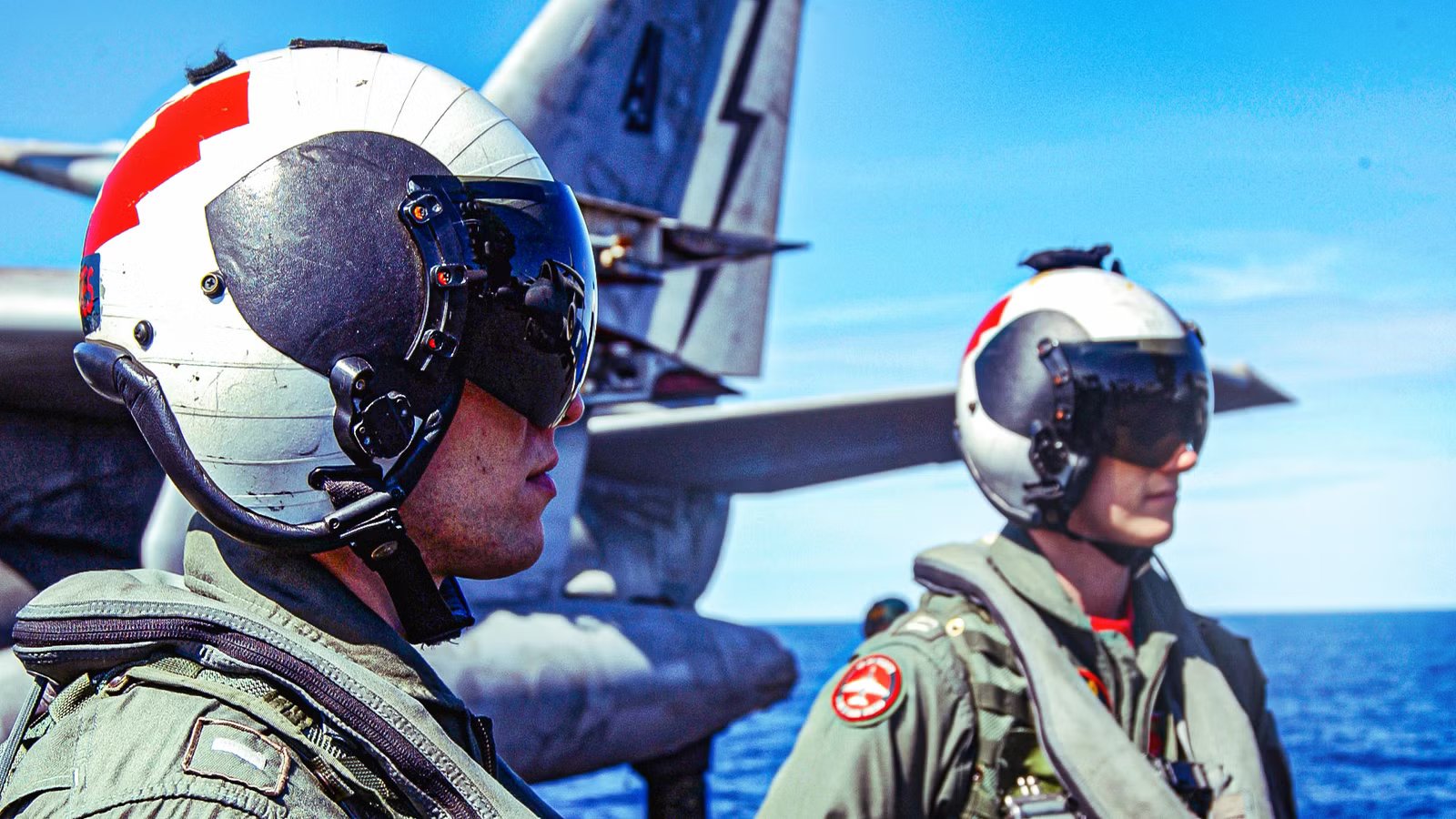
For many aspiring naval aviators, flying high-performance aircraft from aircraft carriers is one of the most demanding and prestigious careers in the US military. But while fighter jets, helicopters, and maritime patrol aircraft often steal the spotlight, pilot salaries in the US Navy are determined less by the type of aircraft flown and far more by rank and years of service. In 2026, a newly implemented 3.8% military pay raise has pushed compensation for senior naval officers to new highs, especially for aviators who continue to serve in the Navy’s upper leadership tiers.
Importantly, a Navy helicopter, fighter, or transport aircraft pilot of the same pay grade generally receives the same base pay and standard aviation incentive pay. The real salary differences come from rank progression, experience, and additional compensation such as non-taxable housing allowances (BAH), subsistence allowances (BAS), and aviation retention bonuses. This list ranks the five highest-paid US Navy pilot ranks in 2026 solely by pay grade, based on official military pay data and federal salary sources. Along the way, we will also examine how these senior aviators remain connected to flight operations even as they move into command and strategic leadership positions.
5
Captain (O-6)
$8,067-14,282 per month

Captains represent one of the most important leadership ranks in US naval aviation. Equivalent to a Colonel in the US Marine Corps or Air Force, Navy Captains are senior officers who frequently command aircraft carriers, aviation wings, or major operational units. Many aviators who reach this rank have spent decades flying aircraft such as the Boeing F/A-18E/F Super Hornet, the  Boeing P-8A Poseidon, or the Sikorsky MH-60R Seahawk before transitioning into strategic command roles.
According to FederalPay.org, a Navy Captain in 2026 will earn between $8,067.90 and $14,282.40 per month in base pay, depending on years of service. That translates to roughly $96,800 to $171,400 annually before allowances and bonuses are added. For aviators stationed in high-cost regions such as San Diego or Norfolk, housing allowances can significantly increase total compensation.
Although many Captains spend more time overseeing operational planning than physically flying aircraft, they remain deeply connected to aviation operations. Carrier Air Wing Commanders, for example, coordinate dozens of aircraft and hundreds of pilots during deployments. Many Captains are also highly experienced former test pilots or combat aviators with thousands of flight hours accumulated across multiple aircraft types and combat theaters. Their combination of operational experience and leadership responsibility explains why they rank among the Navy’s best-compensated aviators.
4
Commander (O-5)
$6,725-11,426 per month

Commanders occupy a particularly influential position in naval aviation because this is often the rank at which pilots receive operational squadron command. These officers typically lead strike fighter squadrons, electronic warfare units, helicopter squadrons, or maritime patrol detachments aboard carriers and at overseas bases. Unlike more senior admirals, commanders often remain closely involved in daily flight operations and may continue to fly regularly during deployments.
Federal salary data shows that Navy Commanders earn between $6,725.70 and $11,426.70 monthly in base pay during 2026. That corresponds to approximately $80,700 to $137,100 annually before accounting for housing allowances, subsistence pay, or aviation incentives. FederalPay.org Commander Pay lists the updated compensation figures reflecting the 2026 military pay raise.
The Commander rank is also where aviation incentive pay and retention bonuses become especially important. According to DFAS Aviation Incentive Pay Tables, experienced aviators can receive additional monthly aviation pay depending on years of aviation service. While these payments are far smaller than base salary, they are designed to encourage experienced pilots to remain in service rather than transition to civilian airline careers, where salaries for senior captains can be substantially higher.
Key Facts About Navy Pilot Pay In 2026
Factor | Impact On Salary |
Aircraft Type | No standard difference in base pay |
Rank & Years of Service | The biggest determinant of compensation |
Aviation Incentive Pay (AvIP) | Additional monthly aviation compensation |
BAH & BAS Allowances | Non-taxable compensation that can add tens of thousands annually |
2026 Military Raise | 3.8% increase effective January 1, 2026 |
Executive Pay Cap | Limits O-7 through O-10 compensation |
Beyond aviation squadrons, commanders may also command destroyers, frigates, or specialized expeditionary units. However, naval aviators at this level are often considered among the Navy’s most operationally seasoned leaders. Many have completed combat deployments over the Middle East, participated in freedom-of-navigation missions in the South China Sea, or supported NATO operations from aircraft carriers deployed worldwide. Their extensive operational experience continues to make them highly valuable assets to the Navy’s aviation community.
The US Air Force Pilots With The Highest Salaries In 2026
Discover the highest-paid US Air Force pilots in 2026, including ranks, bonuses, and total salaries for top-earning military aviators.
3
Rear Admiral (O-8)
$12,803-18,458 per month

Rear Admirals represent a senior “flag officer” level in the Navy hierarchy. By the time an aviator reaches O-8, they are no longer leading squadrons or air wings but are overseeing major operational organizations that involve thousands of personnel and large aviation assets. Rear Admirals may command carrier strike groups, naval aviation forces, or regional operational commands that shape global naval aviation strategy.
According to FederalPay.org Rear Admiral Pay, a Rear Admiral earns between $12,803.70 and $18,458.10 per month in base pay during 2026. This translates into roughly $153,600 to $221,500 annually before additional compensation. Meanwhile, Military-Ranks.org Rear Admiral Compensation estimates that total annual compensation, including allowances, may exceed $225,000.
Despite the administrative nature of their duties, many Rear Admirals remain strongly tied to aviation culture and operations. Numerous flag officers are former carrier strike leaders, test pilots, or combat aviators who accumulated thousands of flight hours earlier in their careers. Some continue participating in familiarization flights or operational inspections involving naval aircraft, although actual routine flying duties become increasingly limited at this stage.
The importance of aviation expertise at the Rear Admiral level cannot be overstated. Naval aviation plays a central role in US power projection, carrier strike capability, and maritime surveillance. Leaders with deep operational flight backgrounds are often tasked with shaping procurement decisions, pilot retention strategies, and future aviation doctrine. In recent years, senior naval aviators have also been heavily involved in integrating advanced systems such as unmanned carrier aircraft and next-generation fighter technologies into the fleet.
2
Vice Admiral (O-9)
$18,096-18,491 per month

Vice Admirals are among the most senior officers in the entire US Navy. These three-star flag officers hold some of the service’s highest operational and administrative commands, including leadership positions within fleet commands, naval aviation headquarters, and major combatant structures. Reaching this rank is exceptionally rare, especially for aviators, making it one of the most prestigious career achievements in military aviation.
Salary figures published by FederalPay.org Vice Admiral Pay show that Vice Admirals earn between $18,096.00 and $18,491.70 monthly in 2026. That corresponds to approximately $217,200 to $221,900 annually in base pay alone. Because military executive pay is capped under federal regulations, compensation differences between O-9 and O-10 officers become relatively small compared to lower ranks.
Many Vice Admirals who began their careers as pilots have extensive operational histories involving aircraft carrier deployments, combat operations, and multinational exercises. Some previously commanded carrier strike groups or entire numbered fleets. Their aviation backgrounds often prove invaluable when coordinating naval air power alongside the United States Air Force, NATO, or allied naval aviation units.
At this level, the role shifts almost entirely toward strategic leadership rather than active flying. Vice Admirals oversee force readiness, procurement priorities, deployment planning, and personnel policies affecting thousands of aviators. They may also play key roles in shaping the Navy’s future aviation capabilities, including sixth-generation carrier aircraft and unmanned systems. Even though they rarely fly operationally themselves, their earlier experience as aviators heavily influences the Navy’s long-term aviation direction.
Is It True That US Air Force Pilots With The Highest Ranks Earn Less Than Commercial Pilots?
This is certainly a fascinating financial question.
1
Admiral (O-10)
$18,491-18,808 per month

At the top of the Navy hierarchy sits the four-star Admiral rank, one of the most elite positions in the entire US military. Admirals oversee entire branches of naval operations, joint military structures, or combatant commands with global responsibilities. For naval aviators, reaching O-10 represents the culmination of decades spent progressing from junior pilot assignments to the very highest levels of military leadership.
According to FederalPay.org Admiral Pay, Admirals receive monthly base pay beginning at $18,491.70. However, because federal law caps military compensation for O-7 through O-10 officers at Executive Schedule Level II, actual maximum monthly pay in 2026 is limited to $18,808.20. NavyCS 2026 Military Pay Chart confirms the current pay ceiling established after the 3.8% pay increase took effect on January 1, 2026. That equates to roughly $225,700 annually in base salary before allowances.
Although Admirals spend nearly all of their time in strategic leadership roles, some remain qualified aviators and may occasionally participate in official flights under limited circumstances. Historically, several senior naval aviators who rose to four-star rank maintained strong ties to aviation communities throughout their careers. Their operational credibility often stems from extensive combat flying experience accumulated decades earlier during carrier deployments and wartime operations.
2026 Estimated Navy Pilot Compensation By Rank
Rank | Monthly Base Pay Range | Estimated Annual Base Pay |
Commander (O-5) | $6,725.70 – $11,426.70 | $80,700 – $137,100 |
Captain (O-6) | $8,067.90 – $14,282.40 | $96,800 – $171,400 |
Rear Admiral (O-8) | $12,803.70 – $18,458.10 | $153,600 – $221,500 |
Vice Admiral (O-9) | $18,096.00 – $18,491.70 | $217,200 – $221,900 |
Admiral (O-10) | Up to $18,808.20 | About $225,700 |
The salary structure highlights an important reality about Navy aviation careers: while tactical flying may define the early years of a pilot’s service, leadership responsibilities ultimately determine earning potential. A junior fighter pilot flying frontline combat aircraft may earn less than a senior helicopter pilot serving at a much higher rank simply because Navy compensation is fundamentally tied to pay grade and leadership level. As the Navy continues to face retention challenges from commercial airlines and private-sector aerospace employers, competitive compensation for experienced aviators remains a major priority for military planners.

![Southwest Airlines Launches 7 New Nonstop Routes From Its 5th Busiest Airport [Map & List]](https://dailynewsnblog.com/wp-content/uploads/2026/08/shutterstock_2509061189_cropped.jpg)