dailynewsnblog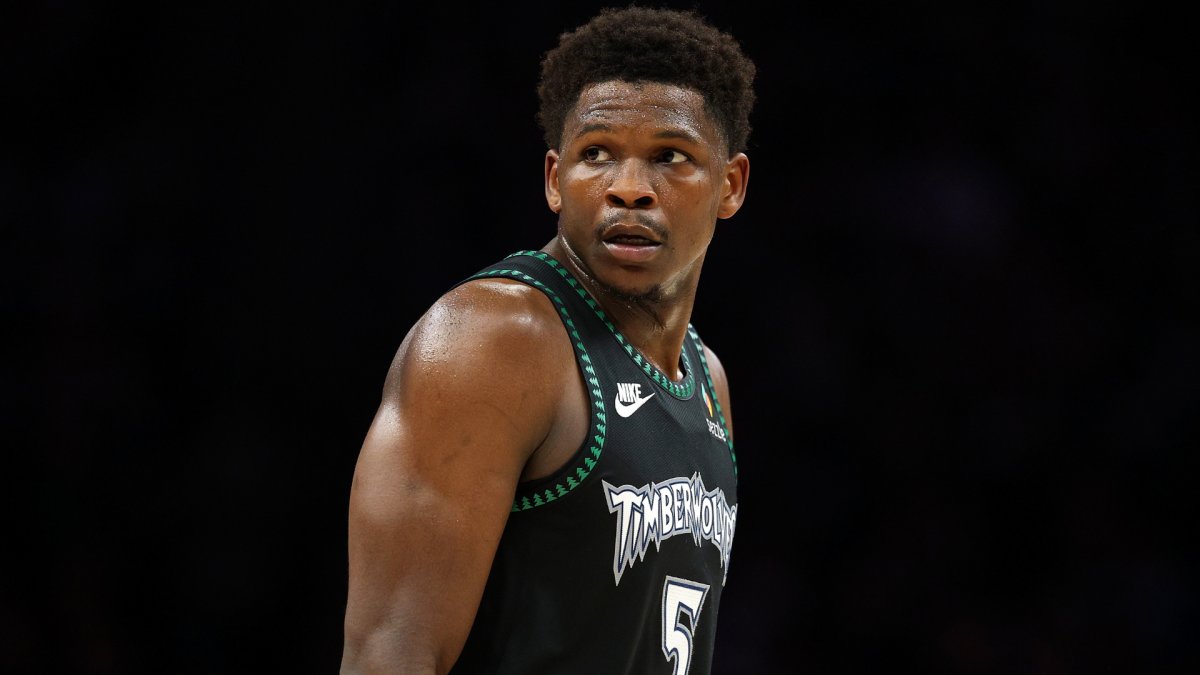
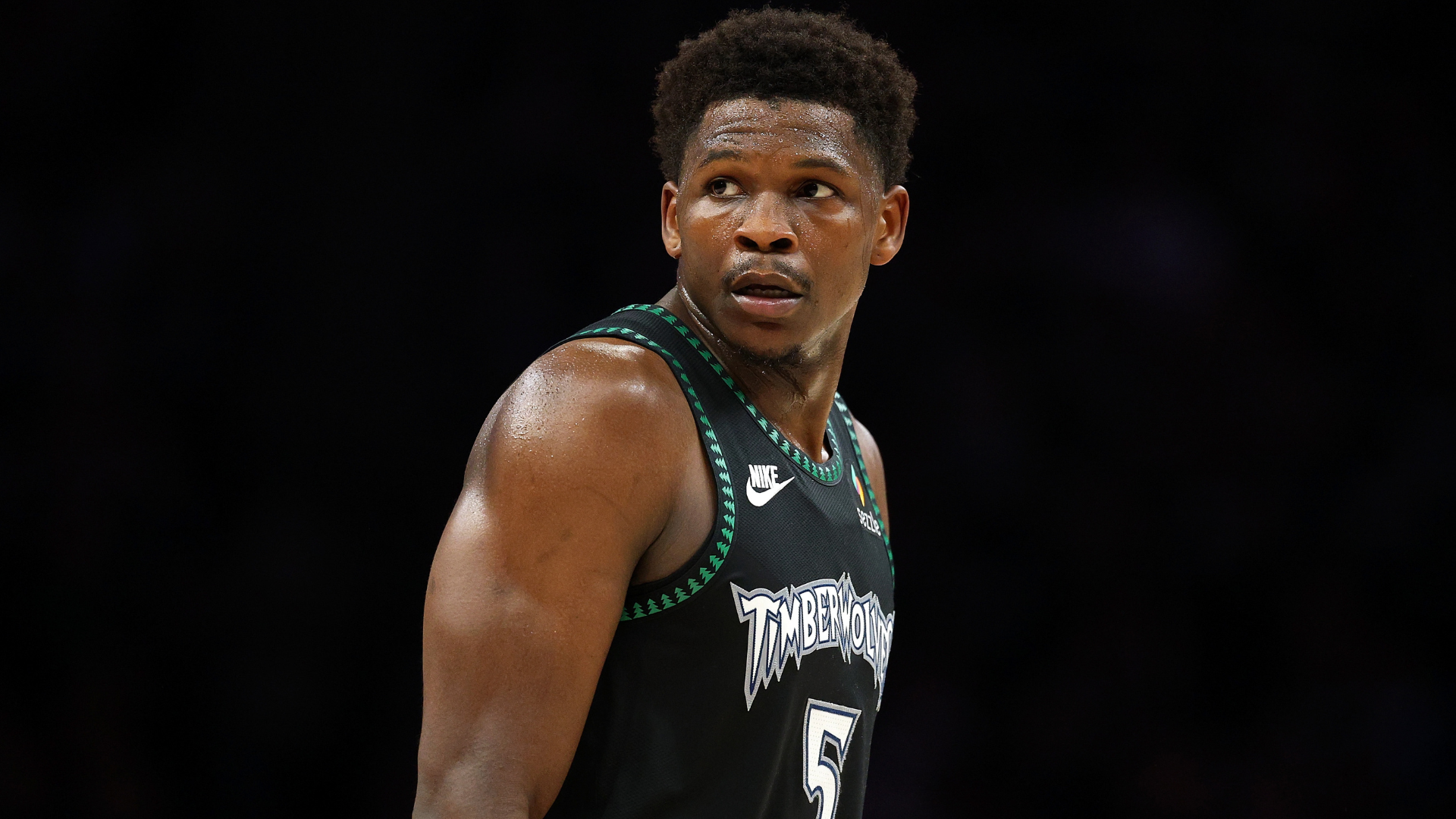
Always the bridesmaids, eh Minnesota? For the third straight season, the Timberwolves have outperformed playoff expectations. Their 2024 upset over the Denver Nuggets is one of the more memorable playoff series in recent memory. They reached the Western Conference Finals as a No. 6 seed a year ago, and they once again slayed Nikola Jokić in the first round this season before falling to Victor Wembanyama and the Spurs in six games in the second round. There is clearly something in the DNA of this team that translates to the postseason. As a group, they are playoff risers.
As a collection of individuals, they have lately seemed outgunned. Minnesota’s only legitimate shot at a championship came in 2024. They had home-court advantage in the Western Conference Finals. They’d played two overtime games against the eventual champion Celtics in the regular season and went 3-1 against Dallas in the regular season. But Karl-Anthony Towns had the most disastrously timed slump of his career. He shot 15 of 54 in Games 1, 2 and 3 against the Mavericks. That gave Luka Dončić enough room to squeak out three single-digit victories. Minnesota couldn’t recover. The Mavericks reached the 2024 NBA Finals.
Months later, Towns was gone. Julius Randle, Donte DiVincenzo and a first-round pick took his place in a move that was seemingly financially motivated. Minnesota was afraid of paying Towns supermax money with Anthony Edwards and Rudy Gobert making the max as well and a new Jaden McDaniels deal looming. The ups and downs of Towns’ journey with the Knicks have been well-chronicled. At various points, Minnesota has been widely declared the trade’s winner.
Yet they’ve had an undeniably Towns-shaped hole in their roster in their past two playoff defeats. The Timberwolves and Thunder played only two games in last year’s Western Conference Finals decided by less than 25 points in Oklahoma City’s favor. Randle scored 11 combined points in those two competitive games. Through the first five games of Minnesota’s loss to San Antonio this year, Edwards was the only Timberwolf to average more than 15.2 points per game. Randle, brought in to replace Towns, was at 14.8.
Beating Oklahoma City last year and San Antonio this year wasn’t really a reasonable expectation for the Timberwolves in either series, and you can’t boil down those defeats to any single factor more complex than “those teams were way more talented.” But if you were to point to the single thing Minnesota most lacked, it would probably be a second, genuine offensive star. Without one, those stout opposing defenses could key in further on Edwards. He averaged just 23 points in the Oklahoma City series and resolved to work on his mid-range and post games to give himself more ways to score tough, contested points. He improved significantly on those fronts this season, but played hurt against the Spurs. He surely would’ve been better healthy. He also probably would have benefitted from the presence of another All-Star level scorer.
Missing KAT?
The scorer the Wolves gave up is currently lighting the Eastern Conference on fire. The Knicks have won their last seven games by 185 combined points. Through 10 games, Towns has a playoff Box Plus-Minus of 14.4. Forget about leading this year’s postseason. According to Mat Issa, only three other players have ever done that across a postseason that included at least 10 games: 2009 LeBron James, 1991 Michael Jordan and 2017 Kawhi Leonard. Pretty good company!
The Wolves, again, chose depth. Circumstance has slowly chipped away at that depth. Nickeil Alexander-Walker walked after last season as the Timberwolves elected to duck the second apron. He immediately became the NBA’s Most Improved Player. Mike Conley will be 39 at the start of next season. He overperformed in this postseason, but he’s no longer a starting-caliber player. DiVincenzo tour his Achilles tendon against Denver. He’ll miss all or most of next season.
The Timberwolves have done an admirable job of recovering. Ayo Dosunmu proved a critical Alexander-Walker replacement. Terrence Shannon Jr., a late first-round pick, gave them good minutes this postseason. But without someone doing the heavy offensive lifting alongside Edwards, it’s just hard to imagine Minnesota ever really competing with the Spurs or Thunder. That’s where Tim Connelly’s two other big swings enter the equation.
The Rudy Gobert (and Rob Dillingham) trades in hindsight
The Rudy Gobert trade, in a vacuum, was good. It turned the Wolves into perpetual bridesmaids after decades of never getting invited to the wedding. It’s also the single biggest reason they may not get to be the bride.
Gobert has lived up to every reasonable expectation Minnesota could have had for him. This has been, bar none, the most successful era in franchise history, and Gobert’s defense is among the drivers of Minnesota’s “playoff riser” track record. He’s vital to their culture. He’s generated star-level value. And the cost of acquiring him was still simply too great.
That has less to do with the actual assets traded — though Walker Kessler becoming a reasonable Gobert facsimile at a tiny fraction of the cost certainly stings — than it does the opportunity cost of the deal. Having Anthony Edwards unlocks potential trade acquisitions that would otherwise be unfathomable to a market like Minnesota. Had the Timberwolves kept their picks, his recruiting power would have opened just about any star acquisition door in basketball. We got reports in February that Giannis Antetokounmpo wants to play with him. That door, at least without the inclusion of rising star Jaden McDaniels, is probably closed with those picks gone.
The Timberwolves made an all-in push when Edwards was 20. That push got him deep into the playoffs far earlier than many of his contemporaries and lifted the franchise to previously unreached heights. But the trade also nudged Towns out the door and seemingly placed a cap on the upside of the roster they’d be putting around Edwards in his mid-20s. He’s 24 right now, probably not even at his peak. Yet his next two highest-paid teammates are 33 (Gobert) and 31 (Randle), likely trending down, and his team has almost no draft capital with which to build around him. Without the tools to go get Edwards a genuine, star-level sidekick, Minnesota appears, at least for the time being, locked behind Oklahoma City and San Antonio in the Western Conference pecking order.
Lead Timberwolves executive Tim Connelly seemingly foresaw these potential issues and took a somewhat drastic step in order to try to avert them. In 2024, he traded his unprotected 2031 first-round pick and a top-1 protected first-round swap in 2030 to snag the No. 8 overall pick. He used it on Rob Dillingham.
The concept was sound. Because of the Gobert trade, Minnesota no longer had the assets to trade for a traditional, veteran star when one would eventually become needed, and because of their salary crunch, they wouldn’t have been able to afford bringing in such a player anyway without slicing through the identity of the roster they’d already built. So they took a big swing on Dillingham, betting that they could develop him into the long-term No. 2 scorer that they would need, and thanks to the four cheap years on his rookie deal, they could do so without his presence interrupting the roster they already had.
That bet went bust. It’s too early to say that Dillingham simply isn’t that caliber of player, but he wasn’t in Minnesota. The Timberwolves didn’t trust him enough for a substantial role. He wound up becoming the bait to get Dosunmu as an Alexander-Walker replacement at this year’s trade deadline.
And that takes us to where the Timberwolves sit today. They are only around $26 million below next year’s projected second apron line, but with only 10 roster spots accounted for. One Dosunmu is re-signed, they’re probably going to come close to that line. Their only tradable future first-round pick this offseason is their 2033 selection. They are therefore mostly bereft of financial flexibility and draft capital to move with right as the second-best player in franchise history (at least) hits his prime. If the goal is merely to remain in the mix, the Timberwolves are fine where they are. If the goal is to improve enough to compete seriously with the Thunder and Spurs and ultimately win a championship, circumstances are getting quietly dire.
What’s next and potential targets
Connelly may take another run at Antetokounmpo. He’s among the most aggressive general managers in basketball, he’s not going to sit still. But the only asset Minnesota has that could seriously move that needle is McDaniels, and he’s the best player they have whose age is aligned with Edwards’. In addition to the depth you’d have to sacrifice in going after Antetokounmpo, you’d be giving up a chance for Edwards and McDaniels to be franchise pillars for the next decade.
Given the offensive steps McDaniels took this season, that would be an awfully bitter pill to swallow. He’s not the No. 2 option they need, but he doesn’t need to be since his value is primarily derived from being one of the NBA’s best perimeter defenders. That he’s consistently creating his own shots and making 3s now is more than enough. He’s a star in his role even if he isn’t a star in the broader NBA context. Turn him and a bunch of other stuff into Antetokounmpo, and Minnesota would be left with perhaps the NBA’s best duo, but serious questions virtually everywhere else on the roster.
Is that worthwhile for a 31-year-old with injury issues? It’s debatable, and would depend on how much faith Minnesota has in its ability to successfully fill in the margins around those two. As Antetokounmpo reportedly prefers to stay in the Eastern Conference, though, it may be out of their hands.
Here’s the likelier path. The Timberwolves elect to keep the basic foundation of their roster together: Edwards as the centerpiece, McDaniels and Gobert as the defensive cornerstones, Dosunmu and Naz Reid as their bench core. From there, they consider pooling their few remaining valuable assets — that 2033 first-round pick, the No. 28 pick this year, their rookie contracts like Shannon and Joan Beringer — into a high-risk, high-reward addition that could potentially become that second option. The matching money would ideally start with Randle and potentially include DiVincenzo simply because of his injury.
The obvious name in this regard would be Ja Morant. The fit here is iffy. Shooting was never quite Minnesota’s strength even with DiVincenzo. Morant needs the ball in his hands to provide offensive value, and he’s rarely contributed much of anything defensively. The Timberwolves pride themselves on their defensive culture, and they’re not going to be overly eager to take the ball away from Edwards. Whether it’s Minnesota or somewhere else, Morant is about as all-or-nothing as an acquisition gets. There is a well-below 50% chance he recaptures the enormous rim pressure that made him a star, stays healthy and stays on the straight and narrow. If he does? He’s a superstar again. If he doesn’t, given his lack of role player skills, he’s an overpaid and underqualified supporting piece.
If you’re looking for a better basketball fit, the swing would be Kyrie Irving. We don’t yet know what Masai Ujiri plans to do with him, but he’s indicated that aside from Cooper Flagg, virtually everything in the organization is up for evaluation. Dallas is similarly asset-thin, as it owes out its first-round picks between 2027 and 2030. Irving would be a chance to replenish that base for Flagg’s timeline. He shoots and is at least capable of scaling up defensively in big moments. He’s also 34 and coming off of a torn ACL. If Minnesota tries this and it doesn’t work, it’s a borderline disaster.
Here’s an under-the-radar option: now that San Antonio knows Dylan Harper is bound for future stardom… how eager would the Spurs be to get off of the four-year max contract it owes to De’Aaron Fox? That probably depends on how the rest of their postseason goes. Minnesota was reportedly interested in Fox at last year’s trade deadline. He comes with some of the same theoretical concerns that Morant does, but not to nearly the same extremes. He’s not a good shooter or defender, but he’s functioning just fine on a team that plays great defense and has plenty of other ball-handlers.
This is probably as good as it gets when it comes to win-now star additions that don’t completely alter the fabric of the roster. The Timberwolves just don’t have the firepower to trade for anyone too much more exciting. That’s the alternative path here. If Minnesota determines it has no path to beating Oklahoma City or San Antonio in the next year or two, maybe now is the time to retrench.
That obviously wouldn’t mean blowing up the roster, but there is a deceptively young core here. Edwards, McDaniels, Reid, Dosunmu, Shannon, Beringer, Bones Hyland and Jaylen Clark are all 26 or younger. Perhaps the move here is seek value for the older players — Gobert, Randle, DiVincenzo if someone wants to take a flier on him returning next year or just get his Bird Rights for 2027 free agency — so that in a few years, they’re better-suited to take another real, big swing.
How much value is really out there for those players? Gobert just played the best defensive series anyone ever has on Jokić. Even at 33, he’d likely fetch a decent first-round pick. Randle is harder to peg, but lottery reform probably helps him in this regard. He’s a regular-season floor raiser, someone who takes a lot of shots and needs the ball in his hands a lot. He’s not good enough to do that for a true contender, but now that there’s suddenly value in winning 35 games, more teams might be interested.
Minnesota probably won’t ever regain the asset flexibility it spent on Gobert. That ship has sailed. But if they take a step back for a couple of years, quite a bit could open up for them. Their 2033 pick becomes tradable this offseason, and their 2035 pick unlocks two summers from now. If they’re mediocre in 2028, they can benefit from lottery reform since that’s one of the few remaining picks of their own that they still control. They are two years below the second apron away from unfreezing their 2032 pick. By then, they’ll have accumulated enough tradable draft capital combined with whatever they get for trading the old guys to potentially dive back into the deep end of the star trade pool.
Who knows? Maybe the NBA expands in the next few years and Minnesota gets to move to the Eastern Conference. There’s no shame in taking the back door into the Finals. Towns may do that in New York this June.
Getting Edwards on board with stepping back would likely be a tough sell. He’s extension eligible this offseason, though he likely won’t sign since he’s not yet supermax eligible. He needs to sign off on any plan. He’s both young enough to justify a step back and good enough to justify a step forward.
The Timberwolves will need to decide on one of those paths, because there’s no path to the top of the West for this group. They weren’t competitive with the Thunder last year, and they would’ve lost to the Spurs in five were it not for an outlier Wembanyama ejection this season. Their plucky playoff over-performance just isn’t enough to overcome the substantial talent gap between them and the two best teams in the NBA.