dailynewsnblog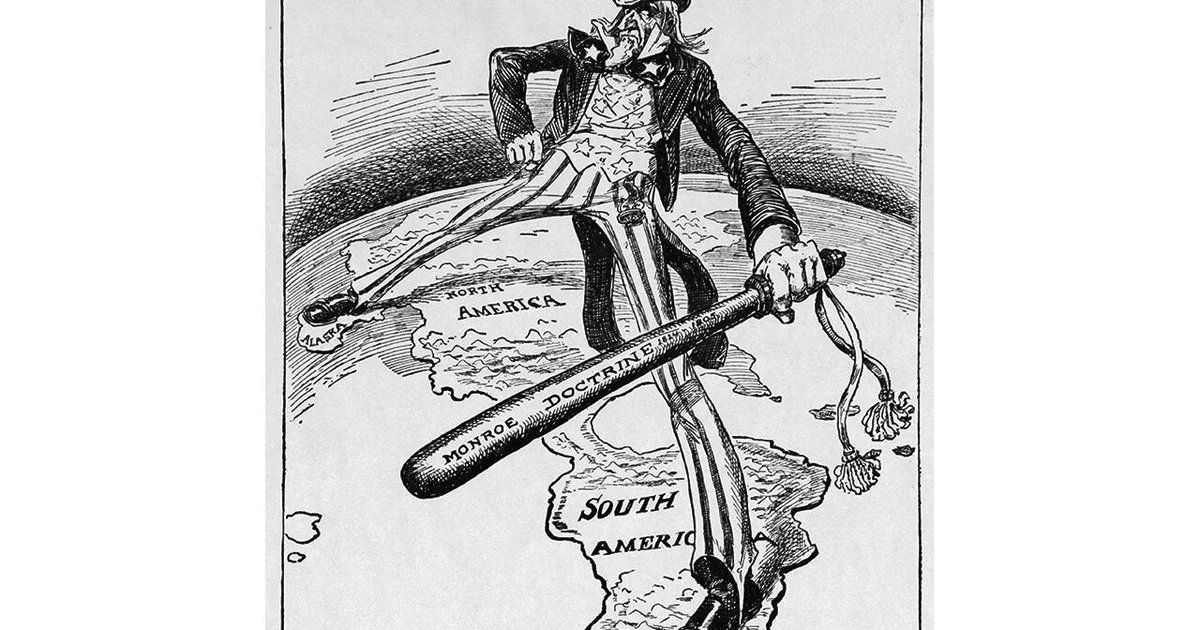
It’s not every day that a 202-year-old address to Congress goes viral. Yes, the Monroe Doctrine (that thing you learned about in high school) is suddenly a hot topic.
Historian Jay Sexton is author of a book on the Monroe Doctrine, and now his phone is blowing up: “My five minutes of fame turned into a week of fame,” he said.
Hill and Wang 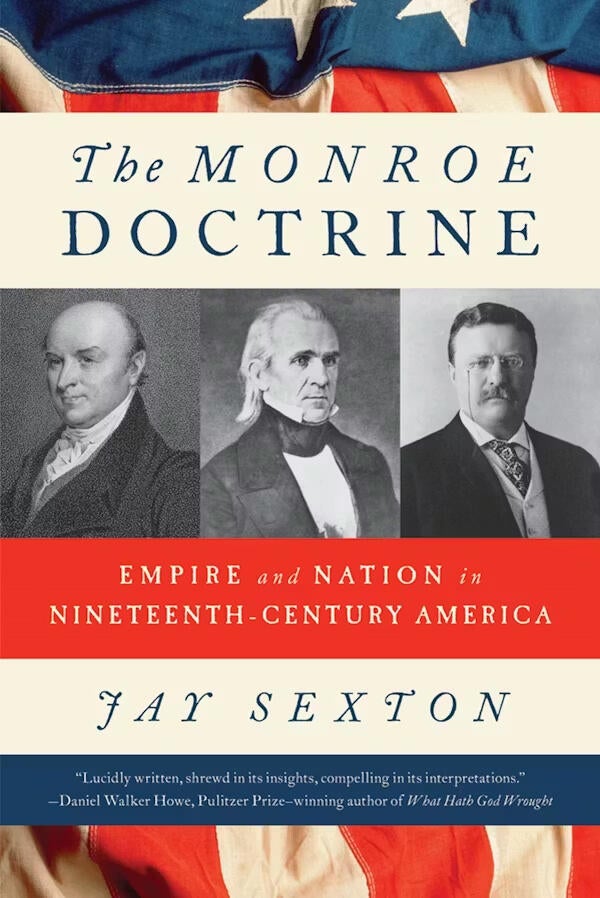
Sexton wrote about how just three paragraphs in an 1823 address by our nation’s fifth president, James Monroe, have been used to justify U.S. actions in Latin America ever since. Monroe’s original message was to Europe: “Stay out of the Americas!”
“It wasn’t a pronouncement of law or statute,” said Sexton. “It was simply a statement made by a president to Congress about what foreign powers could not do in the Western hemisphere. That’s it.”
It was decades before that statement would be ordained a “doctrine.” President James K. Polk invoked it to justify war with Mexico in 1846, and expand the U.S. by nearly half.
Cut to 1904, and President Teddy Roosevelt brandishing his big stick, proclaiming his own corollary to the Monroe Doctrine. Sexton said, “He’s the key figure. When Roosevelt looks at the Caribbean and Central America, he sees instability. He sees concerns that the European rivals might intervene. And he says in order to prevent that from happening, the United States needed to take preemptive action of its own.”
Bettmann Archive/Getty Images 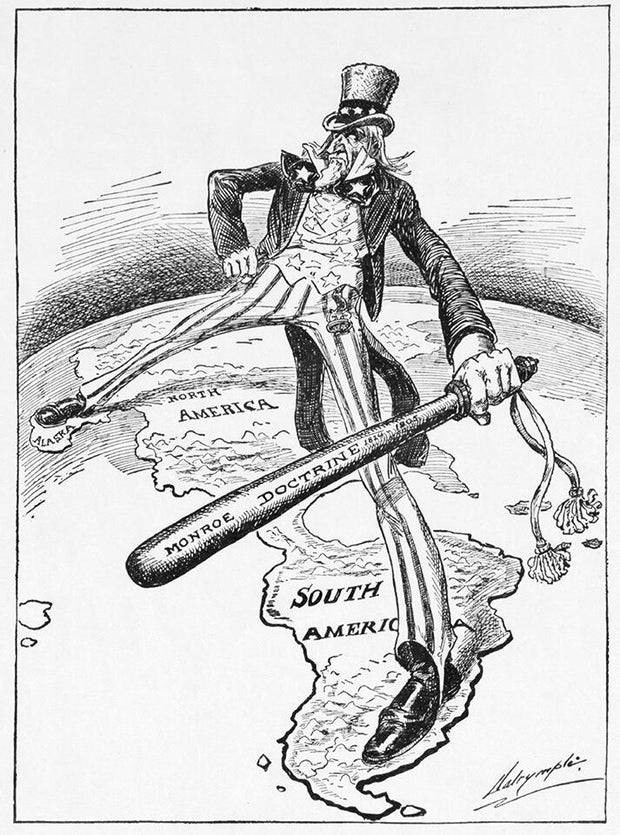
I asked, “Is part of the justification, ‘Well, we kept the Europeans out of this hemisphere, so you have to keep your house in order – or we’ll do it for you’?”
“That’s very much how Roosevelt put it,” Sexton replied.
Enter the U.S. Marines, who by the 1920s were “boots on the ground” in half a dozen Latin American and Caribbean countries, attempting to stabilize them, and – this is crucial – protect U.S. business interests, from bananas in Honduras, to banks in Haiti.
But these occupations soon became bloody quagmires, with hundreds of military and tens of thousands of civilian casualties. “They’re known as the Banana Wars,” Sexton said. “These are the forever wars of their era. They begin to become very, very unpopular.”
The Banana Wars ended with the U.S. withdrawal from Haiti in 1934. And after World War II, the Monroe Doctrine was barely mentioned. In 1962, when the Soviets sent missiles into Cuba, according to Sexton, JFK had this to say: “The Monroe Doctrine, what the hell is that?”
But now, it’s back.
In discussing last week’s incursion into Venezuela, President Trump has cloaked his foreign policy in a once-again revived Monroe Doctrine: “Monroe Doctrine, we sort of forgot about it. It was very important, but we forgot about it,” Mr. Trump said. “We don’t forget about it anymore.”
For more info:
Story produced by Mark Hudspeth. Editor: Chad Cardin.