dailynewsnblog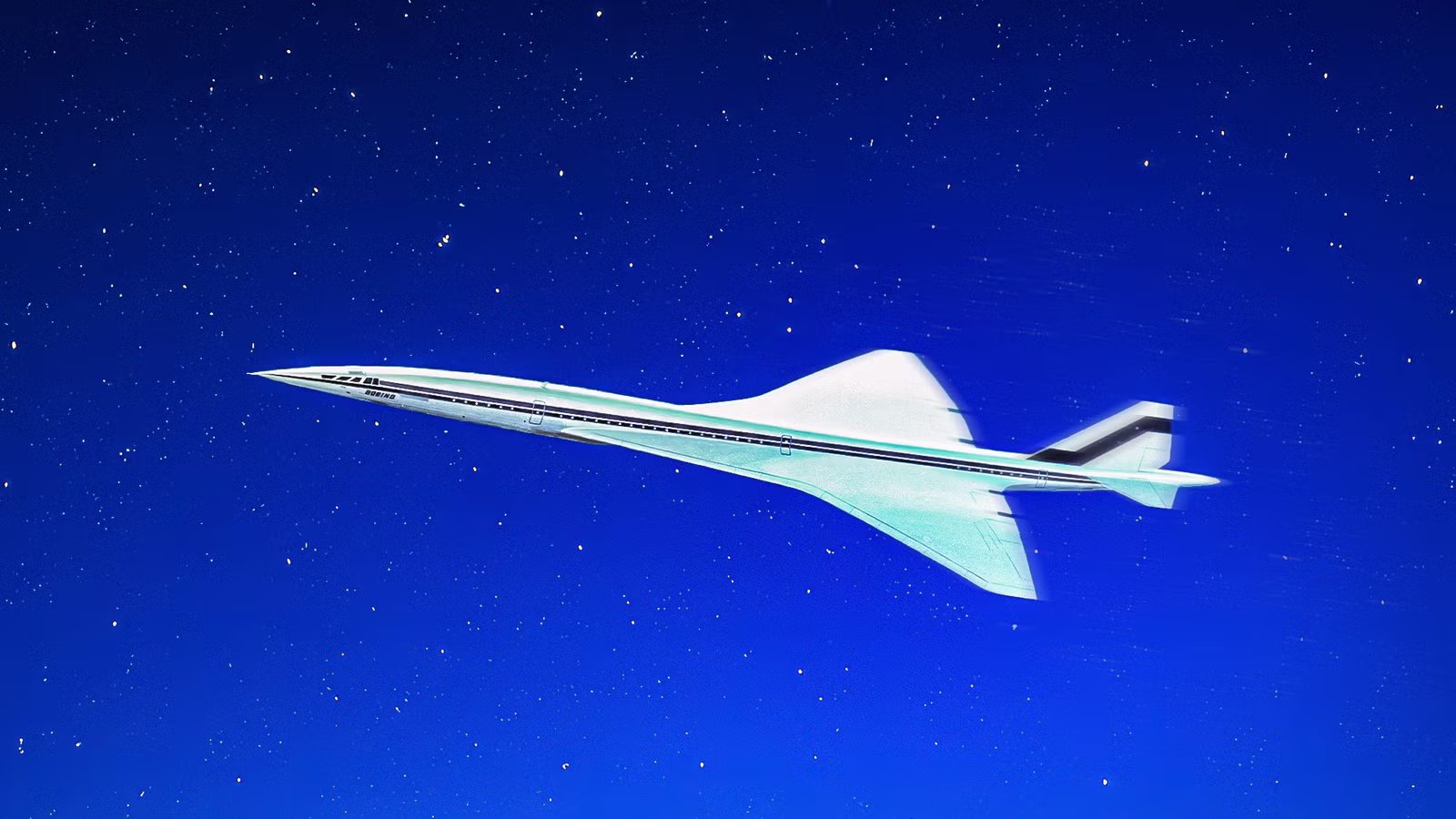
Shooting For The Moon: Boeing’s Ambitious 2707

One of the most dramatic moments in the build-up toward the creation of the Boeing 2707 came in May 1963. Juan Trippe, the visionary behind the Boeing 747 and head of Pan American World Airways, signed an option to purchase eight Concordes and shocked Washington. Fear on Capitol Hill rapidly began to mount that US airlines could put American plane makers out of business if they began buying the next generation of supersonic jetliners from European makers.
Just days after Pan Am’s announcement, President John F. Kennedy acted. On June 5, 1963, during a speech at the US Air Force Academy, Kennedy officially launched the NSTP. The FAA issued a request for proposals, prompting a fierce design competition between Lockheed’s L-2000 delta-wing SST and the Boeing Model 733 or 2707. Boeing won the government contract in 1966 based on a radical variable-geometry design.
SSTs were expected to be the natural successors to the subsonic jetliners of the 1960s. Boeing believed that the 747 would be a bridge aircraft to this inevitably upcoming era of civil aviation. As the first wide-body and double-decker jet liners ever built, they were intentionally made to be easily converted into freighters for that very reason. And having been the first to produce this iconic airliner, Boeing appeared to be confident that it could deliver a superior SST.
The Swing Wing Boeing Fails To Launch

The 2707 was intended to fly at speeds between Mach 2.7 and 3.0 while carrying around 250 or 300 passengers, compared to a 100-seat capacity and Mach 2.0 top speed of the Concorde. The swing wing design of the Boeing SST was intended to make it more efficient than the Concorde at both supersonic and subsonic speeds as well. Compounded by financial and environmental objections, this government-mandated push to violently out-spec the Concorde ultimately doomed the project.
The 2707 wings were meant to sweep forward at 20 degrees for high-lift, stable handling during takeoffs and landings, and then sweep back to 72 degrees for supersonic cruise. This grand concept quickly ran into severe engineering roadblocks. The massive titanium hinges and hydraulic actuators needed to sweep the wings added an unacceptable amount of ‘bloat,’ or structural weight. Moving the wings also necessitated a very complex fuel system to control the aircraft’s aerodynamic center.
Every extra pound of mechanism reduced passenger capacity, but titanium is notoriously difficult to machine and weld. The Lockheed SR-71 Blackbird, a fraction of the 2707’s size, is notorious for the problems its production produced. Engineers struggled to guarantee that the massive wing pivots wouldn’t suffer metal fatigue and snap after routine flight ops. By 1968, Boeing realized the swing-wing design was a mathematical impossibility, and it was getting so heavy that it would likely lack the range to cross the Atlantic Ocean.
What We Know About The Mysterious Supersonic Lockheed Martin X-59 Quesst
Is the next Concorde on the way?
Delta Wing Desperation: Back To The Drawing Board

Boeing scrapped the swing-wing entirely. Under intense pressure from the FAA, they pivoted to a classic, fixed delta-wing layout similar to the Concorde, but greatly scaled up. While more conventional, the huge SST’s design still featured mind-boggling specifications, including a double-articulated drop nose and nearly pure titanium construction, like the SR-71. The plane was to be powered by four massive General Electric GE4 nine-stage, single-shaft, axial-flow turbojets, each producing 68,600 pounds of thrust with afterburners.
Like Concorde, the long, pointed nose obstructed the pilots’ view of the runway during takeoff and landing. Boeing’s design went a step further, featuring a double-hinged nose that folded downwards in two places to maximize visibility. It featured a length of 318 feet (97 m), longer than a Boeing 747, and a wingspan of 174 feet (53 m). It was designed to carry up to 300 passengers in a wide-body, 2-3-2 seating arrangement.
Because aluminum weakens at the temperatures generated by Mach 2.7 flight, the entire airframe had to be built from titanium, requiring entirely new manufacturing methods to be invented from scratch, just like the notoriously complex, expensive, and difficult to maintain SR-71. On top of the issues with the airframe and fuselage manufacturing, the powerplants were the largest turbojet engines ever created. Derived from the canceled North American XB-70 Valkyrie supersonic bomber program, the GE4 consumed fuel at an astronomical rate. Yet, even with all these engineering obstacles, it was an operational complication that spelled the program’s demise in 1971.
Why The SR-71 Blackbird’s Titanium Airframe Will Be Nearly Impossible To Replicate
The fallout of shuttering Skunk Works’ unique factory.
Physics Always Wins: The Sonic Boom Dilemma

The failure of the Boeing 2707, the economic struggles of the Concorde, and the collapse of other SST programs all share a common denominator: the problem of sonic booms. The intensity of a sonic boom is directly tied to the aircraft’s weight and altitude. Because the Boeing 2707 was designed to be twice as heavy as the Concorde, its sonic boom was projected to be loud enough to break structural glass, crack plaster, and terrify livestock.
No matter how much Boeing refined the wings, they could not design around the laws of physics. Because the 2707 was so massive, the sonic boom it generated on the ground was deafening. During test flights of smaller supersonic aircraft over Oklahoma City, the pressure waves shattered windows and terrified residents. Realizing the 2707 would cause widespread property damage, the US government banned commercial supersonic flight over land.
While the British-French Concorde successfully flew commercially from 1976 to 2003, it suffered from identical overland restrictions that turned it into a financial black hole. Denied permission to fly supersonic over the US, Europe, India, and much of Southeast Asia, Concorde was forced to fly at inefficient, subsonic speeds over land. This burned massive amounts of fuel, destroying its speed advantage on any route that wasn’t strictly over the Atlantic Ocean.
30 Years On: When Concorde Set A Speed Record For A Round-The-World Flight
Remembering a milestone in the career of the fastest airliner to ever grace the skies.
A Paper Plane Made For An Era That Never Came

The development of the 2707 and Concorde had the opposite impact that the government and planemakers expected. These programs convinced the aviation industry that speed is not worth the astronomical costs, while efficiency and capacity are highly profitable. The collapse of the SST dream paved the way for the Boeing 747 to reshape commercial aviation. Similarly, the SR-71 proved to be the only plane of its kind ever made, and although it did endure for decades in limited service, no jet has ever been made to truly succeed as an ultra-fast spy plane.
Boeing executives were so certain that the supersonic 2707 would dominate the skies that they treated the development of the subsonic Boeing 747 as a backup project. But the 747’s immense capacity allowed airlines to slash ticket prices, giving birth to mass global tourism. Its efficiency and opulence earned Boeing’s jumbo jet the moniker ‘Queen of the Skies.’ The 747 wasn’t just the flagship of Pan Am; nearly every carrier in the world sought to have at least one in its fleet, becoming the definitive airframe of the era.
By the late 20th century, the military also phased out ultra-fast jets like the SR-71 and XB-70 for slower, less complex, and far more efficient platforms due to glaring limitations. The incredibly complex and costly production and maintenance of these jets was the first strike against them. Meanwhile, their speed, which allowed them to outrun enemy air defenses, also meant they had an incredibly short window in which to observe targets. That severely limited their actual tactical utility, and the military made the same pivot as the commercial industry, opting to make more efficient and versatile platforms as stealth technology proved a better investment.
Boom Vs Concorde Vs Tupolev: Supersonic Passenger Jets Compared
Both blazed a supersonic trail that Boom’s Overture now aims to surpass, but how do they compare?
SSTs Reborn: NASA’s X-59 QueSST

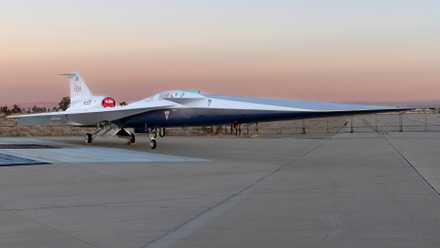
NASA and Lockheed Martin Skunk Works have undertaken a joint project to develop the next era of SST airliners as well as supersonic military aircraft. The X-59 uses an ultra-elongated, 30-foot needle nose and a top-mounted cockpit with zero forward-facing windows. The extreme geometry prevents shockwaves from coalescing as they travel down the airframe. Instead of a violent boom, people on the ground hear a muffled ‘sonic thump.’
The plane made its first flight on October 28th, 2025, when it took off from Palmdale and flew to Edwards Air Force Base. Since then, testing has continued to progress with the plane nearing its first supersonic test flight. NASA hopes to fly over American communities to gather public data about the impact of the significantly quieter supersonic overflight. The hope is to allow for a change in international airspace regulations that will lift the blanket overland ban on supersonic flight and allow for a second era of SST development.
A private startup based in Denver, Colorado, Boom Supersonic, is leading the charge from the private sector. Unlike the Boeing 2707, their prototype aircraft aims to seat just over 60 passengers and fly at only Mach 1.7 on transatlantic routes. Although the new jet will be smaller than the Concorde and slower, it aims to cut travel time across ‘the pond.’
Boom already holds an order book of 130 aircraft, including non-binding commitments and pre-orders from major legacy carriers like United Airlines, American Airlines, and Japan Airlines. Although it will not be approved for overland flights at supersonic speed until the NASA data is delivered to regulators and airspace rules change, its developments paint a hopeful picture for the future of SSTs, thanks to modern engineering solutions.