dailynewsnblog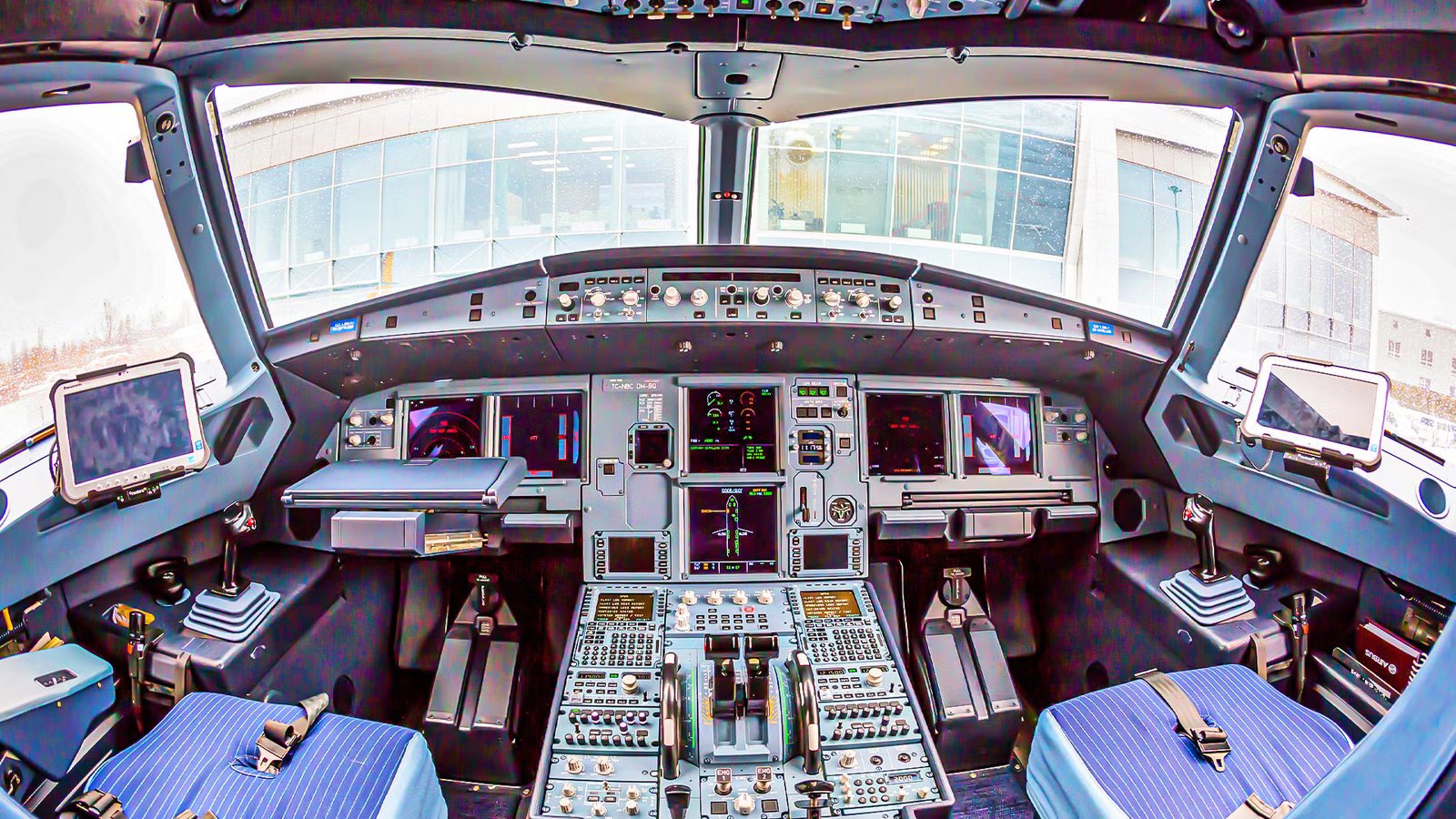
Airbus versus  Boeing: this aviation rivalry is longstanding and clearly evident in many respects. While passengers often focus on cabin comfort or airline branding, pilots and enthusiasts are drawn to the more technical side. Today, we are going to talk about the cockpit. The Airbus A320 and Boeing 737 are two of the most successful narrowbody aircraft families in history, but their cockpits embody vastly different design philosophies. In our article, we will examine those differences in every detail, from what is visible on the ramp to the tactile and technological distinctions pilots face on every flight.
Understanding cockpit design isn’t just trivia (but you’ll have a chance to play trivia towards the end of the article). The cockpit design reveals how manufacturers think about automation, pilot authority, ergonomics, and human-machine interaction. Airbus and Boeing arrived at modern flight deck concepts through different historical paths, and the A320 and 737 embody those choices. By comparing these aircraft side by side, we gain insight into how engineering culture, safety philosophy, and pilot workflow shape the machines that carry millions daily.
Exterior Clues: Nose Shapes & Windows Reveal Different Philosophies

Even before stepping inside, trained eyes can distinguish an Airbus A320 from a Boeing 737 by subtle but telling external features. The cockpit windows, nose contour, and overall facial “expression” of each aircraft reflect decades of design evolution. These distinguished features weren’t aesthetic decisions, but they were rooted in manufacturing lineage, aerodynamic philosophy, and structural priorities. The A320’s nose is often described as smoother and more rounded, giving it a modern, sculpted appearance.
Aviation discussions highlight how Airbus adopted a clean-sheet design philosophy in the 1980s, allowing engineers to optimize cockpit geometry without legacy constraints, as discussed on the Aviation Stack Exchange. By contrast, the 737 traces its structural ancestry to the 1960s. Boeing preserved design continuity across successive generations, resulting in a flatter, more angular, and even more aggressive cockpit profile, similar even to the grandpa of all Boeing jets – the B-52.
This similarity is not a coincidence. In fact, all classic Boeing jets, namely the 707, 727, and 737, shared the same nose cone, referred to as ‘Section 41’ by the Boeing factory, that remained almost the same over time, and became a recognizable ‘face’ of most Boeing jets, with a distinguished, more pointy nose. Enthusiasts also frequently note that the 737’s window shape appears more “eyebrowed” and squared, a recognizable trait rooted in earlier Boeing family DNA.
Window geometry also hints at ergonomic priorities. Airbus opted for large, forward-angled panes to maximize pilot visibility while harmonizing with the fly-by-wire cockpit layout. Boeing’s windows evolved incrementally to preserve manufacturing commonality and pilot familiarity, which is a hallmark of the company’s design philosophy. Both manufacturers intentionally retain visual family identity across models, reinforcing brand lineage and training continuity.
Sidestick vs Yoke: A Philosophical Divide In Pilot Control

When you step into either cockpit, the first striking difference becomes immediately clear: the control interface. Airbus places a sidestick beside each pilot, while Boeing retains the central yokes — a design decision that symbolizes two radically different human-machine philosophies.
The A320’s sidestick was revolutionary when it was introduced, freeing up space and encouraging a more automation-integrated workflow. The implementation of the sidestick also allowed engineers to install a folding table for pilots to write or eat when necessary. Airbus engineers viewed flight control as a managed system in which computers interpret pilot input within protective envelopes. The sidestick acts as a command device rather than a direct mechanical linkage. Boeing’s yoke, meanwhile, preserves a tactile connection to traditional control mechanics. Although modern 737 variants incorporate advanced electronics, the good old-fashioned yoke maintains a sense of physical continuity that pilots have relied on for decades, and for many it’s a big plus. Industry comparisons emphasize that Airbus prioritizes system-managed precision, while Boeing emphasizes pilot authority and familiar feedback, as many pilots confirm.
Pilots moving between these systems often describe the experience as a complete shift in mindset and not a simple hardware change. Interestingly, Airbus sidesticks don’t mechanically connect, meaning that if you move one sidestick, the other stays still. As a result, pilots must rely more on procedural awareness to avoid issuing conflicting commands, even though there is now a safeguard against such dual-input configurations, which was implemented after the Air France A330 Flight 447 crash in 2009, where non-linked sidesticks contributed to uncoordinated and contradictory inputs.
Meanwhile, Boeing’s shared yoke movement reinforces crew coordination through visible feedback. Training philosophies evolve around these differences, shaping how pilots interpret aircraft behavior and workload management.

The Striking Differences Pilots Notice Between Flying Boeing & Airbus Aircraft
Boeing’s 737 and Airbus’s A320 may look similar to travellers — but to pilots, controls, cockpit feel, automation and handling make them worlds apart.
Instrument Layout & Cockpit Aesthetics

Beyond the primary controls, there is another dramatic contrast: instrument layout and visual identity. Airbus cockpits are instantly recognizable for their cool-toned and slightly brighter palette and centralized display logic, while Boeing favors a more traditional, darker grey aesthetic with a different hierarchy of information presentation.
The A320’s flight deck was designed from the beginning as a glass cockpit, incorporating digital displays that emphasize system clarity and automation status. Airbus deliberately color-coded information to direct pilot attention — a human-factors choice reflecting its systems-focused philosophy. Additionally, all Airbus aircraft share cockpit commonality, with nearly identical layouts across the family, making pilot training and model transitions easier. In contrast, Boeing’s 737 cockpit evolved from analog origins, and even its modern glass versions retain a legacy-inspired layout. However, the cockpit has changed significantly, from the original all-analog design of the 1960s to the latest all-glass cockpit of the 737 MAX. Moreover, even between the NG and MAX variants, there are noticeable differences, such as the screen layout (six smaller screens on NG and four larger ones on MAX).
The cockpit space feels different on each aircraft. Even the smallest Airbus, the Airbus A318, seems to have a more spacious cockpit compared to the Boeing 737. For example, you can stand up in the Airbus cockpit, but it’s more difficult in the Boeing cockpit because it has less space in that area.
Furthermore, the choice of cockpit color isn’t cosmetic. It affects fatigue, readability, and perceived workflow. Grey color is considered a neutral one that doesn’t distract. Both cockpits are designed to reduce cognitive load in high-workload phases by enhancing the visual environment.
Overhead Panels: Order vs Density

The overhead panel is where cockpit philosophy becomes spatially tangible. Comparing Airbus and Boeing layouts reveals distinct approaches to system organization and workflow ergonomics.
The A320 overhead is famously clean and logically grouped. Airbus engineers arranged controls by system type with a strong emphasis on visual consistency. Pilots often praise the intuitive layout, where system logic follows a predictable pattern. The 737 overhead, by contrast, appears densely packed, especially on older variants — a reflection of decades of incremental additions layered onto an existing framework. The most “user-friendly”, the MAX overhead panel reflects ongoing refinements in the 737 family, though it retains a denser layout than the A320. While some describe the Boeing panel as “busy,” many pilots value the familiarity and direct system access embedded in the design, as illustrated in the Aviation Geek Club.
Overhead Panel Philosophy
Aspect | Airbus A320 | Boeing 737 |
Layout style | Structured grouping | Layered evolution |
Visual impression | Clean, minimalist | Dense, legacy-rich |
Workflow logic | System flow-based | Direct access tradition |
The difference illustrates Airbus’ clean-sheet philosophy versus Boeing’s evolutionary engineering. Neither approach is inherently superior, as both are optimized around training protocols and operational philosophy. Pilots transitioning between types often describe the Airbus panel as intuitive and the Boeing panel as deeply familiar, reinforcing how cockpit design is as much about psychology as engineering.

Why Did Boeing Stop Developing Planes With Eyebrows?
Once deemed a useful feature, the eyebrow windows gradually lost their utility.
Fly-By-Wire, Mechanical Heritage & Cockpit Noise

A frequent question among aviation enthusiasts concerns how Airbus fly-by-wire systems compare to Boeing’s mechanically rooted architecture. And another question is why pilots sometimes say the 737 cockpit is louder.
The A320 was the first commercial airliner to introduce full digital fly-by-wire control laws, in which computers mediate pilot inputs and enforce flight envelope protection. Boeing’s 737 retains a more mechanically expressive lineage, blending electronic augmentation with traditional feedback concepts. This mechanical heritage also influences cockpit acoustics. The 737 cockpit can feel louder due to airflow patterns, insulation design, and the aircraft’s structural lineage, whereas the A320 benefits from more modern noise-isolation strategies and quieter mechanical components.
Control & Acoustic Characteristics
Feature | Airbus A320 | Boeing 737 |
Control architecture | Full fly-by-wire | Hybrid mechanical lineage |
Envelope protection | Computer-enforced | Pilot authority emphasis |
Cockpit noise perception | Generally quieter | Often perceived as louder |
Pilots describe Airbus protections as confidence-enhancing, especially in high-workload environments. Boeing advocates counter that tactile continuity preserves situational awareness. The acoustic difference, while not dramatic, can become noticeable during extended operations. These distinctions reflect engineering heritage more than superiority. But each system supports safe, efficient flight when paired with proper training, of course.
Reader Challenge: Can You Spot The Differences?

The Airbus A320 and Boeing 737 cockpits represent two visions of modern flight: one built around digital integration and system-managed precision, the other rooted in evolutionary refinement and tactile familiarity. These differences extend from the aircraft’s external “face” to the smallest cockpit switches, shaping how pilots interact with their machines.
For enthusiasts, recognizing these traits transforms ramp spotting into a deeper appreciation of engineering philosophy. For pilots, the distinctions highlight how training and workflow adapt to design culture. Neither cockpit is inherently better, as each reflects decades of operational learning and manufacturer identity.
Here’s your challenge: when presented with six cockpit photos, can you identify whether the instrumentation is from Airbus or Boeing (see the photo above)? Notice all the small details: the sidestick versus yoke, color palette, overhead organization, and display logic. These clues reveal the aircraft’s lineage — and the story of two competing visions that continue to define commercial aviation. Write your answers in the comments below!