dailynewsnblog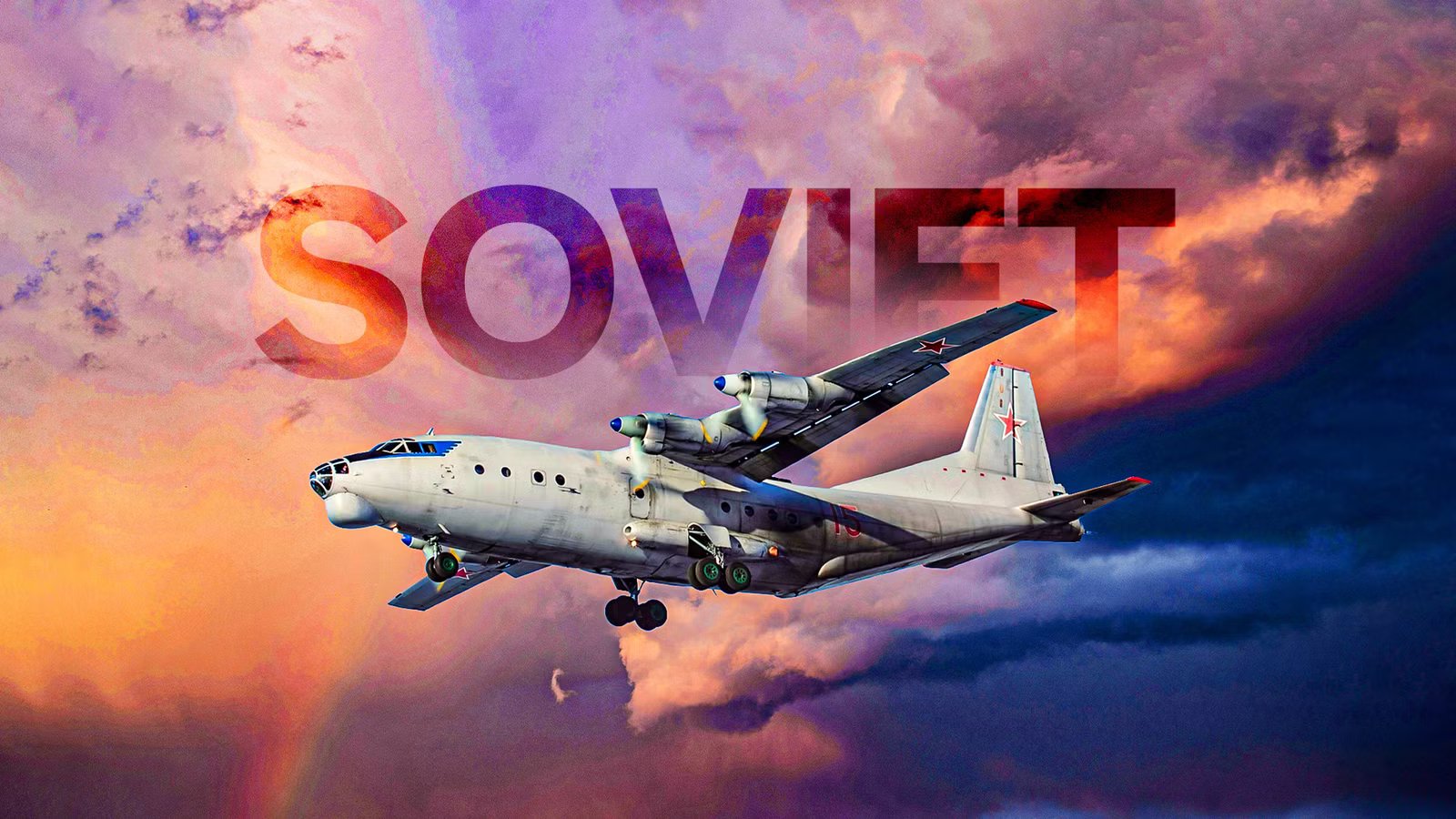
The Antonov An-12 took its first flight on December 16, 1957, from ‘Irkutsk-2’ aerodrome, with Captain Yakov Vernikov and Co-pilot Georgii Lysenko in the cockpit. The aircraft entered Soviet service in 1959, arriving just a few years after the Lockheed C-130 Hercules had already begun logging service hours overseas, according to The Aviation Zone. It went on to fly for the Soviet Air Forces, most of the Warsaw Pact, and export customers as far afield as India, China, and Egypt. On paper, it reads as a straightforward Cold War parallel to Hercules.
The An-12, known as “Cub” by NATO, carried a pair of 0.9 inches (23 mm) cannons in a manned tail turret, sat its navigator behind a glazed bombardier’s nose, and never once used a landing ramp to load cargo. Those are the fingerprints of a World War II heavy bomber, welded onto a 1950s turboprop airlifter that the West spent six decades filing away as a mediocre copy of the Hercules. By the end of this guide, you’ll know exactly which engineering choices separated the An-12 from its American counterpart, why those choices produced a measurably higher loss rate, and why the aircraft’s direct descendant is still rolling off a production line in China today, decades after the country that designed the original ceased to exist.
The Aircraft The West Filed Under ‘Soviet C-130’ Was Never Built Like One

The comparison to the Hercules is fair on the surface. Both are four- engine, high- wingturboprops designed for medium-range military airlift, and both trace their origins to the same Cold War decade. But the design brief behind each aircraft could not have been more different. Lockheed built the C-130 as a dedicated, pressurized logistics hauler for the United States Air Force‘s Tactical Air Command, with a modern rear ramp as its defining feature. Antonov, working from the civilian An-10 airframe, produced something closer to a militarized bomber derivative that happened to move cargo.
The numbers back up how closely matched the two airframes look at first glance. According to Antonov , the An-12 spans 125 feet (38.02 meters) and stretches 109 feet (33.11 meters) nose to tail, powered by four Ivchenko AI-20 turboprops producing roughly 4,000 horsepower (2,983 kW) apiece. The manufacturer lists a cruise speed of 354 mph (570 km/h), a service ceiling of 32,808 feet (10,000 meters), and an operational range of 3,107 miles (5,000 km). It can move a payload of up to 44,000 lb (20,000 kg), whether that’s paratroopers, vehicles, or bulk cargo.
What those specifications don’t show is how many were actually built, and that’s a genuinely open question. Vintage Aviation News puts the figure at 1,248 airframes, the number most commonly cited in the aviation press, while the procharter lists 1,234 and other sources land anywhere from 900 to 1,240. No single production ledger has ever been treated as fully settled, which is itself telling for an airframe built inside a state industrial system that didn’t publish for outside audiences.
What isn’t in dispute is how far the aircraft traveled once it left the factory floor. It flew for most of the communist countries and some customers from non-aligned nations, including India and Egypt, an operational footprint that rivaled the Hercules in scale even with the production count still unresolved. That reach alone should have kept the An-12 in the West’s collective memory. Instead, it got filed under “Soviet C-130” and largely forgotten, a shorthand that erased almost everything that made the aircraft distinctive.
A Bomber’s Nose And Tail Bolted Onto A Cargo Plane

If we look past the shared silhouette and the An-12 starts to resemble something else entirely: a Tupolev-era heavy bomber wearing a cargo plane’s paint job. The nose is fully glazed, giving the navigator a WWII-style bombardier’s view straight through the airframe’s front end, a feature the C-130’s solid, radar-equipped nose never needed and never had.
The tail is where the resemblance turns unmistakable. Aircav.com lists military examples of the An-12 as carrying a manned turret armed with two 0.9 inches (23 mm) Nudelman-Rikhter NR-23 cannons, while Armed Man documents a tail gunner’s cabin lined with 5.3 inches (135mm) of armored glass and a 0.8 inches (20 mm) removable armor shield. The Hercules airframe would eventually go on to carry serious firepower too, in the side-firing cannons of the dedicated Lockheed Martin AC-130 Spectre gunship, but that’s a separate, purpose-built variant developed 13 years later for a different mission. The An-12, by contrast, rolled its defensive armament straight into the standard tactical transport, a distinction that says a lot about how differently the two air forces defined “self-sufficient.”
As Simple Flying has previously detailed in its breakdown of the C-130’s defining features, Lockheed’s design philosophy centered on unrivaled versatility and rapid reconfiguration rather than self-defense: a rear ramp and pressurized hold built for speed of loading rather than survivability under fire. The An-12’s answer to the same mission requirement was to arm the airplane itself and accept the weight, complexity, and drag penalty that came with it.
Why The An-12’s Ramp Was Never As Simple As The Hercules

The C-130’s rear ramp is a hydraulic, powered surface that lowers into position and takes a vehicle’s weight in seconds. According to airfreight.com, the An-12’s rear end looks similar in photos, and it does have a ramp of sorts, but it’s a fundamentally more manual piece of engineering. Production aircraft carry a top door that hinges up and twin lower doors that fold inward to lie flush against the fuselage sides; if vehicles need to be loaded, a two-piece ramp stored inside the cargo bay has to be manually hauled out and set up, with a telescoping leg extended to keep the tail-heavy aircraft from tipping backward.
According to The Aviation Zone, its cargo hold is unpressurized and unheated, and instead of a hinged ramp, the underside of the upswept rear fuselage splits into a pair of doors that hinge upward into the fuselage itself. Loading and unloading anything too large or heavy for a paratrooper stick requires an internal gantry crane rather than driving straight up an incline, a slower, more manual process that reflects the aircraft’s bomber-adjacent lineage rather than a purpose-built logistics tool. Where the Hercules crew can taxi a Humvee aboard in a matter of minutes, An-12 ground crews are working winches and cargo rails inside an airframe that was never optimized for that job in the first place.
That distinction matters more than it sounds. An unpressurized hold means no high-altitude comfort for cargo or passengers riding in the back, and a crane-fed loading system means longer turnaround times on the ramp, a real operational cost for an aircraft meant to move troops and equipment quickly to forward airfields. The trade-off bought the Soviets a simpler, more rugged airframe that could be built and maintained across a sprawling military-industrial base, at the price of the loading speed the Hercules made its signature.
The ‘Black Tulip’ And The Day A Transporter Became A Bomber

The An-12’s bomber DNA came out when the mission demanded it. During the Soviet-Afghan War, the type earned the grim nickname “Black Tulip” for its recurring role in repatriating the bodies of fallen Soviet soldiers back to the USSR, according to Global Military, a nickname that stuck to the airframe long after the war ended.
The Indian Air Force started rolling bombs out of An-12 cargo holds by hand as early as 1965, then pushed the idea further during the 1971 war with Pakistan, with nocturnal raids, and, occasionally, even in the broad daylight. The results were compelling enough that Antonov built a dedicated bomber version, the An-12BKV, fitted with a TG-12MV conveyor rated for a bomb load of up to roughly 24,000 lb (11,000 kg): as many as 70 bombs at 220 lb (100 kg) each, or as few as 18 at 1,100 lb (500 kg) each, according to globalsecurity.org. Other operators reached the same improvisation independently. Ethiopia flew its An-12s as auxiliary bombers against Somalia during their 1980s border war, and Afghan government forces did the same with hand-me-down Soviet examples during that country’s civil war, according to airvectors.net. The practice never fully died out, either: Sudan’s air force has fitted a removable roller conveyor to its remaining An-12s to drop unguided 500 lb (227 kg) bombs over Darfur as recently as the past two decades, as Simple Flying has reported on makeshift Antonov bombers, a tactic widely condemned as indiscriminate under international law.
According to Simple Flying’s comparison of the B-21 Raider and the B-2 Spirit, American bomber doctrine has always kept strike aircraft and airlift aircraft on separate design tracks, purpose-built for one job apiece. The An-12 is a reminder that Soviet doctrine, shaped by a different set of postwar priorities, was comfortable blurring that line entirely.
The Price Of That Doctrine: A Loss Rate The Hercules Never Matched

Every one of those design choices, the guns, the armor, the unpressurized hold, the crane-fed doors, added weight, complexity, and risk that a purpose-built logistics aircraft simply didn’t carry. The numbers show it. According to We Are the Mighty, of the roughly 1,248 An-12s built, 232 have been lost in accidents, a loss rate meaningfully higher than the Hercules, which has recorded 353 losses out of a fleet more than double the size, north of 2,500 airframes built and still growing.
That risk carried a real-world price tag, too. Air data news estimates the An-12’s operating cost at $8,600 to $10,000 per flight hour, a figure driven up by the aircraft’s dated Ivchenko turboprops, manual cargo-handling systems, and the maintenance burden of an unpressurized airframe flying military profiles for decades past its original service date. A modernized C-130J, by contrast, benefits from decades of incremental upgrades built around that original pressurized, ramp-loaded formula, precisely the kind of steady evolution the An-12’s armed, unpressurized layout was never designed to accommodate cheaply.
It’s worth being careful with how that loss-rate comparison is read. Both fleets flew for decades across dozens of operators and conflict zones, and a raw accident count doesn’t isolate design from operating environment, maintenance standards, or the sheer number of austere, unmapped airstrips either type was asked to use. But the gap is large enough, and consistent enough across independent sources, that it’s difficult to explain away as noise. An airframe carrying manned armament, armor plating, and a hand-cranked cargo system is an airframe carrying more weight, more moving parts, and more ways for something to go wrong on a bad night.
The An-12 Didn’t End With The Soviet Union

After the Sino-Soviet split cut off Beijing’s access to Soviet technical support, China reverse-engineered the An-12 into its own airframe, the Shaanxi Y-8, rather than walk away from the design. That decision turned out to be a durable one: the Y-8 survived the split, and it kept evolving into a large family of airborne early warning, maritime patrol, and electronic warfare variants that remain in frontline service with the People’s Liberation Army today. A later joint venture between Shaanxi Aircraft Company, Antonov, and Pratt & Whitney Canada pushed the lineage further with the Y8-F600, a modernized version built around a redesigned fuselage, Western avionics, and PW150B turboprops, according to Global Military.
Original Soviet-built aircraft continue flying commercial cargo missions where ruggedness matters more than modern avionics. Ukrainian cargo carrier CAVOK Air has operated a fleet of original An-12s on charter and ACMI freight services since 2012, carrying oversized cargo and dangerous goods into airports with limited ground infrastructure. One of its aircraft, built in 1967, only made its final flight in 2026 after logging roughly 50,000 flight hours and 18,000 flights, according to Air data news.
Elsewhere, the type remains a working commercial freighter across Africa and the former Soviet Union: Burkina Faso’s Batot Air put a 63-year-old An-12 back into service in 2025, reportedly the oldest active commercial aircraft on the continent, while Sudanese operators Azza Transport and Badr Airlines have flown the type into remote airstrips carrying relief supplies and fuel, according to the Ready for Takeoff book. The military branch of the family proved equally resilient: the upgraded An-12BP became the standard tactical transport across the Soviet military and its allies, while scattered examples still perform airlift missions with CIS and African air forces today.
That’s the paradox of its longevity. Compared to the C-130 as a pure logistics aircraft, the An-12 often looks inferior: slower to load, less survivable, costlier to run. But as a tactical transport built for Soviet doctrine’s emphasis on self-defense and austere airfields, it makes more sense, and explains why an aircraft written off by several air forces decades ago still flies today, both in scattered originals and through its Chinese descendant, the Y-8, and its derivatives.