dailynewsnblog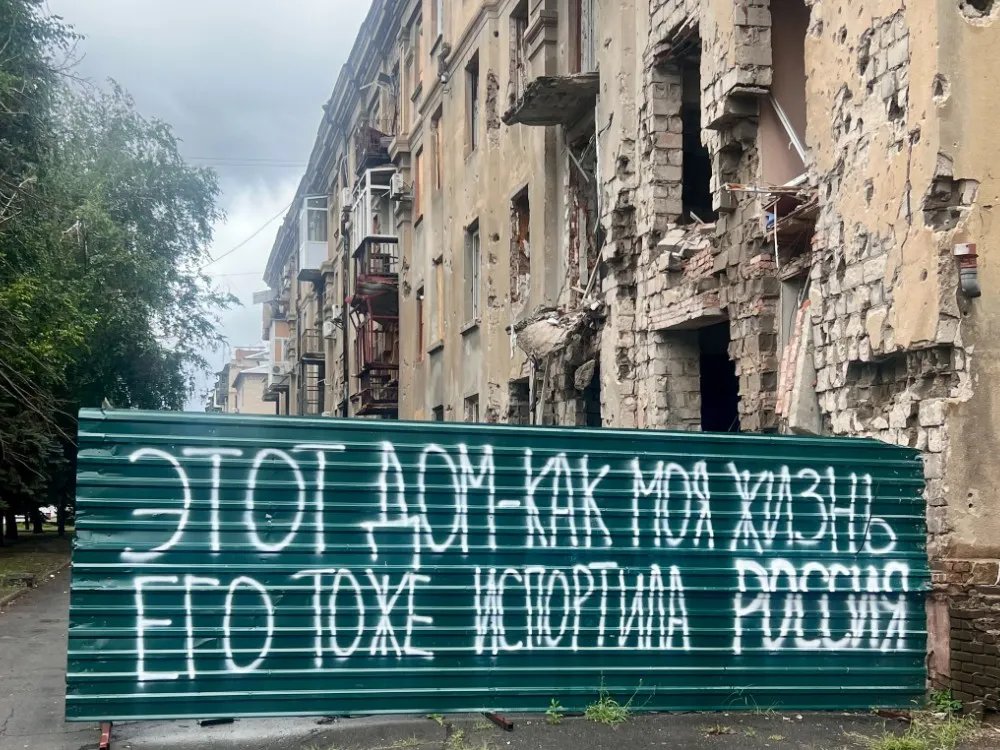
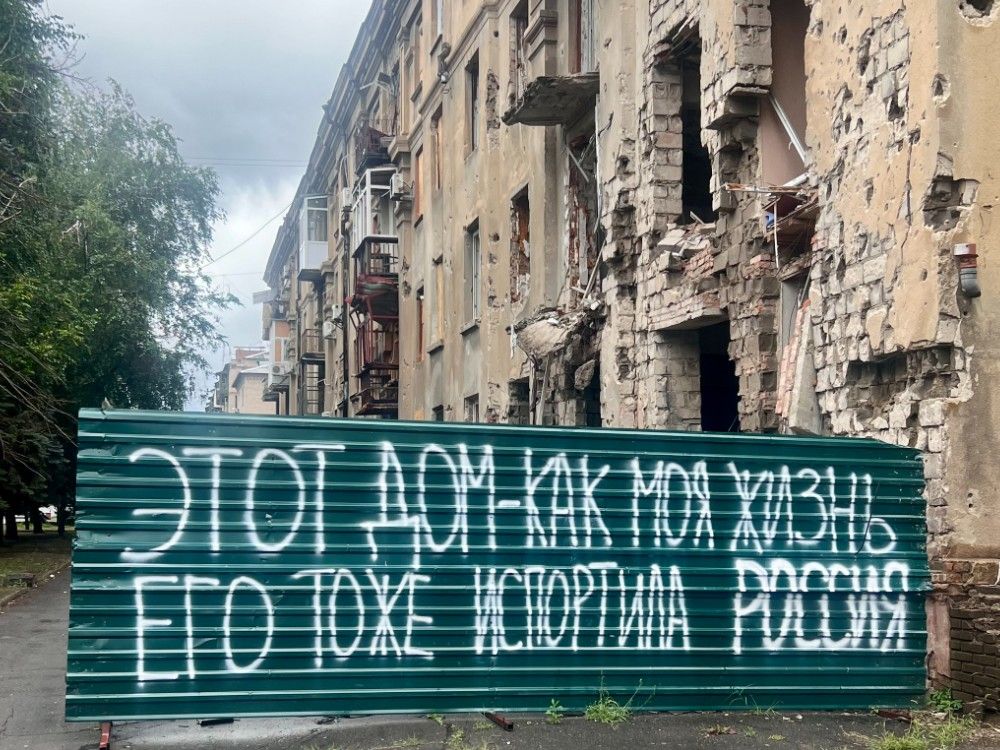
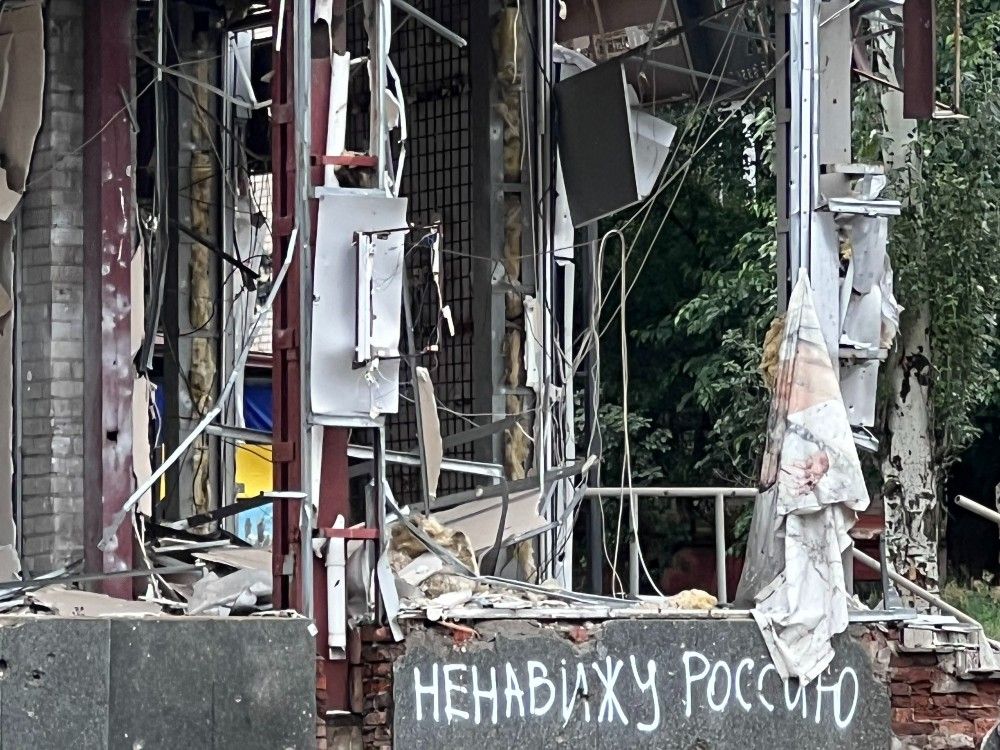
Kramatorsk, Ukraine — The streets are all-but deserted, but the mood of Ukraine’s embattled city of Kramatorsk is emblazoned in foot-high letters across the walls of its ravaged buildings. “This house is like my life: Russia ruined it too.”
You can hear the war constantly in Kramatorsk, which together with nearby Sloviansk is holding the line against Russia’s efforts to capture the whole of the Donbas. You can smell it in the smoke and dust which permeate the air amid the boom of artillery and the rattle of outgoing fire.
The grand square outside the Palace of Culture and the tree-lined parks are empty, while a truck unloads triangular concrete “dragon’s teeth” intended to stop Russian tanks in their tracks. Huge coils of barbed wire offer further impediment, roses and hibiscus flowers blooming in between.
Like all cities at the front, the roads are swathed in fishing nets to protect against FPV drones. Something glitters and twists in the wind: it is a fibre optic cable from the most lethal type of drone.
This is a city preparing to become a battlefield. Russian forces claim to have captured territory just 14 kilometres from Kramatorsk.
And yet, there are signs of attempts at normal life, in the small businesses and volunteer groups which keep society going.
In a shopping mall scarred by shelling, the supermarket remains open, its shelves remarkably well filled. The store is called Chudo, or “miracle.” On the step outside, an elderly man is selling a plastic tub of blackcurrants, plucked from his garden. Their flavour is deep and intense with the fleeting taste of summer.
Around the corner, a modern-looking store with daringly large windows and a few tables outside: Zaboy opened this flagship site last year, selling t-shirts and hoodies with a patriotic Donbas theme, along with specialist coffee at Kyiv-level prices. It was a defiant presence in Kramatorsk, but just a week after our visit, it too announced it would be closing down.
Nearby, Kateryna Seledtsova’s Coffee House Bakery is a haven of flamingo pink, boasting a neon sign by the entrance which declares “All You Need is Love.”
Kateryna first opened the place in 2016, training in French patisserie techniques and offering a range of delicate eclairs and macarons. It closed for just one month, she says, in April 2022, not long after the Russian invasion. She moved to the safer environs of Dnipro and took a pastry chef job, but returned to reopen Coffee House that summer, with a menu geared more towards simpler comfort food.
Kateryna says it was about far more than mere cake. “We are a beacon of light to our customers. When you step inside, you leave the war outside. They tell us – you give us hope.”
The challenges of working in such a frontline city are extreme: she has moved her eight-year-old son to Kharkiv, where his grandparents look after him, although they cannot manage it every day. So she drives three times a week, back and forth, along a route so dangerous that it is known as the Road of Death. One bonus, though: She buys her ingredients in Kharkiv, because they are several times cheaper than in Kramatorsk; the peculiarities of wartime economics.
Kateryna has scouted out a potential new site in Kharkiv too, a place where she could move her whole team when the time comes to finally leave. “It’s complicated,” she says. “My father works for the city authority here, so he cannot leave, or he loses his job. So I plan on staying with him until the last moment.”
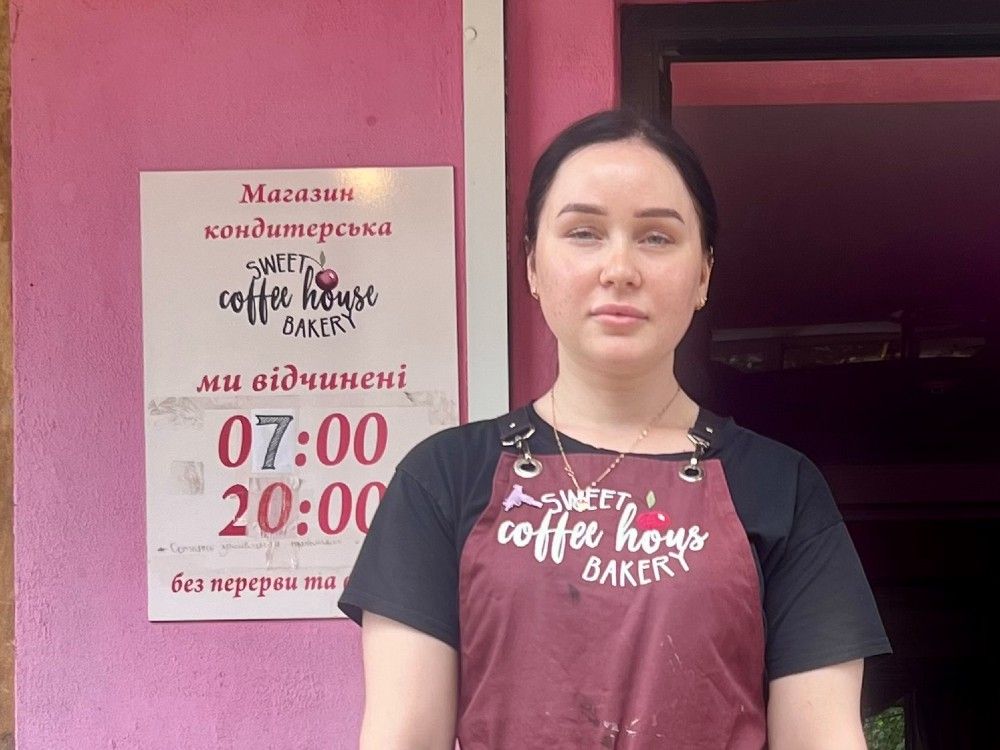
Snezhana, her pastry chef, points out her creations on the counter; I pay for a slice of baked cheesecake, a prettily glazed strawberry tart and a meringue crowned with a flourish of cream.
“It is scary to live here,” Snezhana admits, “but every morning I wake up and come into the bakery to make my desserts and it warms my heart. It was always my passion to work in pastry, and I never imagined I would have my dream job at the age of just 20.”
Up the road we find Olga, who at 61 is one of the city’s most beloved volunteers. Since 2014, when the Russians invaded Crimea, she has been helping those who defend the city, and has turned her Garage-Cafe into a hub for the community, where her regulars have become lifelong friends.
On an otherwise ordinary afternoon in early May, three 250 kg guided air bombs exploded nearby, one by one, in the heart of the city centre.
The blast wave threw her to the cafe’s floor, and turned the buildings on either side into jagged piles of brick and twisted metal. Six people were killed, including Svitlana, one of Olga’s closest friends. Her grief was so strong that she thought she might never recover.
A few weeks after the attack, Olga was back at work, immaculate in a sequinned top and pristine white jeans, making a cappuccino for a taxi driver who tells her it is his birthday. But the garage cafe is now in an especially risky part of town.
“Hardly anyone comes here anymore,” she says. ”I don’t know how to make ends meet. I’ve never been a very good businesswoman, because I always treat everyone to coffee. But now, when I do the books, everything is in the red.” The shelves are still lined with mechanical parts for sale, but there are few buyers.
“I am torn in two over whether to leave,” Olga says, close to tears: “this cafe is my child, this city is my child.”
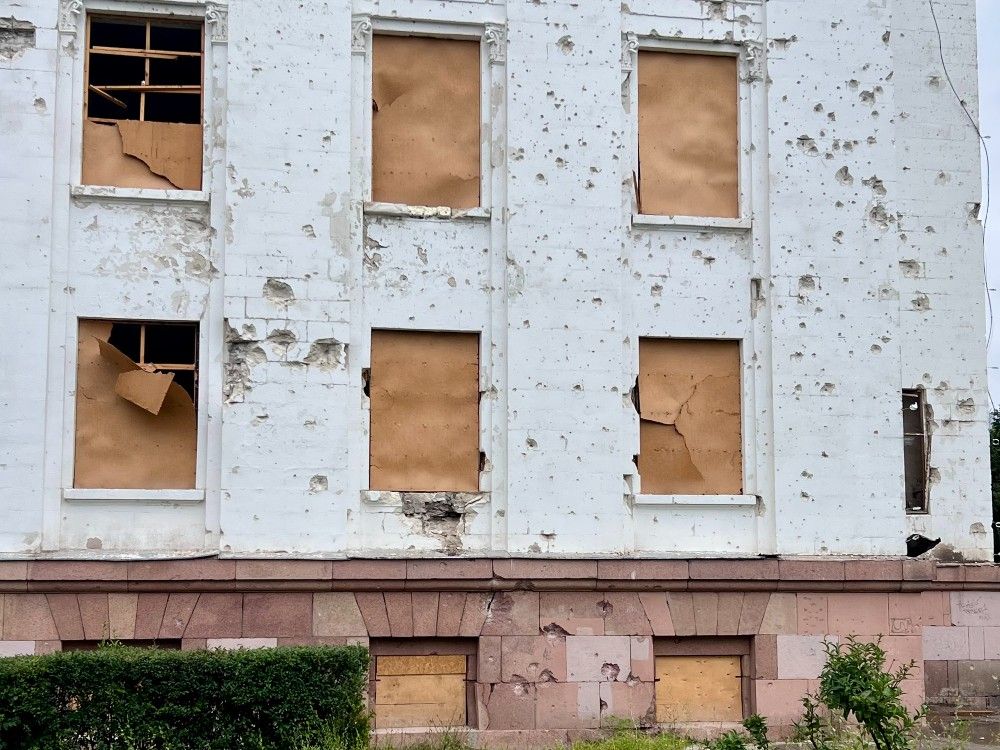
The latest threat of fibre optic drones has created yet another new nightmare. “You have to move as if you were really on the front line — always looking at the sky, always listening for drones, looking for a place to run or hide. I cry a lot,” she says. “Inside I just want to hope everything will be fine. But now people are saying there will be nowhere to return to. The Russians will just destroy everything.”
The local news channels report that two more restaurants are about to close their doors. We walk past one, a popular sushi place called Woka, surrounded by a canopy of trees. On its final day of operation, music is playing defiantly at the deserted outdoor terrace.
Up the road is Rodina, a former cinema containing a maze of different dining rooms and a vast entertainment space upstairs which echoes with the memory of celebrations past. The menu contains everything from pancakes to burgers and a range of pizzas which the local volunteers insist are the best in all of Donetsk region. By the end of July, they would also be closed.
Oleksiy Bliznyuk had already left town, shuttering his Milati Cafe a fortnight earlier, prompted by both the lack of customers and safety concerns. At one stage, he had run three sites, including a production facility with 15 staff who prided themselves on using the best ingredients.
By 2026, he was down to two full-time employees, occasionally four. They tried their best to hold on.
“Then one day, one of my team members told me she’d had to run and hide from an FPV drone, and another girl said a KAB (aerial bomb) had landed in the yard behind her home. It was a really tough moment, but I thought — what are we waiting for? We need to stop.”
And so he began looking for a new site in the central city of Cherkasy, while moving as much of his equipment as possible out of Kramatorsk. “Every day that task becomes more difficult and more dangerous.” There is no government grant to help with relocation.
But opening in another city was never the dream. “It is our business, our heritage, which we built with our own hands. I really hope that it will not vanish for good.” He says he struggles to find the words to describe how it feels. “Kramatorsk is my home, and everything I did there, I did with love. Maybe there will be a miracle, and we will come home again, and I will meet you here, in Milati.”
At night, under a sky streaked with the blood red of a Donbas sunset, the power suddenly cuts out, leaving only the dim glow of a battery-powered torch. We are jolted awake in the early hours by the huge thud of explosions, as guided air bombs pummel the edge of town. The windows rattle and the apartment shudders in protest.
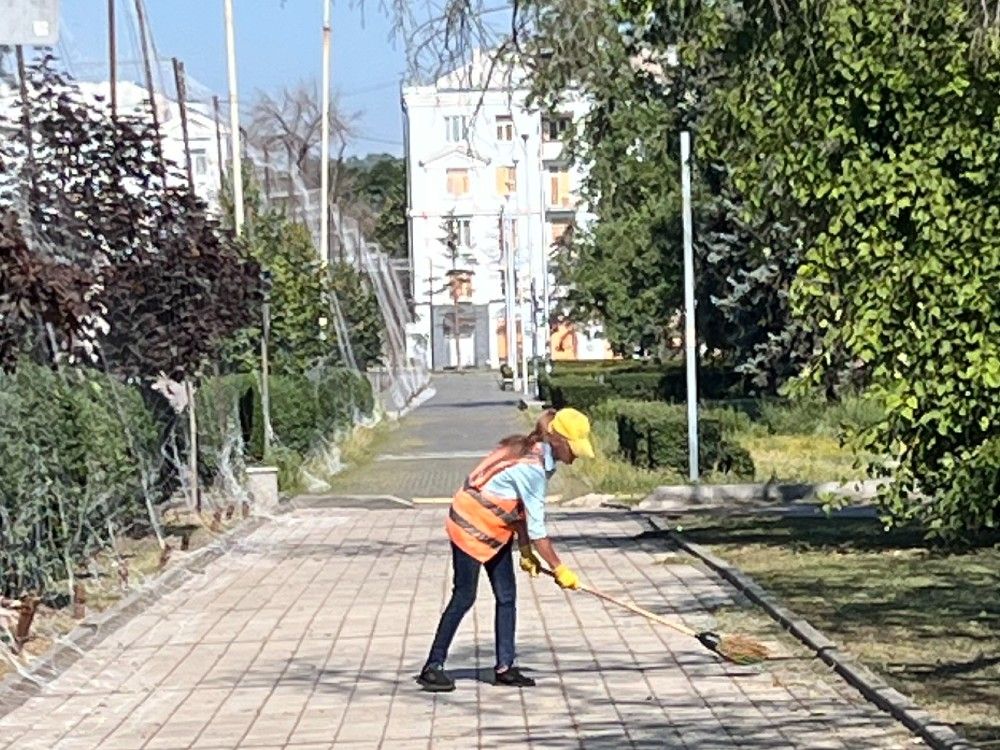
There are still municipal employees sweeping the streets and cutting the grass, but trains stopped calling six months ago: next, people worry that postal deliveries, buses, and utility workers will stop too.
Evacuation teams like the one led by the 26-year-old volunteer Bogdan Zuyakov are already taking people out of the Kramatorsk suburbs, while Russia steadily erases the city, piece by piece.
“Even if my body leaves Kramatorsk,” says Olga, “my heart and my soul will be here.”
Our website is the place for the latest breaking news, exclusive scoops, longreads and provocative commentary. Please bookmark nationalpost.com and sign up for our newsletters here.