dailynewsnblog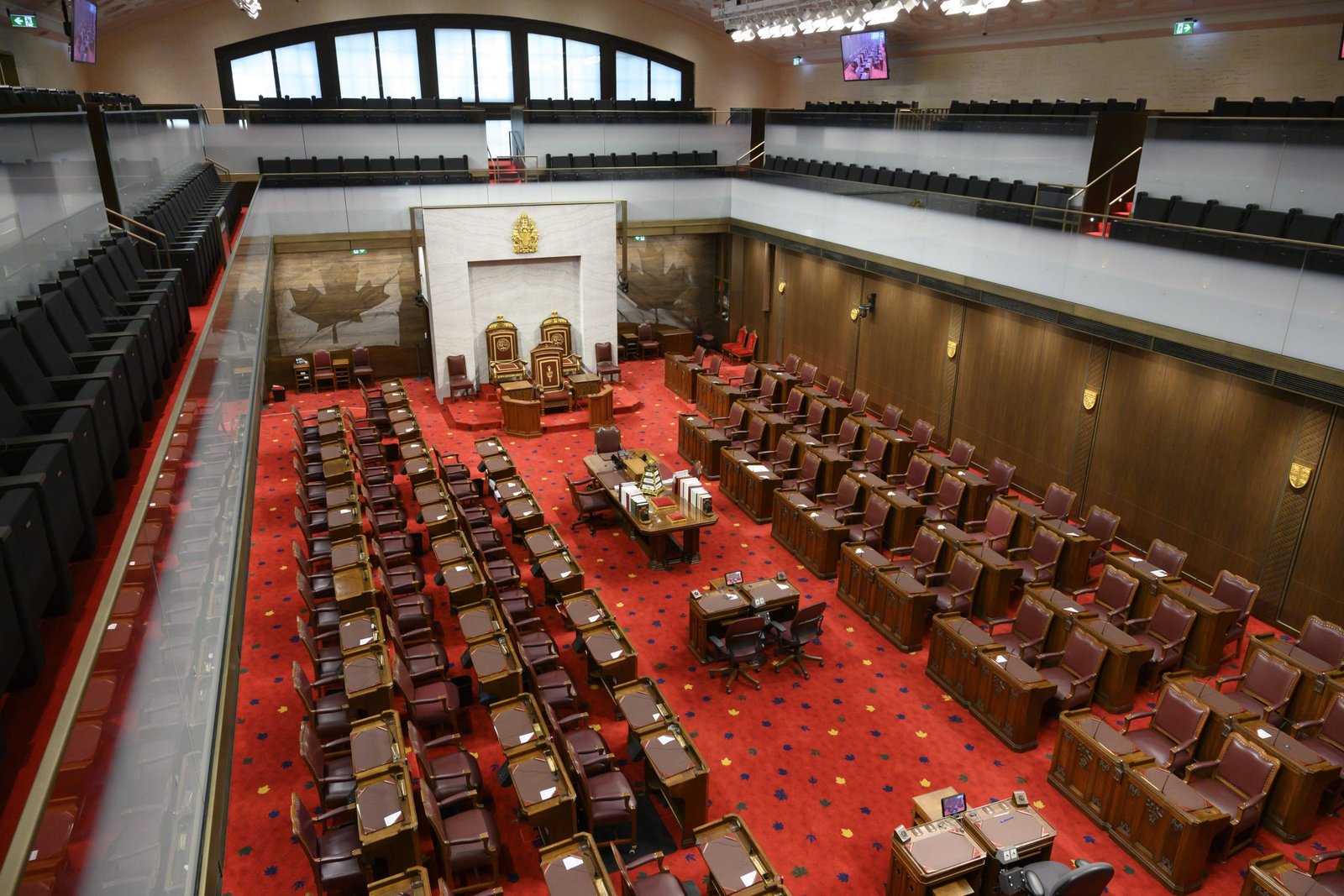
A Senate beholden to the Prime Minister’s Office cannot provide the oversight needed to ensure that the intention of the government, and the commitments it made to Canadians, are actually reflected in its legislation.
The debate over Senate reform is back, and once again the proposed solution misses the point. A recent editorial urged Prime Minister Mark Carney to reinstate a Liberal Senate caucus — re-attaching the upper chamber to the governing party’s whip — as a way of making the Senate more accountable to the public. The argument confuses accountability with control.
Good governance rests on three distinct functions: direction — deciding what should be done; oversight — ensuring it is done well and fairly; and accountability — establishing who answers when it goes wrong. In Canada’s Parliament, the elected House of Commons and the Government it sustains are responsible for direction. That is as it should be. The Senate’s role is oversight and accountability.
A whipped Senate collapses all three functions into one. When senators are required to vote as the Government directs, oversight disappears — replaced by ratification — and accountability becomes circular: the Government reviews itself, and senators do not have to individually defend their vote. Canadians would be right to ask what they are paying for.
Senator Scott Tannas identified the result precisely: a Senate that mirrors the House of Commons is just an “Off-Broadway version of the House of Commons.” The constitutional logic of a bicameral Parliament is that the two chambers bring different perspectives to policy debates. Remove that difference, and you remove the point.
Independent oversight means slowing down, looking sideways, and asking who benefits and who gets hurt. It means catching unintended consequences before they become law, and flagging rights and interests that a confident majority might overlook, intentionally or not. That work is not obstructionism — it is the Senate doing its job.
Consider Bill C-4, the Making Life More Affordable for Canadians Act, which tucked significant changes to the Canada Elections Act into an affordability bill.. Independent senators raised substantive concerns about weak privacy protections governing political parties, a part of the bill that received virtually no scrutiny in the House. A reasonable amendment from the Senate was rejected by the House, together with a message that basically said that we should stay in our lane. The argument was that the House “should be the body that decides the rules that govern communication by federal parties with Canadians”.
This past week, the Senate’s concerns were vindicated when the names, home addresses, and contact details of 2.9 million Albertans were publicly exposed in the province’s largest-ever privacy breach. Some of those people had spent years protecting their home addresses for reasons of personal safety. Take a moment to consider the fear that women who are fleeing abusive relationships felt when they heard this news.
When the Senate functions as intended, the record is encouraging. Research published by Cambridge University Press found that, in the 42nd Parliament, the previous government accepted Senate amendments on 31 of 88 government bills — a 35 per cent rate, a historic high. In the 41st Parliament, when the Senate was more partisan, that rate was just 7 per cent. The House’s increased acceptance of Senate amendments demonstrates that independence improves the quality of oversight.
Crucially, independent oversight is not the same as obstruction. The independent Senate has never defeated a government bill. Former Senator André Pratte articulated the right standard: insist on amendments only when the issue touches the Senate’s core constitutional role, when the Senate is determined to see the fight to its completion, when public support can be mobilized, and when there is a realistic prospect of changing the government’s mind. In thirty years, we have approached that threshold only once.
What the editorial calls for would destroy the very thing that gives the Senate its limited but real value. A Senate beholden to the Prime Minister’s Office cannot provide the oversight needed to ensure that the intention of the government, and the commitments it made to Canadians, are actually reflected in its legislation. It cannot hold anyone accountable because it is itself an instrument of the same power it is supposed to watch.
The Senate’s role is not to set direction — that belongs to the elected House. It is to ask, independently and on the merits: is this being done well, is it being done fairly, have the unintended consequences been considered, and if it goes wrong, who will answer for it? Moreover, the independent Senate of 2026 provides that analysis from a previously unequalled diversity of Canadian perspectives.
Colin Deacon is an Independent Senator representing Nova Scotia.
The views, opinions and positions expressed by all iPolitics columnists and contributors are the author’s alone. They do not inherently or expressly reflect the views, opinions and/or positions of iPolitics.