dailynewsnblog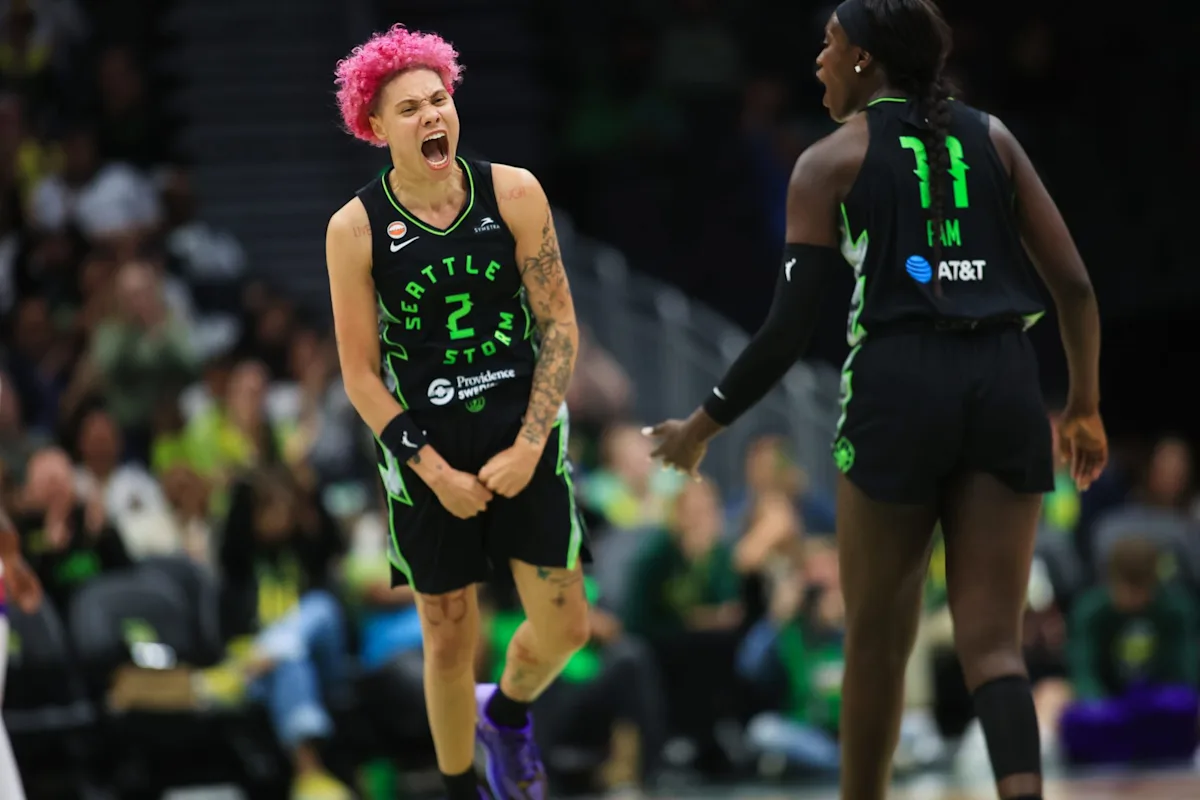
In the first eight years of the Seattle Storm’s existence, the WNBA team was the “tail” on the “dog” of its NBA counterpart, the SuperSonics, according to Storm co-owner Ginny Gilder.
Both bought in 2001 for $200 million by an ownership group led by former Starbucks CEO Howard Schultz, the Sonics and the Storm shared a practice facility and entertainment complex KeyArena for games. Still, the men’s team brought in the cash and was responsible for the majority of the fixed costs.
Advertisement
But the Sonics—Seattle’s first professional sports franchise, founded in 1966—left the city in 2008 over an arena dispute, relocating to Oklahoma City and rebranding as the Thunder. That same year, a group of local businesswomen including Gilder, formed Force 10 Hoops LLC and bought the Storm for $10 million, or just 5% of the total value of the two-team package Schultz purchased years before.
Over the next two decades, the Storm grew into a franchise with an estimated value of $425 million, among the top five of the WNBA’s 13 franchises—all of which have exploded in value amid the league’s catapulting popularity. The team tallied four championships, all with 13-time All-Star Sue Bird, who, after her 2022 retirement, joined Force 10 Hoops as a Storm’s owner in 2024.
There’s a good chance Seattle will not be a one-team basketball town for much longer. NBA Commissioner Adam Silver has said he’s focused on the return of the SuperSonics as part of the league’s expansion, with the team potentially resuming play in Seattle as early as 2028.
Advertisement
The ownership of the Seattle Kraken NHL team is the parent of One Roof Sports and Entertainment, which is positioning itself as the next owner of Seattle’s revived NBA franchise.
While the Sonics were the foundation of basketball in Seattle, Gilder and the rest of the Storm’s ownership spent the last 16 years building the very basketball culture the NBA now wants to re-enter. To them, the return of the Sonics is not just an opportunity for the Storm to celebrate the transformation of women’s sports as the main act; it’s the chance to grow Seattle as a sports town, period.
“It raises the profile of basketball even more…so that you’ll now have pro-basketball pretty much 12 months a year in Seattle,” Gilder told Fortune. “It’s the Sonics and the Storm; it’s the Storm and the Sonics. It’s bread and butter, apple pie and vanilla ice cream. They belong together.”
Advertisement
‘I majored in equity’
Gilder was not planning to become an entrepreneur, but she did grow up an athlete. Before she was selected to participate in the 1980 Olympic Games in Moscow (an event U.S. athletes would boycott but receive Congressional Gold Medals for years later) and won silver in quadruple sculls at the 1984 games in Los Angeles, Gilder rowed at Yale, where she received her bachelor’s in history in 1979.
At 17, Gilder joined more than a dozen of her women’s crewmates in protesting Yale’s treatment of women athletes. At the time, Yale’s boathouse had no women’s locker room, and women would wait on the bus in the winter for the men’s team to shower. About 19 members of Gilder’s crew team went to athletic director Joni Barnett’s office and stripped naked, with “Title IX” scrawled on their bodies in blue felt tip pen. Yale added a women’s locker room to the boathouse the next year.
Advertisement
“I got my degree in history, but I majored in equity, in access to opportunity,” Gilder said.
Though a New Yorker by birth, Gilder became a Storm fan in 2005, the year after the team won its first championship.
“I loved what the team represented,” she said, “And I loved the opportunity to try to make something happen on a more global scale, not be satisfied with the status quo.”
Two years later, Gilder joined forces with Lisa Brummel, a 25-year Microsoft veteran; Dawn Trudeau, another early Microsoft executive; and former judge Anne Levinson, to form Force 10 Hoops. (Levinson left the group in 2010.)
Advertisement
Their basketball knowledge varied greatly—Gilder admitted she didn’t know what a point guard was at the time—but the group had convictions about feminism and gender parity, as well as the financial resources to make sure Seattle could retain one of its basketball franchises. They vowed to run the team like a business.
“Women’s sports was in a very different place,” Gilder said. “And one of the things I said was, one day, we need to be able to sell our team for a profit—not because I wanted to make millions of dollars—but in America, you either have a charity or a hobby or a business.”
Unlike an NBA team, where market growth was assumed, owning a WNBA franchise required a different set of strategies, especially with no other basketball counterpart to bolster an audience or share costs.
Advertisement
Three more championships under Bird helped keep the team’s momentum high, and the new Climate Pledge Arena and training facility (designed by Spero Valavanis, the father of Storm CEO and president Alisha Valavanis) helped provide the team with the resources to grow. The team’s owners have said their social justice convictions struck a chord with Seattle’s sports fans.
“We’ve always believed women’s sports is valuable. And we’ve always believed you should pay to watch women’s sports,” Brummel told Fortune in 2024. “If you came to a Storm game, you’re going to pay for your seat,” she adds. “In return, we will give you an amazing experience.”
‘I cannot imagine that the Sonics will be a tail’
With an anticipated, though not guaranteed, return of the Sonics, Gilder does not see the Storm anchoring the returning franchise in the same way the old Sonics did in the WNBA team’s early days. But while the Storm has become the dog, “I cannot imagine that the Sonics will be a tail.”
Advertisement
“Women’s sports has grown to a place that it has its own distinctive characteristics, it has its own fan base,” Gilder said. “That’s not going to go away with the return of a very important part of Seattle’s history.”
Should the Sonics rejoin the Storm, Silver expects “multiple bidders” for the team, as well as the need to address inevitable logistical hurdles. The Storm currently share Climate Pledge Arena with the Kraken, who have majority ownership of the building.
Natalie Welch, an assistant professor of marketing at Seattle University, said that while the Storm has allowed Seattle to maintain and grow its basketball fanbase ahead of the Sonics’ possible return, the Sonics will also provide a surge of demand for the Storm.
Advertisement
“The Sonics are going to be a hard ticket to get for a while and not as accessible,” Welch told Fortune. “The Storm will have an opportunity to kind of capture some of that value.”
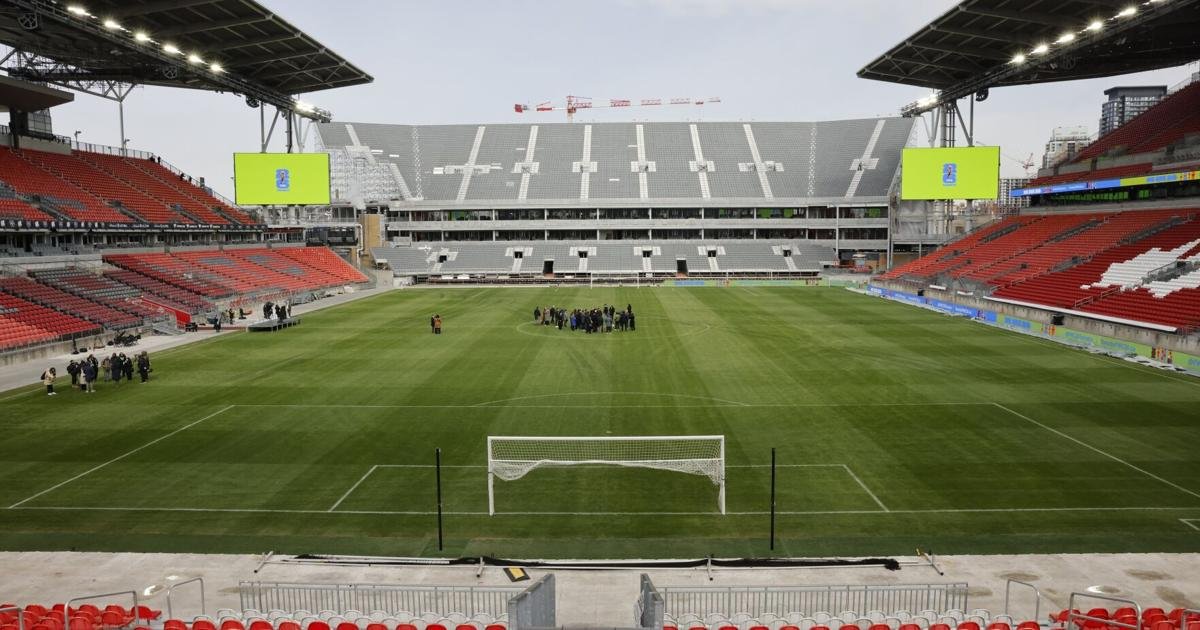
There’s risk with the astronomical growth of a sport, too. The WNBA is executing its own expansion, adding the Toronto Tempo and Portland Fire this year, with plans to add franchises in Cleveland, Detroit, and Philadelphia in 2028, 2029, and 2030, respectively.
WNBA fans often enjoy a less corporate experience than men’s basketball, Welch noted, and as the league grows and attracts more sponsors, there’s the added responsibility of keeping fans—including the Seattle faithful—top of mind.
Advertisement
“These even newer teams have been really interesting to see how they are walking the line of giving the hardcore fans and the longtime fans [what they want], plus trying to welcome in the new fans as well,” Welch said.
This story was originally featured on Fortune.com