dailynewsnblog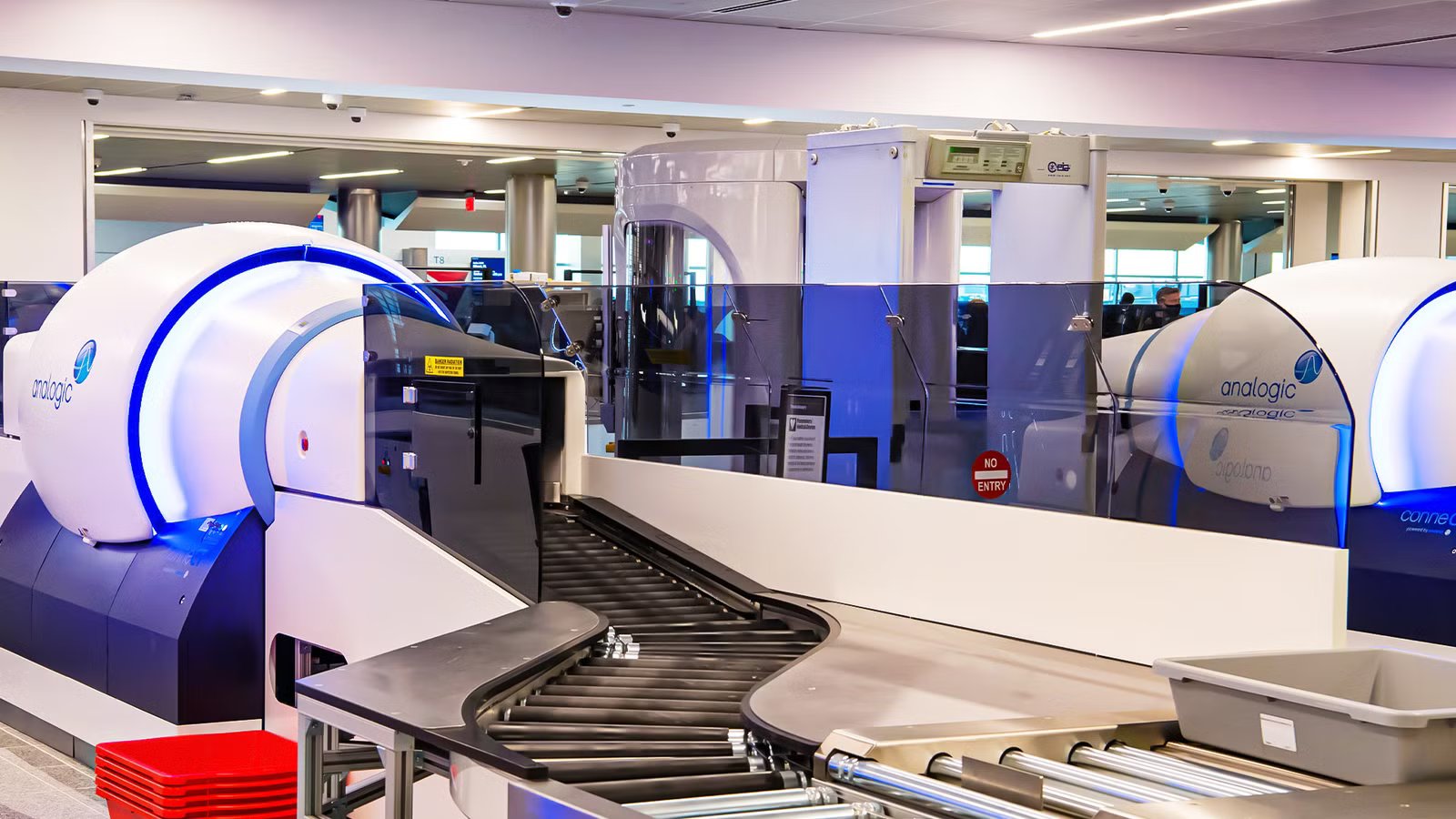
While some passengers might not directly notice it, airport security checkpoints across the United States are changing. For most travelers, the most visible benefit is simple: laptops, tablets, and approved liquids can increasingly stay inside carry-on bags, removing one of the most familiar airport security rituals of the past two decades. However, this same technology that makes the checkpoint feel more convenient also creates new problems for some travelers.
The Transportation Security Administration (TSA) has been rolling out advanced computed tomography, commonly known as CT, scanners as part of a major security technology upgrade. In March 2022, the agency awarded two orders totaling up to $781.2 million for base and full-size CT X-ray systems for airport checkpoints, while later procurement added even more units to the program. These machines are designed to improve threat detection by creating three-dimensional images of carry-on bags. TSA officers can rotate and inspect those images in ways that were not possible with older two-dimensional X-ray machines. For the average passenger, this means fewer items need to be removed from bags, while for travelers carrying analog film, overstuffed carry-ons, or other sensitive items, the story is less straightforward.
TSA’s New CT Scanners Make Security Easier For Most Passengers

The new CT scanning equipment represents a major shift from the traditional X-ray equipment passengers have become used to at airport checkpoints. Older systems produced flatter images, making it harder for officers to distinguish between items layered together inside a bag. This is one reason laptops and other large electronics often need to be removed and screened separately.
The introduction of newer CT systems, which use more advanced imaging and algorithms to create 3D views of carry-on content, is increasingly changing this. According to TSA, officers can view and rotate the image on three axes to identify possible threat items more effectively. The agency has described the technology as both a security upgrade and a way to improve the passenger experience. Today, these scanners are already available at some of the largest hubs in the United States, including  Hartsfield-Jackson Atlanta International Airport (ATL),
  Chicago O’Hare International Airport (ORD), and
  New York JFK Airport (JFK), among many others.
For travelers, the most obvious change is the reduced need to unpack their hand luggage at the conveyor belt. TSA has stated that under current screening procedures for CT lanes, laptops are allowed to remain in bags. In some airport press releases, the agency has also noted that passengers screened through CT units do not need to remove 3-1-1 liquids or laptops. Travelers no longer need to place laptops at the top of a backpack just to remove them quickly, and toiletry bags do not always need to be kept in an outside pocket.
The Problem Is The Same Powerful Imaging That Makes Them Useful

The downside is that CT scanners do not treat every item the same way, and their more powerful imaging is useful for security screening, but it can be a problem for undeveloped photographic materials. This is where the new technology creates a completely different experience for analog photographers than for passengers carrying digital equipment. The new CT scanners can damage or destroy unprocessed film rolls, and the stronger imaging can cause damage in a single screening. CT scanners can fog unprocessed rolls, reduce image quality, and cause permanent damage, forcing analog photographers to change how they move through security.
However, this does not mean that every piece of camera equipment is at risk; digital cameras, lenses, batteries, and memory cards are not affected in the same way. The concern is specifically undeveloped film, including rolls carried separately, film already loaded inside a camera, disposable analog cameras, and instant materials. For most travelers, this may sound like a niche problem, but analog photography has become increasingly popular again among travelers who want a different look from digital smartphone photos. Many unaware passengers might also fail to realize there is a risk until after their trip, when the damage is already done.
Film Travelers Need To Change Their Security Routine

As a result of the new scanners, the most important rule for travelers carrying analog materials is simple: do not allow it to go through a CT scanner if it can be avoided. TSA’s own guidance recommends placing undeveloped film and cameras containing undeveloped film in carry-on bags, or taking undeveloped film to the checkpoint and asking for a hand inspection.
That means film should not be buried at the bottom of a suitcase. Instead, it should be packed so it’s easy to remove before reaching the scanner. It is also advisable to separate unprocessed rolls from cameras where possible and place them in transparent, quart-sized zipper bags on top of the carry-on. That makes it easier for TSA officers to inspect without delaying the process and the entire line behind.
The hand inspection is not especially complicated, but it does take a bit of time, since TSA officers generally take the film to a separate area, visually inspect each roll, swab it for explosive residue, and then manually clear it. The process typically takes three to 10 minutes, with passengers advised to arrive around 15 to 20 minutes earlier if they know they will need the extra step. It is important to note that travelers should clearly tell the TSA officer that they are carrying undeveloped photographic materials and would like a hand inspection.
Checked Bags Are Usually The Wrong Place For Film

The new CT machines have also changed the carry-on versus checked-bag decision process. Many passengers assume that fragile or valuable items should stay in the cabin, but when flying with film, there is another reason to avoid checked baggage. Checked luggage is also screened using similar powerful equipment, and passengers generally do not have the same opportunity to request a hand inspection once the bag disappears behind the check-in counter.
For that reason, film travelers should keep undeveloped rolls, disposable cameras, and cameras containing film in their hand luggage. This does not mean placing them deep inside a trolley that may need to be gate-checked later. The safest option is to keep film in a personal item or small carry-on that will remain accessible through the checkpoint.
There is also a practical difference between domestic and international travel. TSA guidance applies in the United States, where passengers can request a hand inspection. Procedures abroad may vary, and foreign airport security staff may not always handle film requests in the same way. For travelers connecting internationally, that means planning ahead and expecting the same conversation more than once.
The New Scanners Are Also Making Carry-On Size Rules Harder To Ignore

Besides the potential risk to analog film, newer CT scanning equipment can also create problems for travelers carrying oversized or overstuffed bags, since the scanners have fixed tunnel openings. This means a bag that does not physically fit through the machine cannot be screened in that lane.
That matters because many passengers have become used to a certain amount of flexibility around carry-on sizes. Most major US airlines use a standard domestic carry-on limit of around 22 x 14 x 9 inches (56 x 36 x 23 cm). However, in practice, the strictness of the enforcement has often depended on the airline policy, gate agent, aircraft type, and how full the flight is. Soft-sided bags and expanded trolleys could sometimes slip through, especially when passengers were not asked to place them in a sizing frame.
However, the CT scanners at security lanes are now changing that dynamic, and if a carry-on is too large for the scanner, the issue arises at the security checkpoint rather than at the gate. In that sense, the new scanning technology has become an indirect baggage-size enforcement tool for airlines, and while passengers might not be trying to break a rule, an expanded carry-on suitcase that once passed through older equipment may now be pulled aside before screening can even continue.
Passengers Need To Pack For The Scanner, Not Just The Airline

For passengers, the CT rollout at TSA checkpoints is making security increasingly convenient for the average passenger but less forgiving for travelers carrying certain items. Laptops and liquids staying in the bag is a real improvement, as it avoids the need to unpack half a bag in public, but it does not mean passengers can stop thinking about how their carry-on is packed.
A carry-on now needs to be packed not only to meet the airline’s baggage rules but also to fit within the physical limits of the checkpoint itself. For most travelers, the best strategy is to keep laptops and liquids where they fit naturally, while making sure the bag remains within airline carry-on dimensions and is not expanded beyond its normal size. For passengers traveling with analog cameras and photo rolls, it is important they remain accessible and separated where possible. This ensures it is ready to be handed to an officer for a manual inspection before the bag enters the scanner.
The best approach is therefore not to assume every checkpoint will work the same way. Travelers should still arrive prepared for traditional lanes, especially at airports where older and newer machines operate side by side. At the same time, those carrying analog photographic materials or borderline-sized bags should plan around the newer system.