dailynewsnblog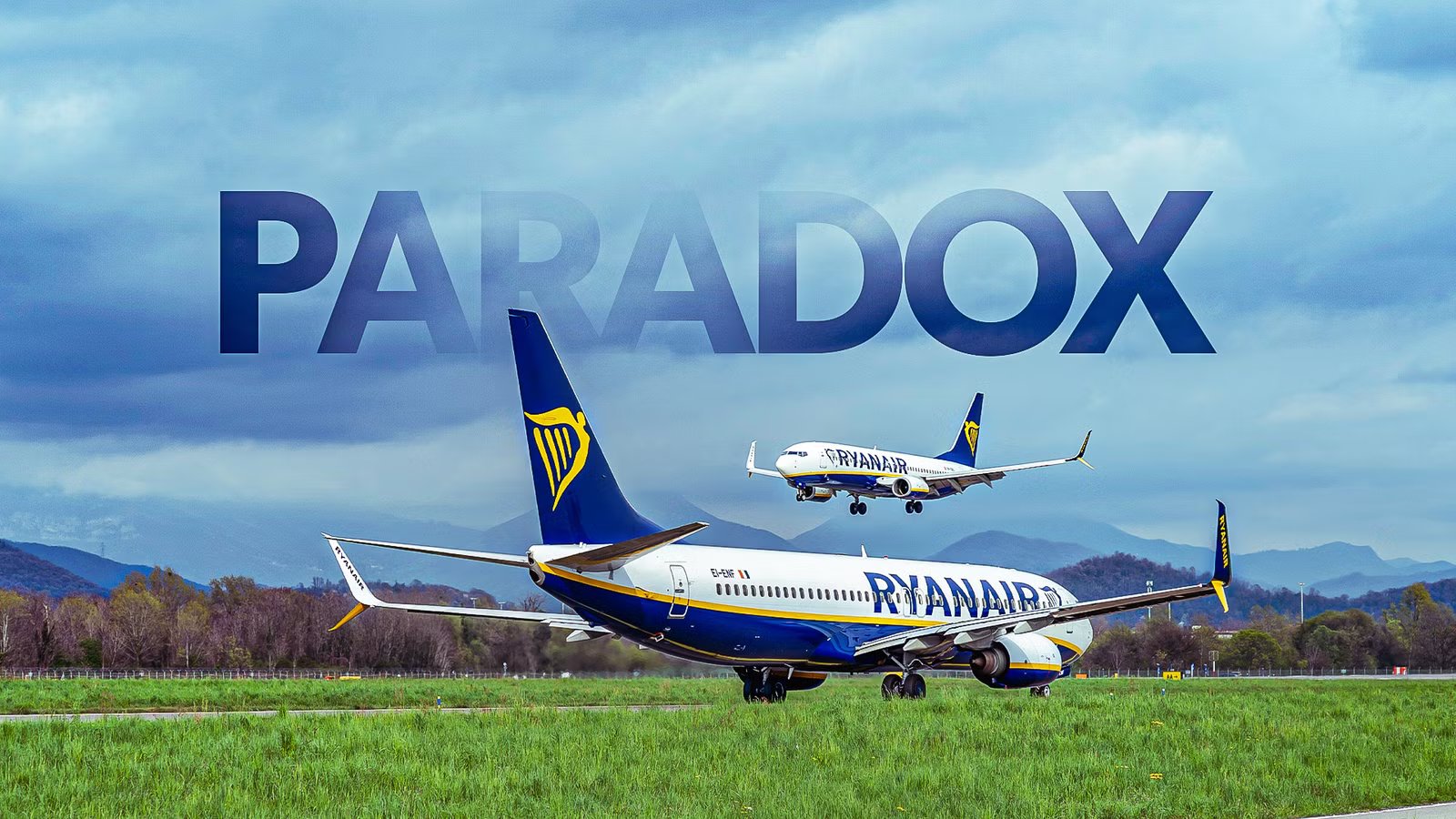
Ryanair is the epitome of a low-cost airline: cheap fares and the no-frills experience that goes with them. Indeed, Ryanair’s offering centers around the idea that travel does not have to break the bank if passengers are willing to forgo almost any element of luxury. But this focus on budget travel can often draw criticism, and it is well known that passengers love to hate the Ireland-based carrier.
That said, people still flock to the airline. Some 20.7 million traveled with the carrier over the month of May alone, according to its own data. Load factor, indicating how full its aircraft were on average, sat at 95% in the meantime. May’s figure also meant it had carried 210.4 million passengers on a rolling 12-month basis, solidifying its position as the largest airline in Europe. So, given its negative label, something does not quite add up.
Is Ryanair Really Disliked?

YouGov data offers an interesting insight as to whether people actually dislike Ryanair. Per the market researcher, Ryanair’s brand index score had averaged -21.1 over the past year as of mid-March. This metric offers an overview of how consumers view a company and essentially how healthy its brand image is overall.
As a point of reference, the airline sector as a whole had an average index score of +6.5 in the meantime, according to the YouGov data. So, based on brand perception, it would appear that Ryanair was well off its peers when it came to the typical consumer’s views of different carriers. But the brand index score is just one side of the story.
YouGov also offers consideration scores that display the likelihood of passengers actually choosing to fly with an airline when push comes to shove. For Ryanair, this had “seen a surprisingly steady growth” over the past year, coming to rest at 24.8%. This ultimately meant almost a quarter of Brits responding to YouGov’s surveys in mid-March said they would consider purchasing a Ryanair ticket upon booking flights. The average for the wider sector, meanwhile, sat at 14.1% by the same point. All this meant that passengers typically viewed Ryanair poorly when compared to its peers, but they were on average more likely to fly with the low-cost carrier than the other options, regardless.
Ryanair Passenger Numbers (And Financials) Growing

Ryanair’s own passenger statistics and even its share price would suggest that the negative brand index score is not something that would have had executives at the airline particularly worried. As already mentioned, the carrier recorded 20.7 million passengers in May alone. This marked a 6% increase against the 19.6 million it saw in May 2025 and followed year-on-year increases in each month of the current calendar year so far.
In terms of its financial year covering the 12 months to March, Ryanair welcomed a record number of passengers aboard its aircraft. At 208.4 million, the figure was up by 4%, while load factor averaged 94% over the year. In comparison,  Lufthansa grew passenger numbers by 3% to just over 135 million in its latest financial year, with load factor sitting at 83.2%.
Ryanair passenger statistics for the year so far, from the airline:
Month | Passengers | Load factor |
May | 20.7 million | 95% |
April | 19.3 million | 93% |
March | 15.8 million | 93% |
February | 13.3 million | 92% |
January | 12.7 million | 91% |
For Ryanair, the increase in footfall aided an 11% increase in full-year revenue to €15.54 billion ($17.91 billion), while profit after tax jumped 40% to €2.26 billion ($2.61 billion). Over roughly the same period, shares gained around a quarter to hit €25.64 ($29.57) by mid-March. Ryanair at the time also forecast a further 4% increase in passengers over the coming year to approximately 216 million.
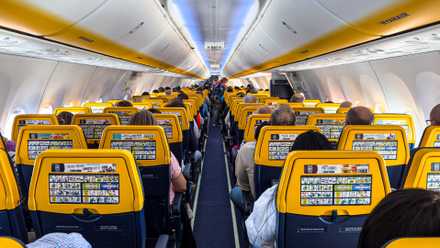
How Ryanair Built Europe’s Most Profitable Airline By Making Flying As Uncomfortable As Possible
Ryanair doesn’t see comfort or luxury as essential for being a successful airline. Instead, offering the lowest fares possible is what does the trick
Ryanair Excels On Value For Money

The numbers do not lie. Ryanair is no doubt a growing airline, even though the average consumer may turn their nose up at the brand, as shown in the YouGov data. As to why those same people will still buy its product, well, the answer is simple: Price.
YouGov’s brand index score for Ryanair, while negative overall, encompassed six different factors. Of these, impression, reputation, and quality sat below the -21.1 headline figure in March, effectively dragging it down. Recommendation then sat in line with the average, while satisfaction was higher, though still in the negative. Value made up the sole consideration of the six to fetch a positive score for Ryanair.
So, while passengers rate Ryanair negatively for the most part, its value for money stood out as a “significant strength,” in YouGov’s words, arguably trumping the rest of the factors behind the overall reading. Ryanair itself acknowledged this in its full-year report. The likes of aircraft delivery shortfalls, delays relating to Pratt & Whitney engine repairs, and rival airlines withdrawing capacity due to unhedged fuel costs were among factors leaving other carriers “less able to compete with Ryanair’s much lower costs” in the current climate, it said.
Likelihood Of Travelers Choosing Ryanair Remains

So Ryanair knows its ability to offer better value for money than rivals in many cases is effectively the trick up its sleeve. Because it can keep prices too low to ignore, a lower brand health rating realistically does not matter so much. There are several reasons for this, but the key in the short term is fuel costs. In May’s full-year report, Ryanair said that it had hedged 80% of its fuel for the coming 12 months. As such, the price was locked in to shield against volatile crude oil prices, which saw Brent spike at around $140 last month, having climbed from $60.85 as of the end of 2025, before conflict broke out in Iran.
Catch what other flight trackers miss
Emergency squawks, holds, NOTAMs — live signals, no signup.
Open tracker
Catch what other flight trackers miss
Emergency squawks, holds, NOTAMs — live signals, no signup.
Open tracker
But its business model relies on more to keep prices low. As is common among low-cost carriers, the advertised price of a ticket is only for a randomly allocated seat. Additional baggage, priority boarding, and choice of seat are among a string of extras offered to generate ancillary revenue for the airline. Ryanair reported this figure was up 6% at €4.99 billion ($5.75 billion) last year, equating to €24 ($27.65) per passenger. Simply put, it is up to customers whether they pay a premium for the optional extras.
YouGov survey: “When you are in the market next to book a flight, from which of the following would you consider purchasing a ticket?“
Rank | Airline brand | Consideration among future travelers |
1 | British Airways | 52.3% |
2 | easyJet | 51.7% |
3 | Jet2 | 39.9% |
4 | Ryanair | 33.4% |
5 | TUI Airways | 29.0% |
6 | Virgin Atlantic | 28.9% |
7 | Emirates | 28.5% |
8 | KLM | 20.1% |
9 | Qatar Airways | 20.1% |
10 | Lufthansa | 17.5% |
It is worth noting at this point that March’s brand index score reading from YouGov followed news that Ryanair was to hike fare prices for the coming summer on the back of aircraft delivery delays, so that may have had an impact. That said, passenger numbers grew at the airline in spite of increases also seen last year. Ryanair’s consideration score has also improved from the 24.8% seen in March, reaching 33.4% in late May. Based on the latest rankings from YouGov, this placed Ryanair fourth behind  British Airways, easyJet, and Jet2 in terms of how likely people were to consider buying tickets over the coming year.
More Passengers Than Ever Before: Ryanair Expects Record Demand Following Earnings
The carrier reported quarterly earnings earlier today.
Jetstar: Same Paradox, Different Hemisphere

Ryanair is far from the only airline to be perceived poorly given its no-frills offering, and low-cost carriers are actually often viewed negatively, wherever they are based around the world. Asia Pacific-based Jetstar Airways was found to be among the world’s “most hated” airlines in early 2023 based on the proportion of negative versus positive Tweets about the carrier, according to research by currency exchange company S Money Australia.
Operating a similar model to Ryanair, Jetstar appears not to have suffered from the negative label, much like its European-based counterpart. Incorporating brands serving Australia, New Zealand, and Asia, Jetstar Group scored revenue of AU$3.12 billion ($2.20 billion) and underlying profit of AU$492 million ($347 million) in the half year to December, according to parent Qantas. This meant increases of 7.9% and 12.1%, respectively, against a year earlier. Passenger numbers for the domestic Australian brand grew by 8.1% to 8.63 million in the meantime.
Though less lucrative than Ryanair, Jetstar’s own figures prove the disparity between brand image and demand is not just confined to the European market. Despite being labeled a “hated airline” in the past, JetStar has been enjoying growing volumes and improving finances more recently. Again, this can be put down to value, with Qantas’ results noting that over half of Jetstar’s passengers in the period had traveled for under AU$150 ($105.81). As YouGov acknowledges, “it is not unusual for low-cost airlines with high customer volume to have negative Index scores”.
Low Expectations Are The Product

The point is, Ryanair may not be the nicest to fly with, but at the prices it offers, it does the job. Ryanair’s low brand health does not mean people necessarily hate the airline, but rather, they know that low expectations are the product. One could equate the paradox to shopping at Costco. Though shoppers here may be attracted by the brand’s value proposition, the overall experience of visiting could leave much to be desired.
Ryanair looks to be pretty content with the image, too. Its group, incorporating Buzz, Lauda Europe, Malta Air, Ryanair, and Ryanair UK, runs approximately 3,800 daily flights from 95 bases to over 220 airports in 36 countries currently. With 300 Boeing 737 models on order to add to its already near-650-aircraft-strong fleet, its expectations are to hit the 300 million annual passenger mark in less than a decade’s time, by 2034.