dailynewsnblog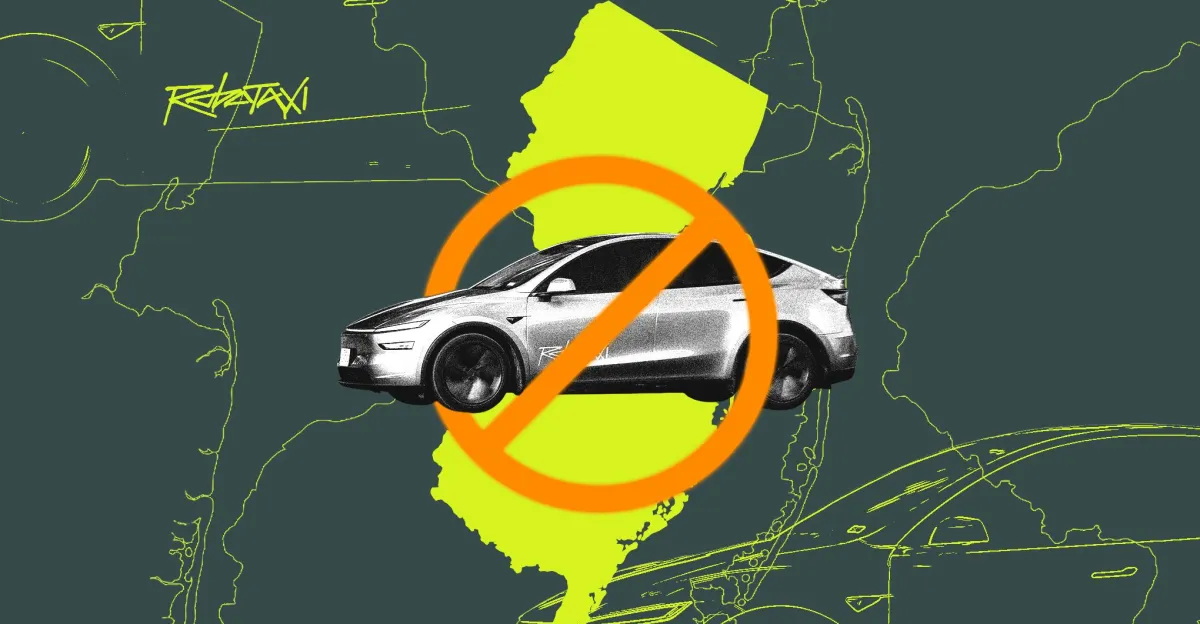
For more than a decade, one question has loomed over the race to build autonomous vehicles: Are cameras alone enough to safely replace human drivers, or do truly driverless cars need additional, overlapping sensors like lidar and radar to navigate the world reliably? Tesla has bet billions of dollars that artificial intelligence and cameras are sufficient. Nearly every other major autonomous vehicle developer has gone the opposite direction.
Until now, that argument has largely been left to executives and engineers. New Jersey lawmakers are trying to settle it in state law.
A bill expected to come up for a vote later this year would require companies seeking to operate fully autonomous vehicles in New Jersey to use cameras plus two other sensing technologies, most commonly lidar and radar. If enacted, New Jersey would be the first state to codify such a hardware mandate into law, moving ahead of a nearly identical proposal currently pending action in neighboring New York. The measure would also effectively prevent Tesla’s camera-only Robotaxi system from operating in New Jersey unless the company changed its hardware.
”This is not anti-Tesla,” Democratic state Sen. Andrew Zwicker, the bill’s primary sponsor, told The Verge. “I’m pro-New Jersey safety.”
Zwicker, a physicist who works at the Princeton Plasma Physics Laboratory (New Jersey doesn’t restrict legislators from outside jobs), said after riding in a Waymo robotaxi in Phoenix he became convinced autonomous vehicles could transform transportation.
”I was amazed how quickly you get used to it,” he said.


The technology, he argues, could dramatically expand mobility, reduce traffic deaths, and make transportation more accessible. But he believes the technology should roll out cautiously in the nation’s most densely populated state.
”At this point, I don’t think the evidence is sufficient that a single sensor with software can handle situations that humans can,” Zwicker said. “Can we get there? Maybe. But we’re not there yet.”
The proposal would establish a three-year pilot program governing the testing and deployment of fully autonomous vehicles in New Jersey. Companies would have to use multiple sensing technologies, report certain crashes, and receive state authorization before operating fully driverless commercial services. They would also have to complete at least 50,000 miles of supervised testing in New Jersey without a major incident before removing the human safety driver.
While state battles over autonomous vehicles have largely centered on safety performance, oversight, and potential job losses, New Jersey is attempting something different: legislating how the vehicles themselves should be built.
“At this point, I don’t think the evidence is sufficient that a single sensor with software can handle situations that humans can.”
— New Jersey state Sen. Andrew Zwicker
The sensor requirement is by far the bill’s most consequential provision and it would have repercussions beyond Tesla. Elon Musk has long argued that cameras paired with increasingly capable artificial intelligence are the best and most cost effective way to operate autonomous vehicles. Humans navigate the world using vision alone, Musk has said, so sufficiently advanced AI should eventually be able to do the same. Eliminating lidar and radar also dramatically lowers hardware costs, making it easier to build robotaxis cheaply enough to deploy at massive scale.
Musk has even argued that adding more sensors can reduce safety by forcing software to reconcile conflicting information.
”Lidar and radar reduce safety due to sensor contention. If lidars/radars disagree with cameras, which one wins?” he wrote on X last year. “We turned off the radars in Teslas to increase safety. Cameras ftw.”
Most of the rest of the autonomous vehicle industry disagrees. Companies including Waymo and Zoox combine cameras with lidar and radar, arguing that each sensing technology has different strengths and weaknesses. Cameras capture rich visual detail, allowing vehicles to recognize colors, traffic signs, lane markings, and pedestrians, but they can struggle in poor weather, darkness, or glare. Radar performs better in rain and fog and excels at measuring the distance and relative speed of nearby objects. Lidar uses lasers to create detailed three-dimensional maps of a vehicle’s surroundings, making it particularly effective at determining the shape and distance of nearby objects.
Rather than relying on a single sensor, those companies combine the strengths of all three, arguing that redundancy makes autonomous driving safer. Philip Koopman, a Carnegie Mellon electrical and computer engineering professor and autonomous vehicle safety expert, said camera-only systems may eventually become capable enough for fully autonomous driving. But he doesn’t believe they are today.
As Koopman put it, “eyeballs are better than cameras for many reasons” and “human brains are fundamentally more powerful than AI because we understand.” While there are situations where Koopman said camera-only works just fine — clear weather, favorable lighting, and less complex roads — he believes it’s not ready for broad consumer use.
“To run 24/7 across the majority of public roads in New Jersey today, it needs lidar,” he said. “It’s pretty clear that today camera-only technology is not up to the challenge.”
Koopman supports the New Jersey proposal but said he would prefer even stronger safeguards, such as requiring conventional driving controls like steering wheels and pedals so first responders could move disabled vehicles (so no Cybercabs, which don’t have either), and limits on how many AVs can be on the road during the pilot (a potential provision Zwicker said he’s considering).
“It’s pretty clear that today camera-only technology is not up to the challenge.”
— AV expert Philip Koopman
“The difference between 100 cars and 10,000 cars is night and day,” Koopman said. When the scale is small, “There’s just not enough cars for that much weird stuff to happen to them.” He pointed to Waymo, which now operates more than 3,500 commercial robotaxis across 11 US metro areas.
”They never used to have problems with floodwaters and school buses — not because they could do floodwaters and school buses,” Koopman said. “But with 100 cars it just doesn’t happen that often.”
Despite a lot of fanfare, Tesla currently only has a handful of unsupervised Robotaxis on the road, mostly in Texas, according to data from Robotaxi Tracker, suggesting it hasn’t been as easy to scale the camera-only approach as Musk had previously promised. Last year he predicted that Tesla would have hundreds of thousands of fully self-driving Teslas operating by the end of 2026. (Tesla did not respond to requests for comment for this article.)
Many of the bill’s provisions mirror recommendations from SAVE-US, a nonprofit that advocates for stricter autonomous vehicle regulation. Physicist and SAVE-US national campaign director Shua Sanchez said the group formed because Congress has failed to establish national rules while autonomous vehicle companies have expanded into states with dramatically different levels of oversight.
“California has the best safety regulations in the country,” he said. “Texas, Arizona, and Georgia have almost no state oversight.”
Among the organization’s priorities is requiring redundant sensing systems.
“We don’t have a problem with Tesla as a company,” Sanchez said. “We have a problem with camera-only autonomous vehicles.”
Nearly every major stakeholder has sought changes to the bill. Waymo successfully pushed to remove a requirement that safety drivers remain in vehicles throughout the pilot, and Uber argued the state should continue requiring human drivers for most rides, according to Zwicker.
Tesla has been lobbying against the legislation in New Jersey, according to Zwicker, who said company representatives met with lawmakers to argue that advances in artificial intelligence make additional sensor types unnecessary. Zwicker said that while the tech has gotten better, “I’m not convinced yet that they’re ready to go.”
The debate has spilled beyond the state House.
“As written, the legislation imposes restrictions so severely that Tesla’s autonomous vehicle technology couldn’t legally operate in New Jersey,” read a Tesla missive to New Jersey Tesla owners encouraging them to contact lawmakers. “Rather than prioritizing real safety outcomes and performance, the bill specifically bans Tesla from the New Jersey market.”
Zwicker said his office received roughly 4,000 emails within a day. “The messaging wasn’t about the details of the bill,” he said. “It was that Zwicker is trying to take away your Autopilot.”
“Rather than prioritizing real safety outcomes and performance, the bill specifically bans Tesla from the New Jersey market.”
— A Tesla message to NJ owners
Zwicker rejects that characterization. The legislation applies only to fully autonomous vehicles operating under the proposed state pilot program — not driver-assistance systems that require a licensed human driver to remain behind the wheel.
The fight in New Jersey reflects a broader vacuum in autonomous vehicle regulation. Congress has debated national autonomous vehicle legislation for years without passing a comprehensive framework, leaving states to develop their own rules as commercial robotaxi services expand. Robotaxi services already operate in states including California, Texas, Arizona, and Georgia under dramatically different regulatory systems. While California requires extensive testing permits and public reporting, it doesn’t specify which tech the AVs need to get there. Texas has adopted a far lighter-touch approach, which lets automakers self-certify that their autonomous vehicles are ready for the road.
New Jersey’s bill raises the possibility that AV tech there could differ from that of other states. Zwicker says that isn’t his concern.
“The technology doesn’t exist in the Northeast at all,” he said. “The goal is to start now, do it safely, and build public trust.”
Sanchez sees the sensor requirement as a common-sense safeguard rather than a restriction on innovation.
“There are absolutely brilliant people working at Tesla trying to make camera-only autonomy work,” he said. “But they’re trying to do it with one arm tied behind their back.”