dailynewsnblog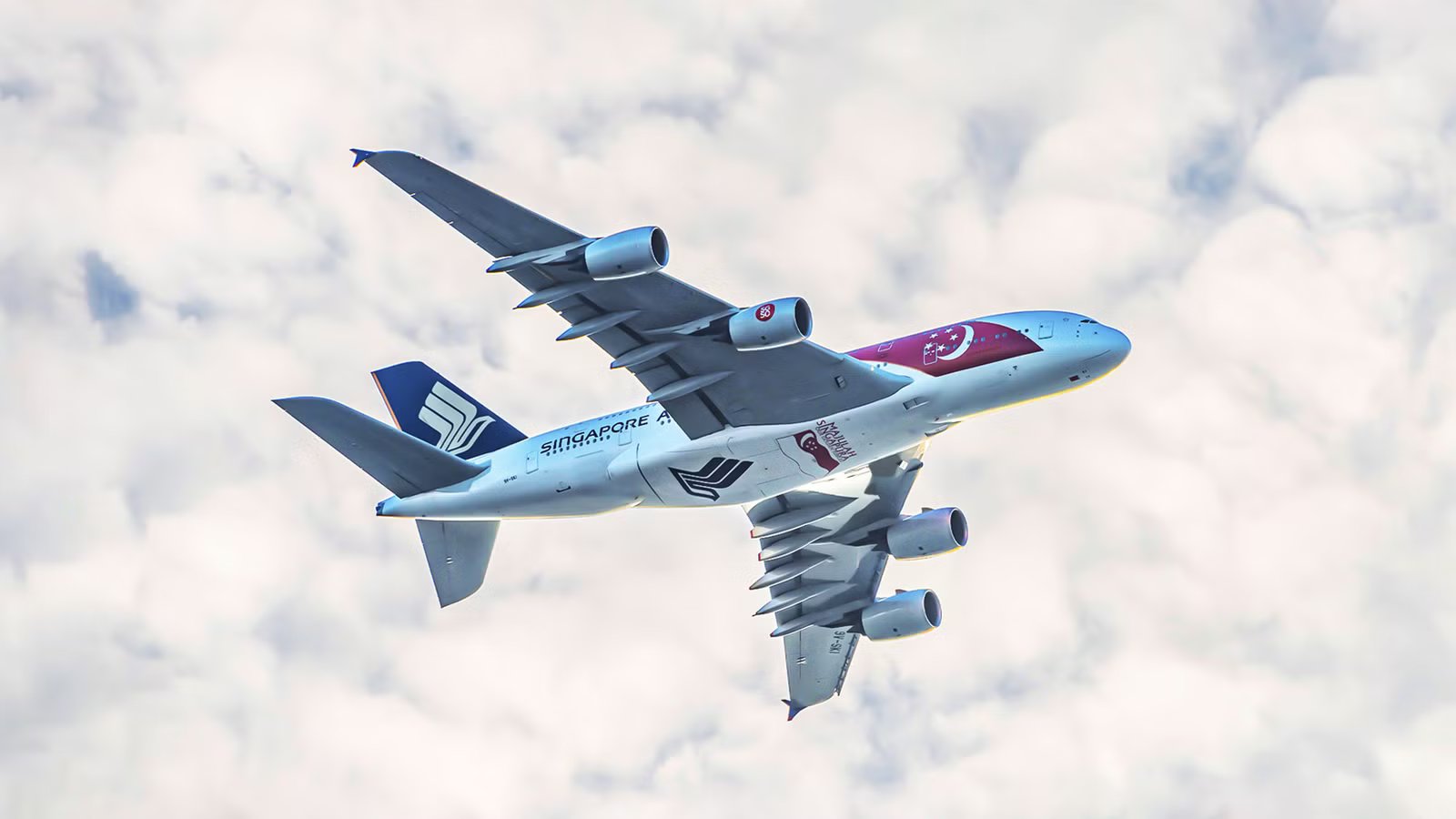
Airbus made a huge bet on the future of the aviation industry with the introduction of the superjumbo. Having begun development of the Airbus A380 back in the early 1990s, the manufacturer sought to market an aircraft that would solve the issue of growing demand around a finite number of hub airports. Simply put, the A380 would allow airlines to move greater numbers of people via each movement, in turn reducing congestion.
Come the double-decker jet’s commercial introduction in 2007, though, it appeared hybrid operations were growing in favor over the hub-to-hub model that Airbus built the A380 for. That is not to say the A380 was not a popular option in some cases. Rather, the emergence of more efficient, long-range twin-engine jets gave airlines choice. For those in the United States, the flexibility afforded by the latter proved a deal-breaker. No US-based carrier ever operated the A380 as a result, despite the industry locally being dominated by a handful of major carriers relying on a string of key hubs.
US Airlines Built Networks Around Several Hubs

In essence, the A380 never took off among US carriers because they built their networks around several key airports. Where the superjumbo looked to offer a means for transporting great numbers at once between such hubs, the number of hubs in the US proved too great for the aircraft to be viable. It may seem ironic, but the mismatch begins to make more sense when the makeup of the US market is factored in.
Take the Big Three US carriers, for instance. Between them,  American Airlines,
  Delta Air Lines, and
  United Airlines collectively boast 27 hubs across 22 individual airports today, with some shared by two or even all three of the trio. These themselves serve individual purposes, but ultimately either connect international flyers to the rest of the world or fit into a vast web of domestic routes.
The Big Three US airlines’ hubs, as listed on their respective websites:
Airline | Hubs |
American Airlines | Charlotte Douglas International Airport (CLT), Chicago O’Hare International Airport (ORD), Dallas/Fort Worth International Airport (DFW), Los Angeles International Airport (LAX), Miami International Airport (MIA), John F. Kennedy International Airport (JFK), LaGuardia Airport (LGA), Philadelphia International Airport (PHL), Phoenix Sky Harbor International Airport (PHX), Ronald Reagan Washington National Airport (DCA) |
Delta Air Lines | Hartsfield–Jackson Atlanta International Airport (ATL), Boston Logan International Airport (BOS), Detroit Metropolitan Wayne County Airport (DTW), Los Angeles International Airport (LAX), Minneapolis–Saint Paul International Airport (MSP), John F. Kennedy International Airport (JFK), LaGuardia Airport (LGA), Salt Lake City International Airport (SLC), Seattle–Tacoma International Airport (SEA) |
United Airlines | Chicago O’Hare International Airport (ORD), Denver International Airport (DEN), Antonio B. Won Pat International Airport, Guam (GUM), George Bush Intercontinental Airport (IAH), Los Angeles International Airport (LAX), Newark Liberty International Airport (EWR), San Francisco International Airport (SFO), Washington Dulles International Airport (IAD) |
America’s aviation industry was not always like this, with airlines being confined to point-to-point connections prior to 1978. Government deregulation at this point paved the way for airlines to tailor routes to demand, and it led to the use of hubs for maximizing efficiency. All of that meant flexibility was key, and so aircraft capable of covering various routes or making multiple trips daily were needed.
Airbus A380 Just Too Big For US Carriers

Unfortunately for Airbus, the A380 failed to fit the bill. Designed specifically for high-capacity flights, it was always going to be mismatched with a system in the US geared towards capturing dispersed demand. Where the A380’s sheer size proved its biggest strength elsewhere, this turned out to be its largest setback when it came to the US.
According to Airbus, the full-length double-decker jet could in theory carry 853 passengers in an all-economy configuration, being certified to do so. Typically, however, the superjumbo is used to transport closer to 550 people at a time. While this is also regularly cut to fewer seats to prioritize premium offerings, the point remains: The A380 simply offers too much plane for the needs of US carriers.
This is because each of the majors uses several airports to support their international operations. In the case of Delta alone, Hartsfield–Jackson Atlanta International Airport (ATL), Minneapolis–Saint Paul International Airport (MSP), Salt Lake City International Airport (SLC), and Detroit Metropolitan Wayne County Airport (DTW) primarily serve this purpose, for example. Where one central hub would indeed require larger aircraft, given the higher number of passengers being funneled through, the use of four key airports by the airline means smaller widebodies like its Airbus A350, Airbus A330, and Boeing 767 aircraft are more suited to the numbers involved. Where the A380 has come in useful is exactly where airlines have fewer central airports in play.
Where Does The A380 Excel?

More than anywhere else, the plane has proven extremely useful for  Emirates. With 116 models in its fleet as of 2026, the United Arab Emirates, one of the UAE’s flag carriers, remains the largest operator of the superjumbo by a stretch. Most notably, unlike its US-based counterparts, Emirates relies on just one centralized mega-hub at Dubai International Airport (DXB).
By concentrating almost all of its passengers through Dubai, Emirates is able to ensure that enough seats are filled on its largest aircraft to justify flying them. Per its latest annual report, 43%, or roughly 22.9 million, of the 53.2 million passengers carried by Emirates over the airline’s last financial year were served by A380s. These, which carried between 484 and 615 passengers depending on configuration, were said to have covered 53 destinations. Importantly, load factors on these flights averaged 79%, meaning seats were overwhelmingly filled and so were generating revenue for the airline.
Airlines that operate the Airbus A380 in 2026:
Airline | Number of A380s |
Emirates | 116 |
British Airways | 12 |
Singapore Airlines | 12 |
Qantas | 10 |
Etihad Airways | 9 |
Lufthansa | 8 |
Qatar Airways | 8 |
Asiana Airlines | 6 |
Korean Air | 5 |
All Nippon Airways | 3 |
Similarly,  British Airways and
  Singapore Airlines solely fly their A380s from their respective hubs of London Heathrow Airport (LHR) and Singapore Changi Airport (SIN). In Singapore’s case, its 12-strong superjumbo fleet was only set to serve nine routes over the remainder of the year, come the time of writing. Including the likes of Heathrow and Sydney Kingsford Smith Airport (SYD), the routes represent where Singapore forecast enough demand to justify operating such large aircraft.
US Still A Major Market For A380 Flights

Though no US carrier ever mirrored airlines like Emirates, British Airways, and Singapore in purchasing A380s and concentrating them at a single hub, the country itself has still come to be a major market for the aircraft. A total of 16 airports across the US have Modifications of Standards in place to accommodate A380 operations, according to the Federal Aviation Administration.
As of early this year, 10 of these airports were scheduled to be served by seven airlines covering 22 routes using A380s. Emirates alone was set to account for six of these routes, with British Airways and  Lufthansa then gearing towards five apiece. In terms of airports, Los Angeles International Airport (LAX) was to get the most A380-served connections, including to Heathrow, Dubai, Sydney, Incheon International Airport (ICN), Munich International Airport (MUC), and Melbourne Airport (MEL).
US airports served by A380s in 2026:
Boston Logan International Airport (BOS) |
Dallas/Fort Worth International Airport (DFW) |
Denver International Airport (DEN) |
Daniel K. Inouye International Airport (HNL) |
George Bush Intercontinental Airport (IAH) |
Los Angeles International Airport (LAX) |
John F. Kennedy International Airport (JFK) |
Miami International Airport (MIA) |
San Francisco International Airport (SFO) |
Washington Dulles International Airport (IAD) |
All of that goes to say, any routes in and out of the US offering the levels of footfall needed to sustain A380 flights remain well covered off by rivals from overseas. In many cases, these rivals overwhelmingly have geography on their side, with Dubai connecting the Middle East, Africa, Asia, and Europe, for instance. For US airlines, attempting to compete directly would mean venturing into an already well-supplied market.
Most US Air Traffic Domestic

There is also the caveat that the majority of air traffic in the US is domestic and only a handful of airlines exist Stateside that could feasibly fly or ever have flown the A380. Based on data from aviation analytics site OAG, total scheduled capacity across the US for July this year sat at 126.6 million seats. Of this, 95.3 million seats, or 75.2%, were set to be on domestic flights.
Within this, American was poised to single-handedly account for 21% of the market by offering 23.6 million seats. Delta and  Southwest Airlines were then to follow with a 19% and 18% share of the available seats, respectively. That meant just three airlines were offering in excess of 50% of the seats on offer across the US market for the month. Add in United, and that share increased to 75%, as noted by OAG.
Given Southwest’s primarily domestic focus, the three legacy carriers appear as the only airlines across the country dealing with enough international passengers to bring the need for aircraft like the A380 into question. Considering each of the trio’s multi-hub strategies, however, and the fact that several high-capacity A380 flights to and from the US have long been offered by foreign peers, the need for such an aircraft goes out the window.
Some Interest From US For A380

It is worth noting that there was once an element of interest from within the US for Airbus’ double-decker. Fedex Express and  UPS Airlines did originally have orders in place for a freighter variant, but delays saw both cancel their deals before the first passenger A380 even rolled out in Singapore in late 2007. All told, the freighter was never built, and in turning their backs the duo ultimately closed off the world’s single-largest aviation market to the program.
For passenger carriers, American Airlines’ then-vice president of planning, Vasu Raja, summed up the predicament around the A380 in 2019. “The reality is that we don’t just funnel all of our traffic into one hub,” he said. “We operate out of nine different hubs in the US, and because of that there’s no single hub where you can pool 500 people’s worth of demand every single day and go make that work.”