dailynewsnblog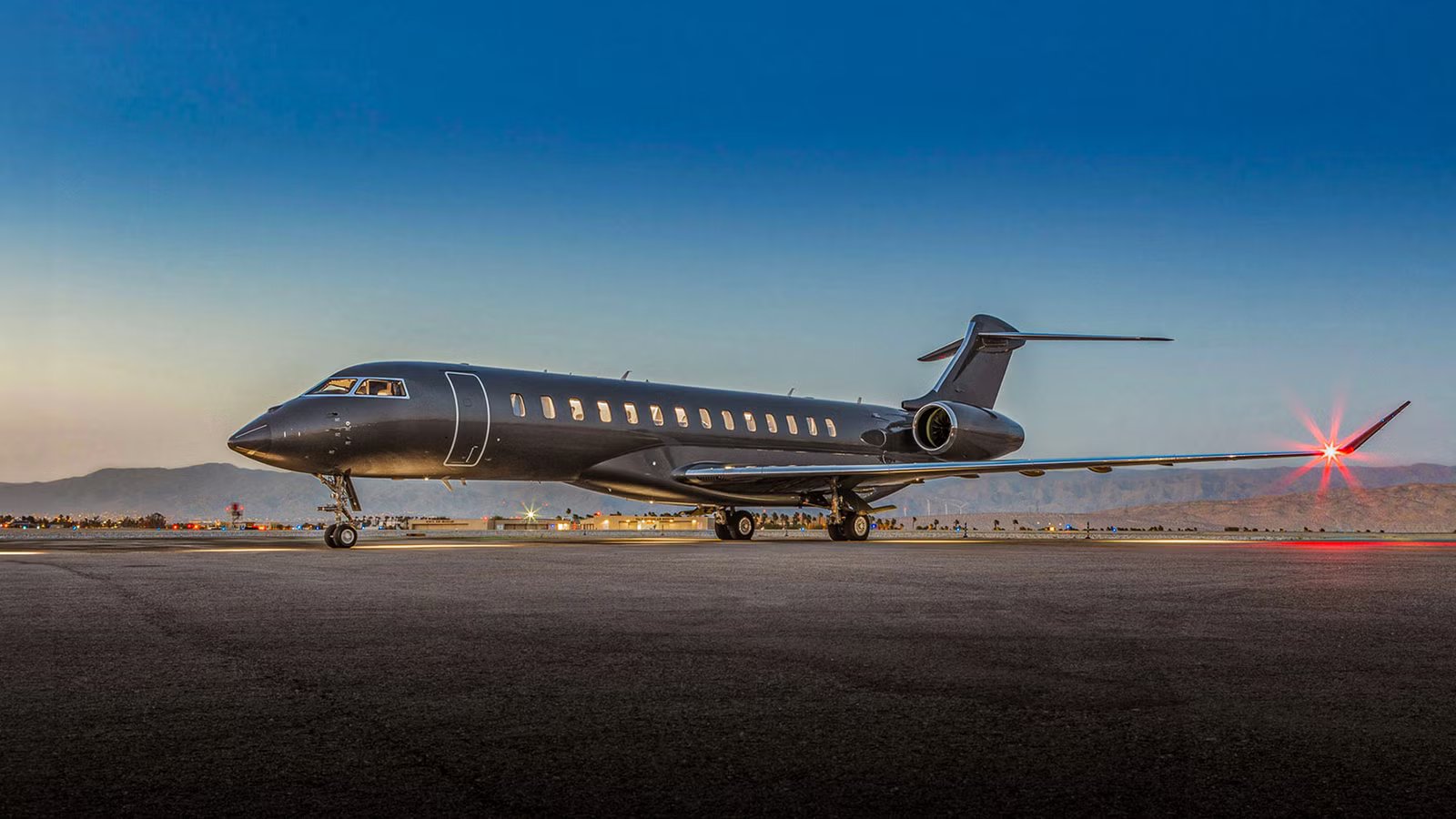
The advertised hourly charter rate for a private jet rarely reflects what a client ultimately pays. For ultra-long-haul missions, the hourly figure serves as a starting point rather than the final price. By the time fuel surcharges, aircraft positioning, crew expenses, airport fees, taxes, and seasonal demand are factored into the invoice, the total can rise dramatically. On one of the world’s premier long-range business aviation routes, New York to Dubai, that difference can amount to tens of thousands of dollars.
The Bombardier Global 7500 sits at the top of the business aviation market and is purpose-built for missions like this. With a published range of 7,700 nautical miles (14,300 km), it is capable of connecting major financial centers across continents without refueling under suitable operating conditions. Yet the ability to fly nonstop comes at a premium. Depending on the operator, season, and trip specifics, a one-way charter between New York and Dubai typically costs between $150,000 and nearly $300,000, making it one of the most expensive regularly requested business aviation itineraries in the world.
Why The Bombardier Global 7500 Is Built For This Mission

Very few business jets can realistically operate a route as demanding as New York to Dubai. At approximately 6,850 nautical miles (12,685 km), depending on routing and prevailing winds, the journey pushes many aircraft beyond their comfortable operating range. The Global 7500 was designed specifically to overcome that limitation. Certified in 2018, the flagship aircraft introduced an entirely new capability for the ultra-long-range business jet market. Bombardier rates the aircraft for flights of up to 7,700 nautical miles (14,300 km), allowing nonstop connections between city pairs that previously required at least one refueling stop. The aircraft is powered by a four-zone cabin architecture, advanced fly-by-wire controls, and a pair of General Electric Passport engines optimized for long-distance efficiency.
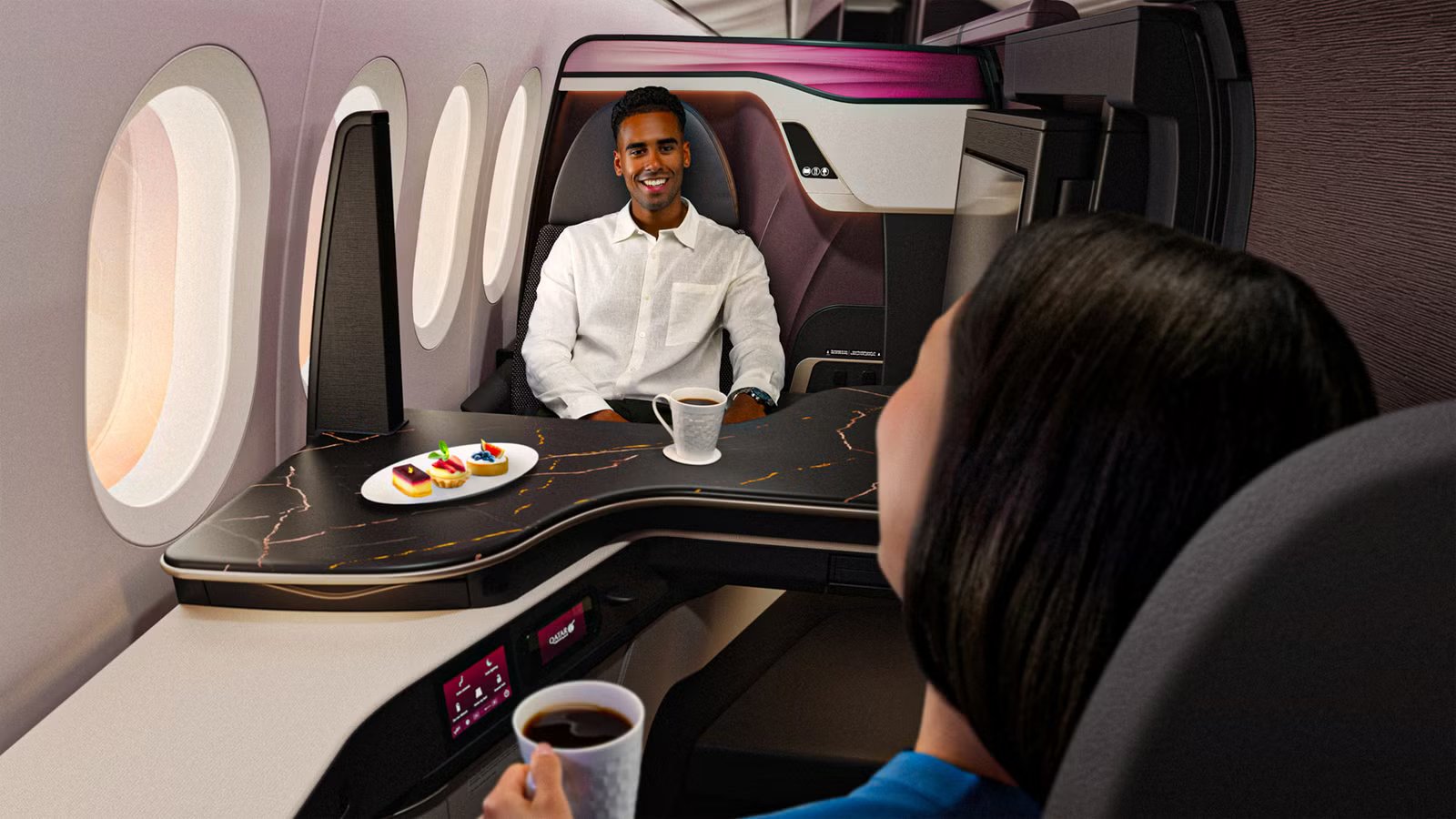
For passengers, that translates into more than simply avoiding a fuel stop. Eliminating an intermediate landing can save several hours while reducing customs formalities, security procedures, and scheduling uncertainty. High-profile executives, government officials, entertainers, and ultra-high net worth individuals often value time savings as much as the aircraft itself. The Global 7500’s cabin also distinguishes it from smaller long-range business jets. Depending on configuration, it accommodates up to 19 passengers and includes four separate living spaces. Many operators install a dedicated bedroom, a full galley, conference seating, and a stand-up shower option, enabling travelers to work, dine, sleep, and arrive prepared for meetings immediately after landing.
That combination of performance and comfort explains why the Global 7500 competes directly with the Gulfstream G700 at the very top of the charter market. Both aircraft were designed for missions exceeding 12 hours, but only a relatively small worldwide fleet is available for charter, limiting supply and supporting premium pricing.
Global 7500 and G700 Comparison | ||
|---|---|---|
Global 7500 | G700 | |
Length | 111 feet (34 meters) | 109 feet, 10 inches (33.48 meters) |
Wingspan | 104 feet (32 meters) | 103 feet (31 meters) |
Maximum operating Mach | Mach 0.925 | Mach 0.935 |
Range | 7,700 nm (14,300 km) | 7,750 nm (14,350 km) |
Maximum takeoff weight | 114,850 lb (52,100 kg) | 107,600 lb (48,800 kg) |
Hourly Rates Are Only The Beginning

Many charter advertisements promote hourly pricing because it provides an easy comparison between aircraft categories. For a Global 7500, however, the quoted hourly figure tells only part of the story. Multiple 2026 pricing guides place entry-level charter rates for flagship ultra-long-range aircraft at approximately $12,000 per flight hour, although that represents ideal market conditions rather than the amount most customers ultimately pay. Premium operators commonly quote between $16,000 and $19,000 per hour for the Global 7500, while the newest G700 frequently starts around $17,000 per hour before additional costs are applied.
On paper, multiplying a representative hourly rate by a 14-hour flight appears straightforward. A charter rate of $16,000 per hour would produce a base transportation cost of roughly $224,000 before taxes or operational expenses. Even a comparatively conservative $14,000 hourly rate still results in nearly $200,000. In reality, few invoices stop there. Unlike airline tickets, private jet charters are individually priced based on each mission. Aircraft availability, airport congestion, fuel prices, repositioning requirements, and international handling arrangements all influence the final quote. Two seemingly identical flights departing only days apart can differ in cost by tens of thousands of dollars.
The effect becomes even more pronounced during busy travel periods. Industry pricing trackers indicate that summer 2026 charter rates are running roughly 15 to 20% higher than baseline levels because of elevated fuel costs, constrained aircraft availability, and exceptionally strong demand across Europe and the Middle East. Jet card programs provide another useful benchmark because many include repositioning expenses within their published hourly pricing. According to first quarter 2026 industry tracking, ultra-long-haul aircraft enrolled in major jet card programs averaged $19,301 per flight hour, illustrating how comprehensive pricing often exceeds headline charter advertisements. In short, the advertised hourly rate represents the floor, not the ceiling.
What Pushes A $200,000 Flight Toward $300,000?

The largest difference between the advertised charter rate and the final invoice comes from expenses that have little to do with the passengers themselves. Aircraft positioning, commonly called ferry flying, often represents the biggest additional charge. Unless a Global 7500 already happens to be waiting at the customer’s preferred departure airport, the aircraft must first fly empty to collect passengers. Those repositioning hours still consume fuel, crew time, maintenance reserves, and engine cycles, making them billable in many charter agreements.
For international missions like New York to Dubai, positioning can occur at both ends of the trip. If the aircraft is scheduled to continue elsewhere after arrival or return empty to another operating base, additional costs may be incorporated into the quotation. Although modern business jets are significantly more efficient than earlier generations, a 14-hour intercontinental mission still consumes a substantial amount of jet fuel. Because fuel prices fluctuate continuously, many operators separate these costs from their advertised hourly rates rather than embedding them into a fixed price. Crew expenses add another layer as pilots operating ultra-long sectors require hotel accommodations, meals, ground transportation, and mandated rest periods before returning. Depending on scheduling, relief pilots may also be necessary to comply with international flight duty regulations.
Furthermore, major international gateways such as New York’s John F. Kennedy International Airport (JFK) and Dubai International Airport (DXB) assess landing fees, parking charges, aircraft handling costs, and security expenses. Many private travelers also choose dedicated fixed base operators or VIP terminals, which provide expedited customs processing, private lounges, and direct aircraft access but add further charges to the overall trip. Finally, international taxes and regulatory fees vary by jurisdiction. Federal Excise Tax, passenger segment fees, customs processing charges, and international navigation fees all contribute to the final invoice. Taken together, these additional expenses frequently increase total trip costs by 20 to 40% above simple hourly calculations. That is why broker quotations for a one-way New York to Dubai charter regularly fall between $150,000 and $295,000, even when the underlying hourly rate initially appears much lower.
Comparing Charter Quotes Across The Market

One of the more revealing aspects of private aviation is how widely prices can vary for what appears to be the same trip. A nonstop charter from New York to Dubai on a Global 7500 is not a standardized product; every operator prices the mission differently based on fleet location, aircraft ownership structure, operating certificates, fuel contracts, and scheduling constraints. Several charter brokers publishing 2026 estimates illustrate this variation. The Room Hunt places one-way Global 7500 and comparable ultra-long-range charters between $150,000 and $250,000, while Centurion Jets lists a broader range of approximately $195,000 to $295,000 for similar itineraries. RentJet advertises nonstop flights beginning around $195,000, with actual pricing depending on aircraft availability and customer requirements.
These differences do not necessarily indicate that one provider is significantly cheaper than another, but reflect different assumptions about positioning flights, crew expenses, airport selection, or whether taxes and international handling fees are included. A lower advertised figure may exclude costs that appear later in the booking process, while a higher initial quote may already bundle those items into a single fixed price.
Aircraft availability also plays a major role. The Global 7500 remains one of the newest and most sought-after business jets in service. Although Bombardier has steadily increased deliveries, the worldwide charter fleet is still relatively limited compared with older aircraft such as the Gulfstream G650 or Global 6000. During periods of high demand, brokers may have to source aircraft from another region, increasing repositioning costs before passengers even board. Empty leg opportunities can occasionally reduce prices, but they are uncommon on routes like New York to Dubai. Empty legs arise when an aircraft must reposition without passengers after completing another charter. Because ultra-long-haul missions are relatively infrequent and highly customized, matching a customer’s preferred schedule with an available repositioning flight is considerably more difficult than on shorter domestic routes.
Another consideration is cabin configuration. While every Global 7500 offers exceptional comfort, charter operators furnish their aircraft differently. Some emphasize executive meetings with conference seating and advanced communications systems, while others prioritize luxury with permanent bedrooms, entertainment suites, and upgraded catering packages. These premium services contribute to pricing differences that extend beyond the aircraft itself. Ultimately, charter clients are purchasing flexibility as much as transportation. Departure times, onboard amenities, baggage capacity, catering preferences, customs coordination, and ground transfers can all be tailored to the individual traveler. That level of personalization explains why pricing remains dynamic instead of fixed.
Who Actually Pays For Flights Like This?

A quarter-million-dollar private jet charter naturally raises the question of who finds such an expense worthwhile. For the overwhelming majority of travelers, even first class on a commercial airline provides a far more economical option. Airlines such as Emirates operate multiple daily flights between New York and Dubai with enclosed suites, fine dining, airport lounges, and lie-flat beds at a fraction of the cost of a private charter.
Corporate executives traveling with senior leadership teams often value the productivity gained from a private aircraft. Confidential meetings can continue throughout the flight, departure times can be adjusted around business commitments, and travelers arrive together without the delays associated with commercial terminals. When the value of a major transaction or international negotiation reaches hundreds of millions of dollars, the charter cost becomes relatively small compared with the potential business outcome.
Government delegations also rely heavily on ultra-long-range business aircraft. Diplomatic schedules frequently require direct transportation between cities while maintaining strict security and communications capabilities throughout the journey. Flexibility is especially valuable when travel plans change on short notice. High net worth individuals and family offices represent another significant customer segment. For these clients, privacy, convenience, and schedule control often outweigh ticket prices. A nonstop charter eliminates airport crowds, lengthy connections, and unpredictable delays while allowing travelers to depart from dedicated private terminals.
Entertainment, sports, and medical transportation can also justify aircraft of this capability. Touring performers, professional athletes, production crews, and specialized medical teams sometimes require direct intercontinental travel with equipment that would be impractical on scheduled airline services. Even among these customer groups, though, nonstop flights of this length remain relatively uncommon. Many private aviation users choose shorter sectors or combine private and commercial travel depending on destination and operational needs. Chartering a Global 7500 for a 14-hour nonstop mission represents one of the highest tiers of business aviation, reserved for situations where time, privacy, and flexibility carry extraordinary value.
Will Ultra-Long-Range Charters Become More Affordable?

Demand for aircraft such as the Global 7500 continues to grow, but that does not necessarily mean prices will fall. Industry analysts expect the premium end of the charter market to remain constrained for several years as manufacturers work through order backlogs and operators expand fleets gradually rather than rapidly. Bombardier continues delivering additional Global 7500 aircraft, while Gulfstream is increasing production of the G700. More available aircraft could improve charter availability on popular long-haul routes, but demand from corporations, governments, and wealthy individuals has remained consistently strong since the pandemic reshaped private aviation travel patterns.
Fuel prices will also play an important role, as prices remain high. Technology will also continue improving aircraft efficiency, but physics remains difficult to overcome. Flying nearly 8,000 miles (12,875 km) nonstop in complete privacy requires an exceptionally capable aircraft, experienced crew, and extensive operational support. Those fundamentals ensure that ultra-long-range business aviation will remain a premium product rather than a mass market service.
For travelers considering a New York to Dubai charter, the advertised hourly rate should be viewed only as an entry point. By the time repositioning flights, international fees, fuel surcharges, crew costs, and taxes are incorporated, the final invoice often exceeds a quarter of a million dollars. That reality explains why the true cost of operating one of the world’s longest private jet flights has far less to do with the published hourly rate than with the complex logistics required to make such a mission possible.