dailynewsnblog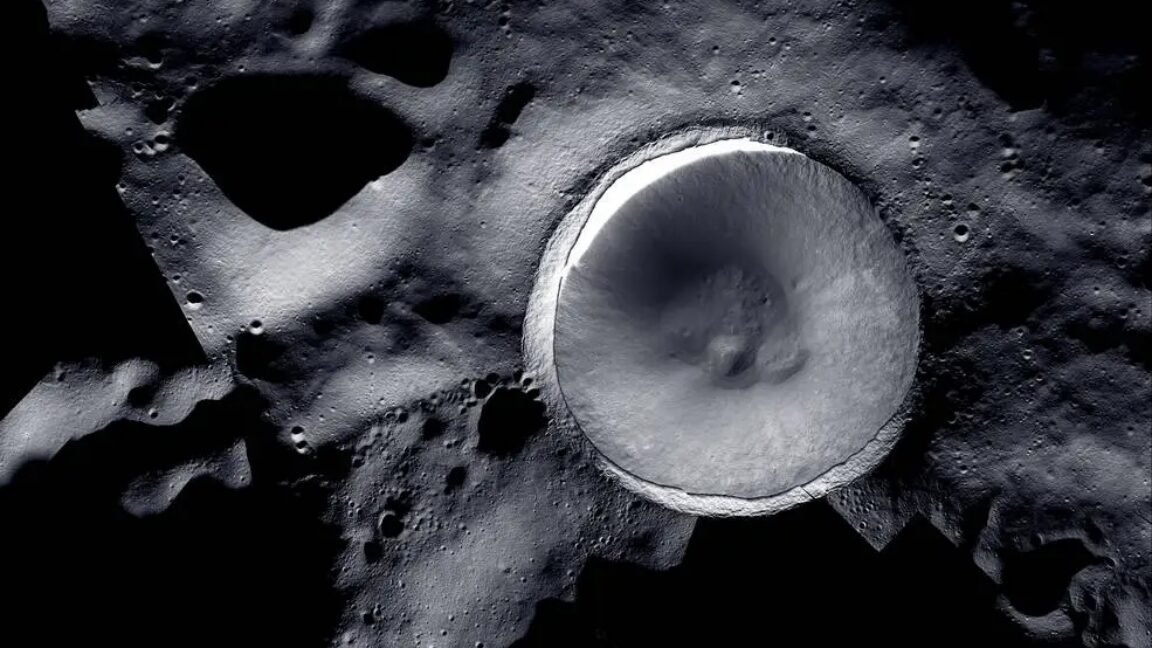
A certain appeal
Shackleton Crater is about 13 miles (21 kilometers) wide, with a surface area roughly the same as the cities of Philadelphia, Las Vegas, or Detroit. The crater measures 14,000 feet (4.2 kilometers) deep. If Endurance and Chang’e 7 land on or near the crater rim, as expected, it would be the first time landers from different nations have operated simultaneously so close to one another on another planetary body.
The plans to send two missions to Shackleton at close to the same time are also emblematic of the brewing competition between the United States and China to land humans on the Moon before the end of this decade. Both nations plan to construct a lunar base near the Moon’s south pole in the 2030s.
The highest crests of Shackleton’s rim offer the advantage of near-continuous sunlight, providing a lander or future Moon base a stable source of solar power right next to a crater floor in eternal shadow, where temperatures are cold enough to preserve ancient ice deposits. The Moon’s polar cold traps, including Shackleton, are attractive targets for future exploration. The ice at these locations could be harvested to supply drinking water, oxygen, and rocket fuel for a lunar outpost.
Shackleton has some pertinence for fans of Apple TV’s sci-fi alternate-history series For All Mankind, in which prospectors from the United States and the Soviet Union compete for water resources inside the crater.
Credit:
Blue Origin
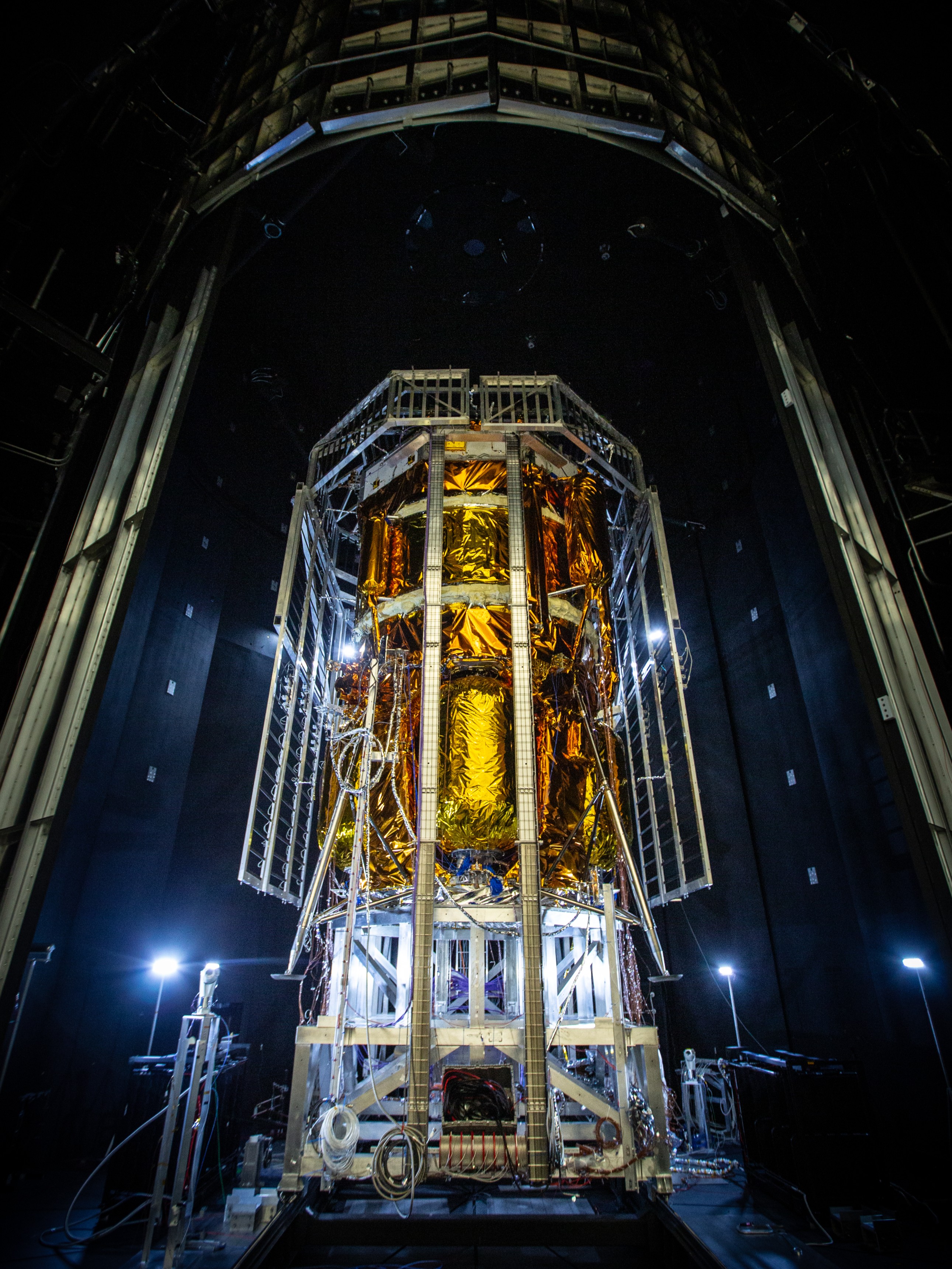
Blue Origin’s Blue Moon lander undergoes tests at Johnson Space Center in Houston.
Credit:
Blue Origin
Blue Origin’s Endurance lander is the first test flight of the company’s Blue Moon Mark 1 design, a 26-foot-tall (8-meter) vehicle intended to deliver cargo and experiments to the lunar surface. Blue Moon Mark 1 is a stepping stone to Blue Origin’s human-rated lunar lander for NASA’s Artemis program.