dailynewsnblog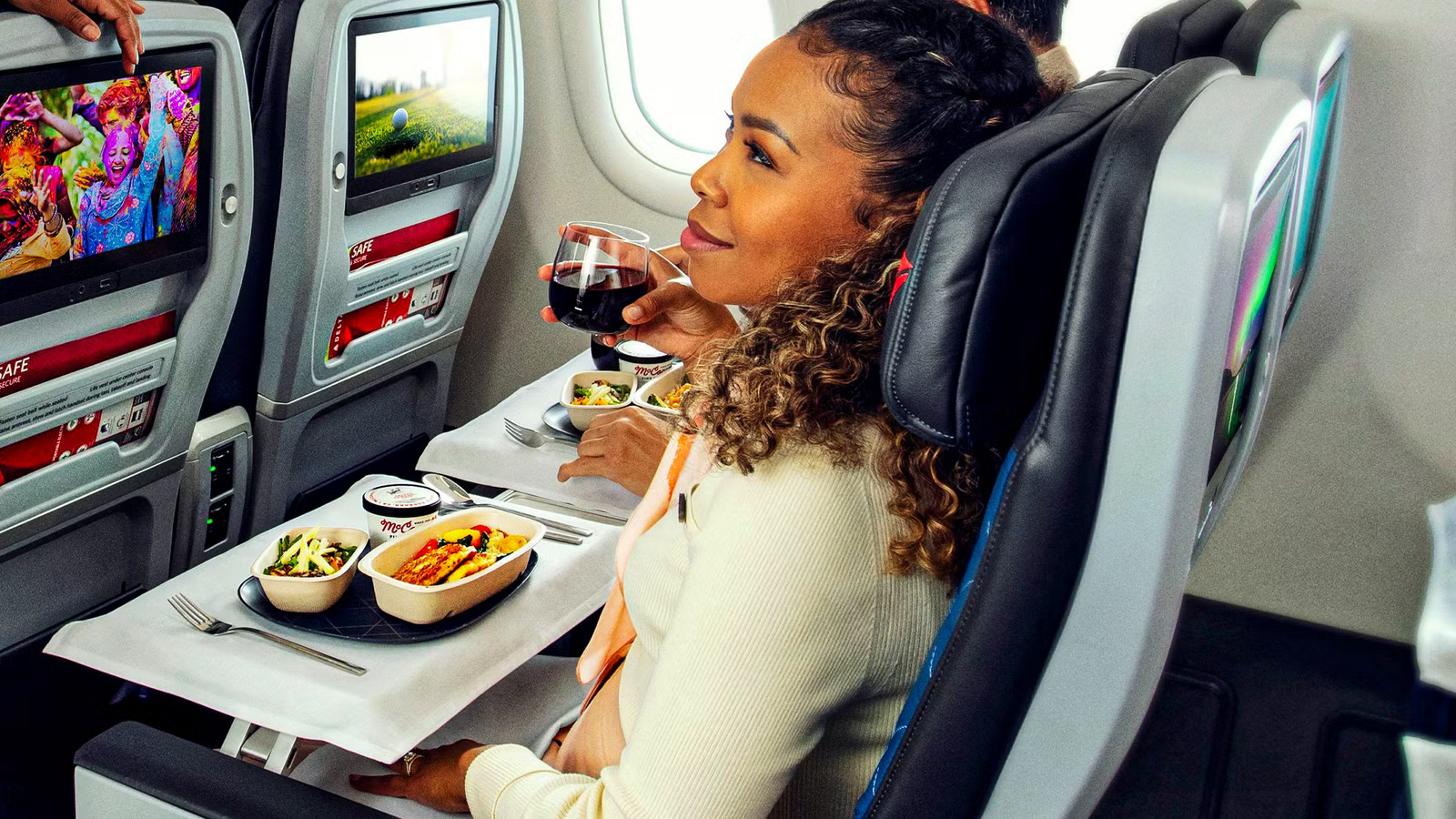
Premium economy became one of the most successful cabin concepts in international aviation because it solved a problem that neither business class nor standard economy could address on its own. Travelers who wanted more space, better food, and a quieter experience did not necessarily want to pay business-class fares. Airlines in Europe and Asia recognized that gap early and built separate cabins around it. US carriers, however, spent years developing a different interpretation of the word “premium,” creating a market-positioning problem that became increasingly difficult to unwind once the genuine premium economy began gaining momentum.
The issue was not simply that US airlines entered the segment late. They had already trained customers to associate “premium” with extra-legroom economy. By the time  American Airlines introduced a true premium economy cabin in 2016, followed by
  Delta Air Lines and
  United Airlines, international competitors had established a much clearer distinction between an upgraded economy seat and a separate intermediate cabin. US airlines subsequently discovered another problem: demand was stronger than many of them anticipated. The industry has spent much of the past decade correcting both mistakes by expanding dedicated premium cabins, improving the products themselves, and treating premium passengers as an increasingly important source of revenue.
US Airlines Had Already Redefined What “Premium” Meant

The origins of the problem can be traced to the way US legacy carriers approached economy-class upgrades during the 2000s and early 2010s. Instead of introducing a distinct intermediate cabin on a broad scale, United, Delta, and American focused on selling additional legroom within the main cabin. United’s Economy Plus, American’s Main Cabin Extra, and Delta’s Comfort+ gave passengers a way to pay and receive more without moving into business class. The concept was commercially effective because airlines could monetize seats that already existed without dedicating substantial additional cabin space to a separate product. For travelers taking relatively short domestic flights, extra legroom could provide most of the perceived benefit they wanted.
Catch what other flight trackers miss
Emergency squawks, holds, NOTAMs — live signals, no signup.
Open tracker
Catch what other flight trackers miss
Emergency squawks, holds, NOTAMs — live signals, no signup.
Open tracker
International airlines approached the opportunity differently. EVA Air helped establish premium economy as a distinct cabin, while Virgin Atlantic and several European and Asian carriers developed products with wider seats, upgraded meals, greater pitch, and a separate service identity. These cabins occupied their own space on the aircraft and were marketed as something more substantial than economy with additional legroom.
That distinction mattered because the two products appealed to different expectations. A passenger buying extra-legroom economy generally understood that the airline’s food, seat design, and service remained essentially the same. Premium economy, by contrast, was intended to feel like a separate travel class. US airlines therefore entered the international premium economy market with a terminology problem before they even began competing directly. They had already attached the word “premium” to products that were fundamentally different from the cabins international travelers increasingly expected.
American Finally Introduced A True Premium Economy Cabin

American Airlines became the first major US carrier to introduce a genuine premium economy product when it began installing Premium Economy on its Boeing 787-9 aircraft in 2016. The cabin occupied a distinct section between business class and economy and provided a wider seat, additional space, upgraded dining, and a dedicated service experience. American was no longer simply charging more for a better-positioned economy seat, but was creating a product designed to compete directly with premium economy cabins that had already become established internationally.
Delta and United eventually followed with Premium Select and Premium Plus, respectively. Those products similarly established a physical and commercial separation from their respective extra-legroom economy offerings. The difference was especially important on long-haul routes, where passengers spending upwards of 14 hours in an aircraft were more likely to notice the limitations of an economy seat.
United’s introduction of Premium Plus in 2018 illustrated just how difficult the transition could be. The airline did not initially have enough aircraft equipped with the new cabin to offer the product consistently across its network. As a temporary solution, some Premium Plus seats were sold as Economy Plus while receiving standard economy service. That decision was operationally understandable, but commercially awkward. The airline had created a premium product without being able to consistently deliver the premium experience associated with it. It also demonstrated that retrofitting aircraft and aligning service standards across a large fleet could be substantially more complicated than simply installing a new seat.
Demand Was Initially Underestimated

Early on, US airlines misjudged how many passengers would actually buy premium economy fares. United eventually acknowledged that it had underestimated the size of the market. Chief Commercial Officer Andrew Nocella said the airline had “undersized the Premium Plus cabin,” a recognition that the initial allocation of seats did not match the demand the carrier was seeing. That realization changed the economics of the segment. Premium economy was no longer simply an additional amenity intended to give business travelers another option as it became a significant source of revenue from passengers who wanted a better international experience but did not require a lie-flat business-class seat.
The economics are particularly attractive because premium economy can generate considerably more revenue from a relatively modest increase in floor space. An airline does not need to devote as much room to each passenger as it does in business class, yet it can charge substantially more than it would for an economy seat. That creates a middle ground with considerable revenue potential.
The strength of the segment also reflects changes in the leisure market. Affluent travelers increasingly have the ability to spend more on long-haul flights, particularly when the additional cost delivers a noticeable improvement in comfort. For airlines, those passengers can fill a gap between highly price-sensitive economy customers and the much smaller population willing to purchase business class. The result has been a gradual rebalancing of aircraft cabins. Premium economy is becoming less of an experiment and more of a core component of long-haul fleet planning.
Terminology Remains A Challenge

Even after US airlines established dedicated premium economy products, the original distinction between extra-legroom economy and genuine premium economy remained confusing for consumers. United provides one of the clearest examples. Economy Plus is a separate product from Premium Plus (pictured above), yet third-party booking platforms have not always presented those categories consistently. Some online travel agencies have displayed certain Economy Plus options under premium economy-related labels, while others have maintained the distinction.
That creates a practical problem for travelers comparing fares across airlines. Someone searching for premium economy can encounter products that differ substantially in seat width, service, baggage allowances, meals, and cabin location despite appearing under similar terminology. JetBlue has also used a premium-positioning strategy centered on enhanced economy seating rather than a conventional separate premium economy cabin on many aircraft. That approach demonstrates why the US market remains structurally different from markets where premium economy has long been treated as an independent cabin category.
For airlines, inconsistent terminology can weaken the value proposition. A traveler who pays substantially more expecting a dedicated premium cabin may feel misled if the product turns out to be little more than an economy seat with additional legroom. For customers, the solution is increasingly to compare the actual product rather than the name attached to it. Seat width, pitch, meal service, baggage rules, priority benefits, and cabin configuration provide a more reliable indication of what a fare includes.
US Airlines Are Now Expanding Premium Faster

The industry has responded to the earlier miscalculation with a much more aggressive expansion of premium seating. Delta’s premium strategy has been particularly significant, with the airline reporting that premium-cabin ticket revenue surpassed main-cabin revenue for the first time in its history in late 2025. That milestone demonstrated that premium demand is no longer a niche component of the airline’s business.
American has also been increasing premium capacity at a faster rate than its main cabin, while United has continued installing Premium Plus across additional widebody aircraft. The carriers are simultaneously introducing newer seats and refining the service attached to them. This expansion is not simply about giving passengers more comfortable seats. Airlines are using premium cabins to increase revenue without relying exclusively on business-class demand. A passenger who cannot justify several thousand dollars for a business-class ticket may still be willing to pay several hundred dollars more for a substantially better economy experience.
That creates a valuable intermediate tier that improves aircraft economics; the airline can sell premium inventory to multiple customer groups, including corporate travelers whose policies do not permit business class on certain routes and leisure travelers willing to spend more for comfort. The strategy is particularly relevant as airlines plan new long-haul aircraft interiors. Cabin designers now have to determine not merely how many seats can fit inside an aircraft, but how much space should be allocated to each revenue category. A larger premium economy cabin can reduce economy capacity, yet the resulting increase in yield may compensate for the lost seats.
Premium Economy Is Becoming A Structural Advantage

The most important lesson from the US airline industry’s delayed embrace of premium economy is that the product’s success depends on defining what customers are actually buying. The years spent marketing extra-legroom economy as a premium option created a distinction that US carriers have had to clarify through new cabins, new service standards, and increasingly sophisticated fare structures.
That correction is now accelerating with Delta’s revenue crossover, American’s premium-capacity growth, and United’s continued investment in Premium Plus. All three indicate that the intermediate cabin has become strategically important rather than an afterthought between economy and business class. The next phase will likely be less about introducing premium economy and more about expanding its range.
Airlines can increasingly divide the cabin into multiple price points, use upgraded seats to capture affluent leisure demand, and adjust premium capacity according to individual routes. The strongest carriers will be those capable of identifying where customers will pay for additional comfort without requiring the enormous amount of space consumed by business class. In that sense, US airlines did not merely arrive late to premium economy, but they first had to unlearn their own definition of premium. The industry is now discovering that the space between economy and business class is large enough to support an entire revenue strategy.