dailynewsnblog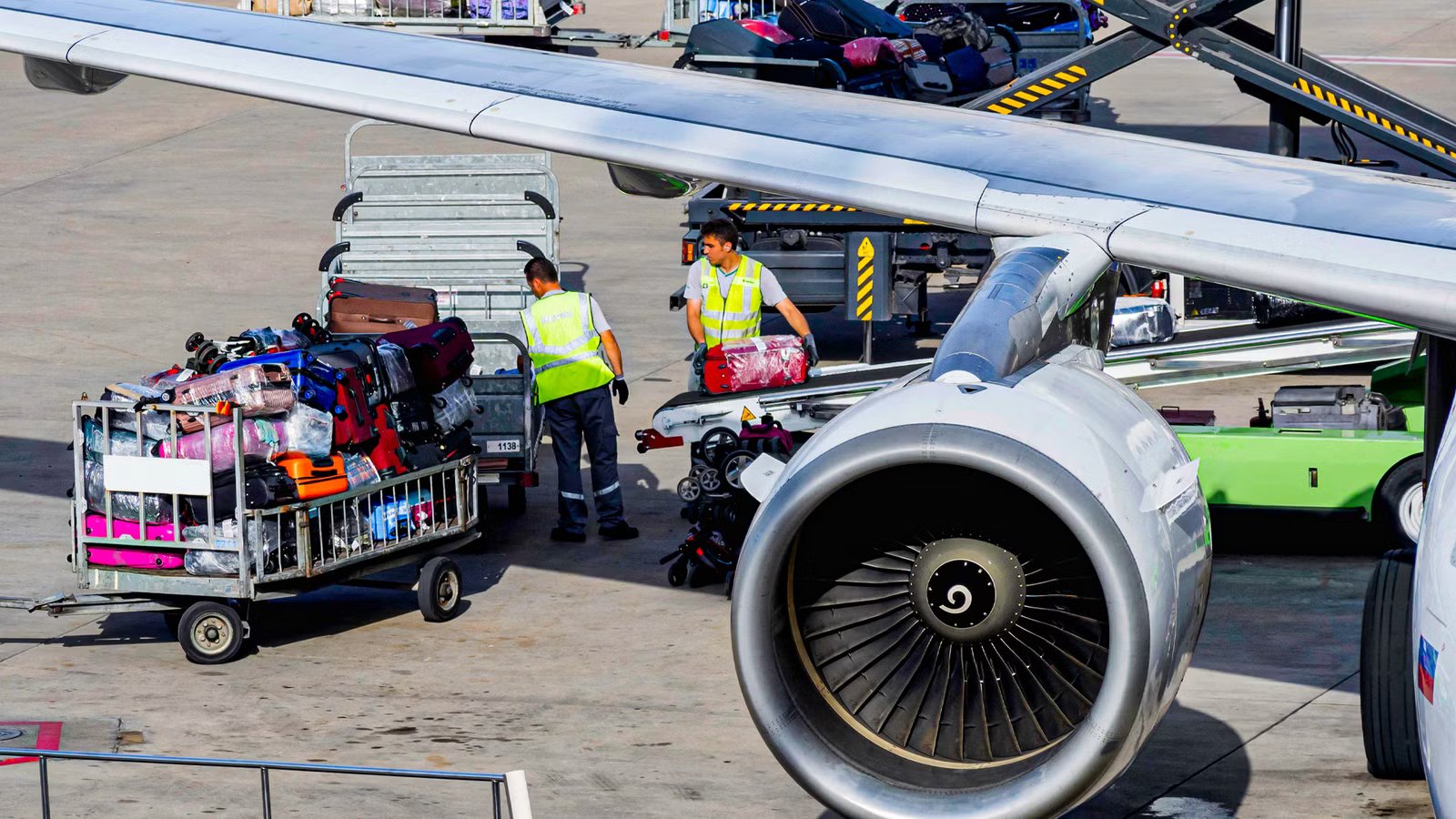
A silent technological revolution is upon us, where cameras can now identify your suitcase by its individual dents, scratches, and unique blemishes. This level of precision was initially designed to rescue the industry from a staggering 74.7% surge in mishandled bags seen between 2021 and 2022. It has introduced a new, largely undiscussed friction point between carriers and travelers. This guide explores how the rapid deployment of AI and computer vision, intended for operational efficiency, is inadvertently setting the stage for a new era of hyper-strict baggage enforcement that could change the check-in experience forever.
Driven by severe labor shortages and more people taking to the skies every year, airlines have shifted from mere experimentation to deploying autonomous systems on a massive scale. Modern baggage handling now utilizes baggage biometrics and robotic loading aids to replace the error-prone manual processes of the past. However, the same computer vision that ensures your bag reaches your destination is also capable of measuring a carry-on’s dimensions to within a fraction of an inch, creating a dilemma for airlines that previously relied on lenient human eyes.
Where Did All The Bags Go?

What has made this change move far more into the realm of reality is an unsustainable spike in baggage errors that saw the global mishandled bag rate reach 7.6 bags per thousand passengers in 2022. To combat this, the industry began investing heavily in automation and AI to streamline the journey from the check-in counter to the aircraft belly. These systems are designed to be on-the-ground tools that can handle the sheer volume of 1.2 bags checked by the average passenger.
Airlines like  Delta Air Lines are leading the charge by integrating AI-driven tools that can predict and handle exceptions before a bag even goes missing. By moving away from heavily pre-planned, manual logistics, carriers can now manage baggage in real-time, adapting to delays and gate changes with digital precision. This automation is essential for an industry that has been progressively losing millions of bags annually.
Utilizing electronic bag tags and autonomous ramp vehicles, airports are successfully reducing the physical strain on ground crews while increasing accuracy. These improvements are most definitely a win for operational reliability, but they require a level of visual data collection that was previously impossible. Every bag is now a digital data point, scanned and analyzed multiple times before the aircraft even pushes back from the gate.
Baggage Biometrics

High-resolution cameras now perform what the industry calls baggage biometrics, a process that builds a unique digital identity for every checked item. Instead of relying solely on a paper tag that can be torn off or damaged, AI identifies suitcases by their specific physical characteristics, such as subtle blemish patterns or the exact location of a dent. This ensures that even if a tag is lost, the system can still recognize the bag and automatically route it to the correct flight.
These cameras capture a level of detail that human handlers could never replicate, creating a fingerprint for luggage that persists throughout the journey. If a bag is damaged during transit, the AI can compare before and after images, allowing airlines to pinpoint exactly where the incident occurred. This transparency is a massive step forward for liability and customer service, though it requires constant, high-definition monitoring of every piece of luggage.
This biometric tracking creates a permanent digital footprint that follows your luggage from the moment it leaves the check-in kiosk. Shifting from reactive tag-matching to proactive identity tracking, the system maintains a high-fidelity record of your bag’s physical state to combat the 74.7% surge in mishandled items. Every detail is captured, meaning the anonymity of a standard suitcase is replaced by a unique data profile that allows for real-time management across the entire journey. It forms the structural foundation for the autonomous systems that take over once your bag disappears behind the rubber curtains.

What Can You Look Forward To From Airlines & Airports In 2025?
Next year, we will see sustainable fleets, a premium passenger experience, and technology-driven airports with biometrics and artificial intelligence.
Automation Is Everywhere

Automation has moved beyond the terminal and onto the ramp, where autonomous vehicles are now replacing traditional tugs and carts. These vehicles navigate busy tarmacs using computer vision and sensor arrays, delivering luggage to the aircraft with minimal human intervention. It is a direct response to global labor shortages that have left many ground handling positions vacant since the industry’s post-pandemic recovery.
Robotic loading aids are also being deployed to assist with the physical task of lifting heavy bags into aircraft containers. These systems not only protect workers from injury but also ensure that every square inch of the cargo hold is utilized efficiently. Through optimizing the load factor of the baggage compartment, airlines can reduce fuel burn and ensure the aircraft remains within strict balance limits.
In addition to physical robots, AI-driven exception handling is now the standard for resolving routing conflicts. If a passenger’s connecting flight is moved to a distant terminal, the AI calculates the fastest path for the bag and redirects the autonomous carts accordingly. This level of dynamic management was simply impossible under old, manual systems that relied on pre-printed flight manifests.
Much More Enforcement Of The Rules

The problem that has surfaced is the narrowing gap between what an airline can measure and what it should enforce. With computer vision systems now capable of determining the exact dimensions of a bag as it passes a camera, the days of eyeballing a slightly oversized carry-on are numbered. If the system flags a bag as one inch (2.54 cm) too wide, it can automatically trigger a fee or a mandatory gate check before the passenger even reaches the boarding area.
While this precision was built for safety and loading efficiency, its potential as a revenue tool is creating tension. Passengers who are used to pushing the limits of personal items find themselves targeted by automated gate agents that do not allow for the nuance of a soft-sided bag that can be compressed. A transition from human discretion to algorithmic enforcement is a jarring shift for frequent flyers who value flexibility.
|
Feature |
Human Gate Agent |
AI Computer Vision |
|
Detection Method |
Visual estimation/Physical sizers |
High-resolution 3D scanning |
|
Consistency |
Variable (Subject to mood/crowds) |
100% Constant |
|
Measurement Tolerance |
High (Often allows 1-2 inch leeway) |
Extremely Low (Sub-millimeter accuracy) |
|
Reaction |
Verbal warning/Manual fee |
Automated alert/Digital charge |
Comparison with traditional methods shows that while AI is fairer in its consistency, it lacks the empathy that often smooths over the stresses of travel. An agent might see a grieving family and waive a small fee; an AI will simply record the weight and apply the surcharge. The silent scanning allows airlines to collect data on every bag, potentially building profiles of high-volume travelers who consistently exceed limits.
Why Do Airlines Want This?

Airlines are making these massive changes to survive the economic reality of today’s industry landscape. The industry has most definitely caught up with the dip in passenger numbers in 2020, and so, the traditional way of handling luggage has become physically and financially impossible. The ten million extra mishandled bags seen in 2023 represent a massive drain on airline profits and passenger trust.
By investing in these new AI and robotics technologies, carriers can decouple their growth from the availability of low-cost labor. They can keep operations running even during staffing crunches that would otherwise ground flights. Furthermore, the move toward electronic bag tags and digital tracking reduces the cost of reuniting lost bags with their owners, which traditionally involved expensive couriers and manual searches.
With the move toward automated, real-time decision-making, the industry is finally addressing the black hole of baggage logistics. Passengers are increasingly demanding Uber-style tracking for their luggage, wanting to see exactly where their bag is at every second. To provide this level of transparency, every step of the process must be digitized, which naturally leads to the collection of more data than most travelers realize is being captured.
Efficiency In The Name Of Lost Privacy

The check-in process will likely become a walk-through experience in the near future, where passengers and their bags are scanned simultaneously. What this will inevitably mean, though, is that privacy in the airport will be traded for efficiency. Nobody enjoys a lost bag, but the cost of a 100% successful delivery rate is a world where the airline knows more about your luggage’s physical condition than you do.
Avoiding over-stuffing soft-sided luggage is more important than ever, as automated sizers will not be as forgiving as the ground staff of the past. As these systems mature, we can expect baggage biometrics to become as common as facial recognition at the gate, creating a seamless, albeit highly scrutinized, journey. Gone are the days of being let through, even with a bag that is outside the limits. AI will not show the empathy that ground staff may show, meaning that everyone must be far more vigilant when it comes to sticking to the rules that the chosen airline puts out.
The next step for AI will be predicting baggage failure before it happens, identifying a weak handle or a fraying seam before the bag breaks in the sorting system. Utilizing predictive maintenance for luggage, airlines could offer even higher levels of service. For now, the focus remains on closing the gap between manual chaos and digital order, ensuring that the ten million extra lost bags of the past stay firmly in the history books.

![12-Hour Nonstop Flights: Alaska Airlines’ 10 New Longest Routes In 2026 [Full List]](https://dailynewsnblog.com/wp-content/uploads/2026/05/251219_787_stills_1397_cropped.jpg)