dailynewsnblog
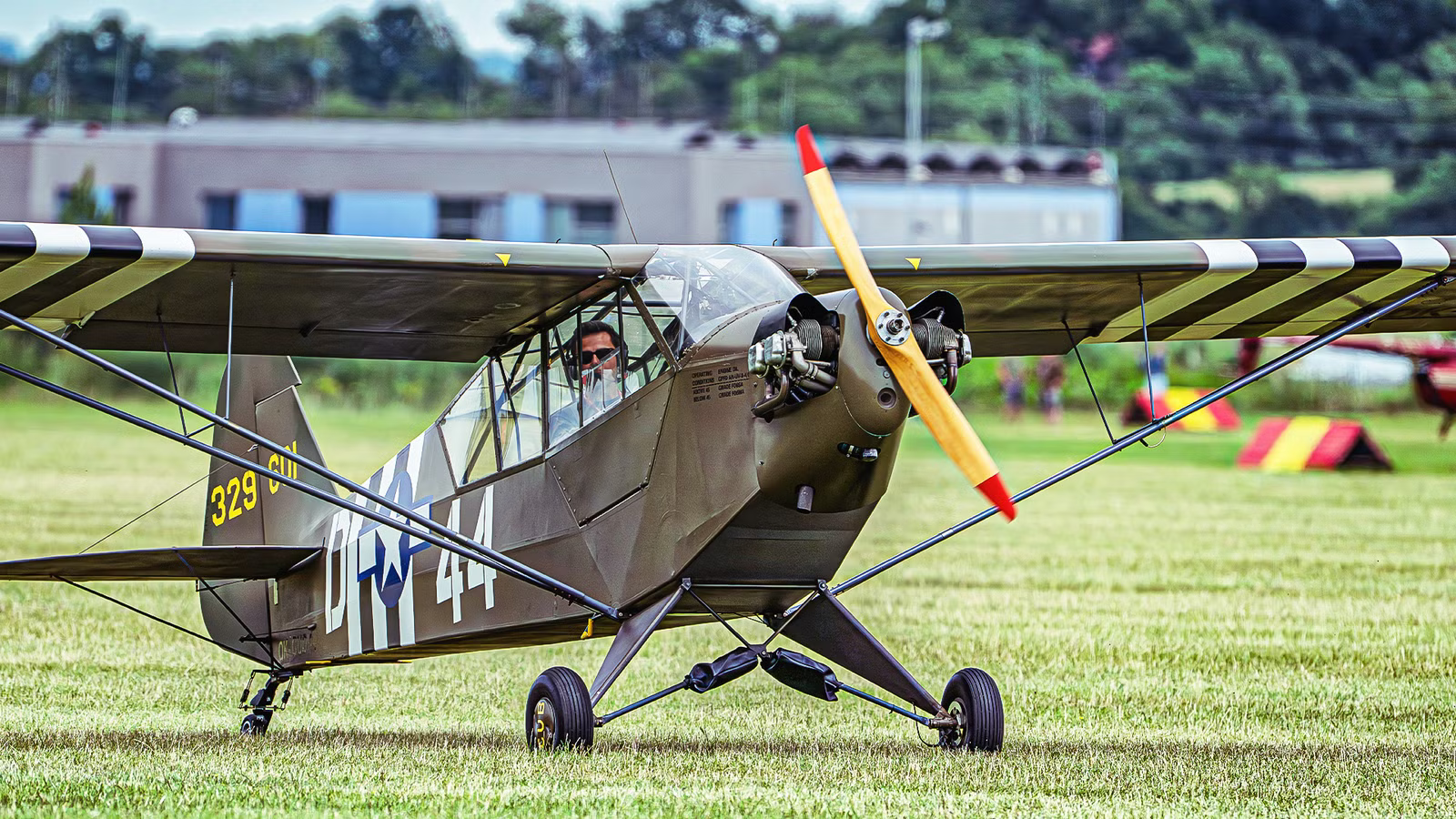
It is estimated that of the more than 400,000 American pilots who flew in WWII, four out of five had their first flight in a Piper J-3 Cub. Historical analysis also claims that 75% completed their training in that very same spruce-and-fabric taildragger. The little yellow plane became an icon for the droves of new aviators that learned stick-and-rudder skills for the first time from its cockpit. While the WWII fires made the Cub a legend, its story began long before the war.
The J-3 was the debut model of the newly established Piper Aircraft Corporation, launched in 1938. The low-cost Cub was popular with the government-sponsored civilian pilot training program, which trained college students to fly. When the US government realized hostilities were inevitable, Capitol Hill began investing significantly more funding in the assembly line. At the peak of wartime manufacturing, Piper rolled a completed Cub out of the factory doors every 20 minutes, designated L-4 Grasshopper.
Beyond training, these planes were also used to patrol the coast in reconnaissance roles, and they were vital to US Army programs like the Tuskegee Airmen and WASP ferry service flown by women. When the factory wound down in 1947, it had delivered roughly 19,000 to 20,000 examples. The Cub helped usher in the ‘golden era of air travel,’ and while it may be out of production, a handful of examples remain airworthy around the world.
Why The Cub Made A Forgiving Teacher

The Cub was chosen by the Pentagon in its time of need for its forgiving flight characteristics and rock-bottom construction cost. The reputation it had built up in the CPTP gave lawmakers confidence that the little tail dragger could be trusted with preparing the greatest generation for such an unprecedented battle in the skies around the world. The Department of Defense entrusted the Cub with training almost every new pilot for the largest Air Force ever stood up in world history.
Looking at the engineering behind the plane, Air & Space Magazine says the Cub’s large wing and light weight made it feel like a powered glider, and it could touch down at under 40 mph (64 km/h). A student could make mistakes without breaking much. Power came from small piston engines rated from 40 to 90 horsepower (30 to 67 kW), depending on the version, the same article notes. The Stearman, the military’s usual primary trainer, carried an engine above 200 horsepower (149 kW) and weighed nearly a ton empty. Tuskegee Airman Roscoe Brown recalled that its narrow landing gear demanded care to avoid a ground loop, which is a sudden swing during landing that can damage the airplane.
The Army Air Corps first ordered the type as the O-59 in 1941 for liaison and observation work, according to the National Museum of the US Air Force, and later designated it the L-4. It says Piper’s J-3 trainer was nearly all olive drab paint to transform it into an L-4. That simplicity helped the Army, which could order a proven airplane with a large pool of pilots already comfortable at its controls.
The 65-horsepower Continental engine was incredibly efficient, burning only about 4 to 5 gallons of fuel per hour. This allowed flight schools to keep training operations running continuously for pennies on the dollar compared to heavier military trainers. The ready availability of parts and airframes meant the government never had to worry about training pipelines stalling because of aircraft shortages.
Washington Becomes Piper’s Biggest Buyer

President Franklin Roosevelt had unveiled the CPTP on December 27, 1938, promising instruction for 20,000 college students a year, according to the Centennial of Flight Commission. A small trial began in early 1939, and Plane & Pilot reports that the full program started that autumn. The government paid for each student’s 72 hours of ground school and 35 to 50 hours of flying.
A federal rule also required every participating flight school to own one airplane for every 10 students. That requirement turned the program into a means of developing greater domestic aerospace capabilities. Piper and the Cub were well-placed to win that business, with its airframe tailored expressly for the purpose of training flights. The Cub did win most of it too.
Because the manufacturing process was so streamlined, the Piper factory in Lock Haven, Pennsylvania, could scale up instantly. Rivals, including the Waco UPF-7, the Luscombe 8, and the Taylorcraft B, captured only 25% to 50% of the market. In the late 1930s, a brand-new Piper J-3 Cub cost roughly $1,000 to $1,300. Even adjusted for the era, it was highly affordable.
The Little Taildragger That Democratized Flying In America

Despite the dark times that drove the Cub’s production to such monumental volumes, it became one of the most important airplanes in democratizing general aviation and serving as a catalyst that propelled American Commercial flying to heights never seen before. Before 1939, the military elite and wealthy hobbyists entirely dominated aviation. It was practically impossible for minorities or women to gain access to an airfield, let alone a pilot’s license.
By lowering the cost and complexity of flight, this small yellow airplane broke racial and gender barriers and built a massive talent pool that fueled the post-war commercial aviation boom. The Tuskegee Institute in Alabama became one of the primary CPTP training sites. This CPTP pipeline trained the first group of Black aviators, creating the legendary Tuskegee Airmen.
For women, the CPTP offered a rare, federally funded gateway into aviation. Over 2,500 women learned to master stick-and-rudder handling in the J-3 Cub’s tandem cockpit. As the war escalated, these women became the backbone of the Women Air Force Service Pilots. The WASPs logged millions of hours ferrying military aircraft, towing targets, and testing equipment.
Launching America Into A Golden Era Of Flying

When the conflict ended, the sheer scale of wartime Piper Cub training directly accelerated the evolution of the modern commercial airline industry in several profound ways. Before the war, ordinary citizens viewed flying as a death-defying stunt. Seeing thousands of local boys, women, and minorities return from the war as decorated pilots completely normalized aviation.
To support the thousands of training Cubs and wartime cargo planes, the government built or upgraded over a thousand regional airfields, control towers, and weather tracking stations across the country. By 1944, the CPTP and military pipelines had trained over 435,000 pilots, so when the war ended, America possessed the largest, most highly skilled pool of aviators in human history.
The military sold surplus aircraft for pennies on the dollar. Thousands of veterans used their GI Bill benefits to continue their flight education. This massive consumer demand forced airlines to rapidly expand. Without the enormous flying network built on the back of the Cub, the US could never have generated the human capital or infrastructure required to launch the global airline industry into the jet age.
The Greatest Generation Ushers In The Jet Age

To make the leap from propeller power to jet engines, it wasn’t enough to develop revolutionary new turbine technology and supersonic aerodynamics. The massive number of pilots who learned to fly in the Cub because of WWII’s demands created a meritocracy of aviators and a massive pyramid of talent. Instead of simply giving the wealthy the opportunity to take the controls of an airplane, the Cub opened the flight deck to the public based on skill, rapidly advancing the development of airmanship in America. Before the mass mobilization of WWII, flying was largely ‘barnstorming,’ an art form based entirely on feel, intuition, and individual luck.
The Cub changed everything by introducing a standardized, federally regulated curriculum. This disciplined, checklist-driven training philosophy was exactly what was required later to manage jetliners. America’s aviation community forged its professionalism in blood. The transition to faster, heavier, and more complex aircraft was incredibly dangerous, both in combat and flying in friendly skies. The absolute best and most adaptable pilots at the top of this pyramid became military test pilots and early airline captains who mastered the first generation of commercial jets, like the Boeing 707 and Douglas DC-8.The democratization of small-scale flying had a massive, cascading effect that enabled the rapid maturation of the commercial airline networks. The Cub also helped create a general aviation community open to the public, including working-class Americans.
Before the Cub, flying a private aircraft was a disorganized hobby reserved for the wealthy. The Cub democratized the skies, creating a framework that let any ordinary citizen walk down to a local airport, sign up for lessons, and buy a plane. The sudden influx of thousands of regular citizens flying small aircraft forced the government to completely rewrite the rules of the sky.
Local entrepreneurs bought surplus Cubs, set up shop at small local airfields, and created the first modern flight schools. To drive costs down even further, pilots pioneered the flying club concept. Private planes evolved from a rich man’s toy or a circus stunt into a practical tool regular people used for crop dusting, pipeline patrol, flight instruction, and family weekend trips.