dailynewsnblog
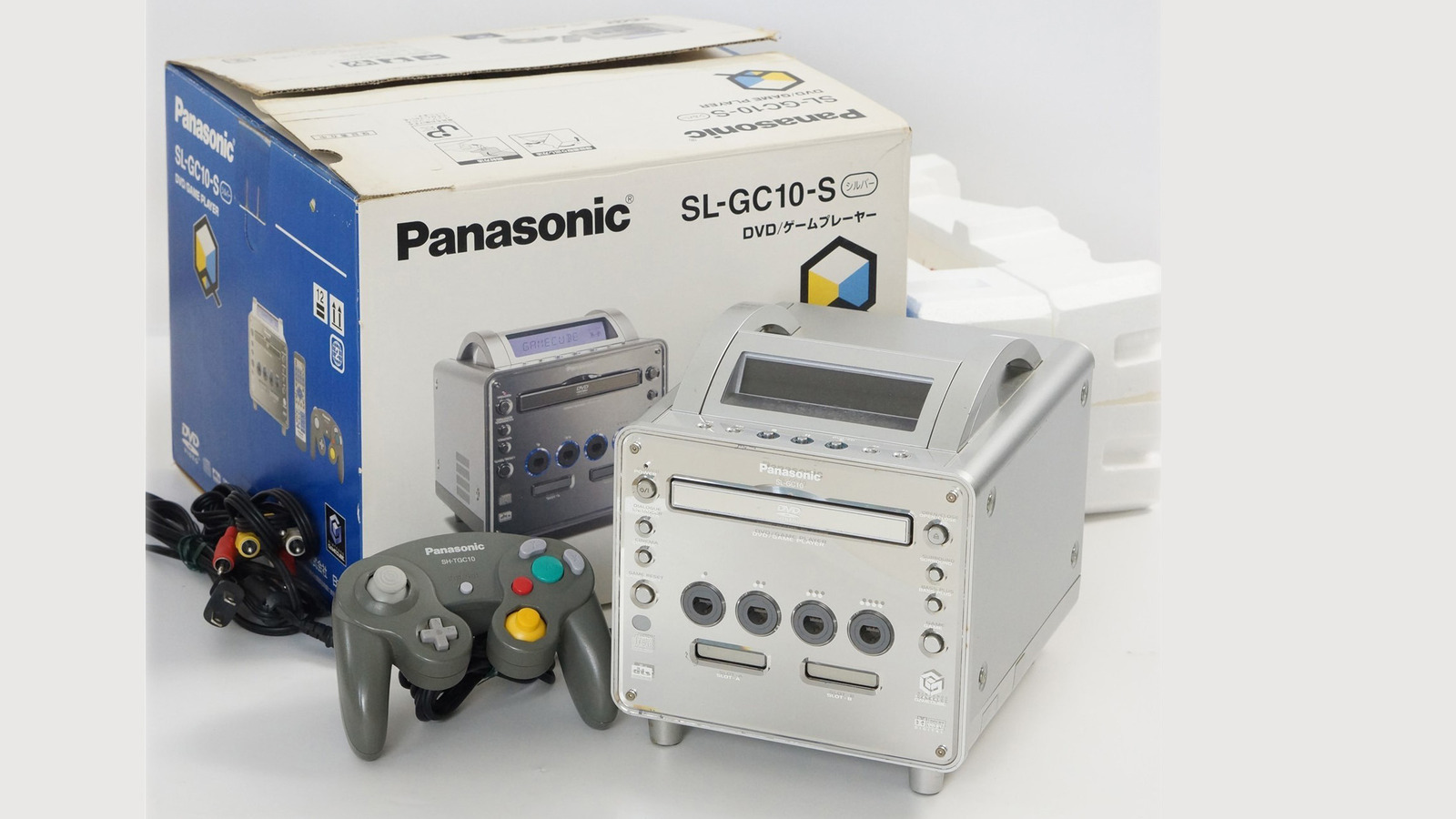
The Panasonic Q was a bizarre mashup. Its motorized disc tray accepted GameCube discs, DVDs and audio CDs. The company took the home theater part seriously. The Q had a Cinema mode for picture processing, along with audio features like Dolby Digital, DTS (Digital Theater Systems) for surround sound, Dialogue Enhancer and Bass Plus.
Those home theater features sure must have been nice for games like Super Mario Sunshine or Metroid Prime, right? Unfortunately, no. That’s because the Q’s home theater features were split off from the game console. Game audio was limited to the GameCube’s standard analog connections. There was even a hardware button to manually switch between the two modes because it wouldn’t change automatically based on the disc type. When it was time to switch, the system effectively powered down one side and restarted the other.
The Q also came with Panasonic-branded accessories reflecting the product’s duality. There’s a gray GameCube controller with Panasonic branding for games and a matching gray remote control for the DVD player. This wasn’t so much a hybrid device as it was two distinct machines from two companies sharing the same chassis. Oh, early oughts, how we miss you.
Setting aside the exterior, the gaming half of the Q was no different from a standard GameCube. You could pop in Super Smash Bros. Melee or Mario Kart: Double Dash!! and have an identical experience to your friend with the regular version. It had the same controller ports, memory card slots and full compatibility with the GameCube library (although unmodified models were region-locked to Japan).
The weird industrial design did lead to one tradeoff: the GameCube’s Game Boy Player didn’t fit. The optional accessory, which let you play Game Boy, Game Boy Color and Game Boy Advance games, lodged underneath Nintendo’s system. But because the Q’s base was different, Panasonic had to release a modified version of the Game Boy Player designed for its shiny, weird console.
Despite all of that effort, the Panasonic Q struggled to find an audience — mostly because it was damn expensive. It launched in Japan at ¥39,800 (roughly $313 at the time) — a lot of money for such an oddball product. Although that matches the PS2’s Japanese launch price, Sony’s console arrived nearly two years earlier, had already built a huge audience and made the DVD player a central selling point. Not to mention, you didn’t have to reboot your console to switch between the two modes. Plenty of modded imported units made it overseas, but the Q never launched outside of Japan.