dailynewsnblog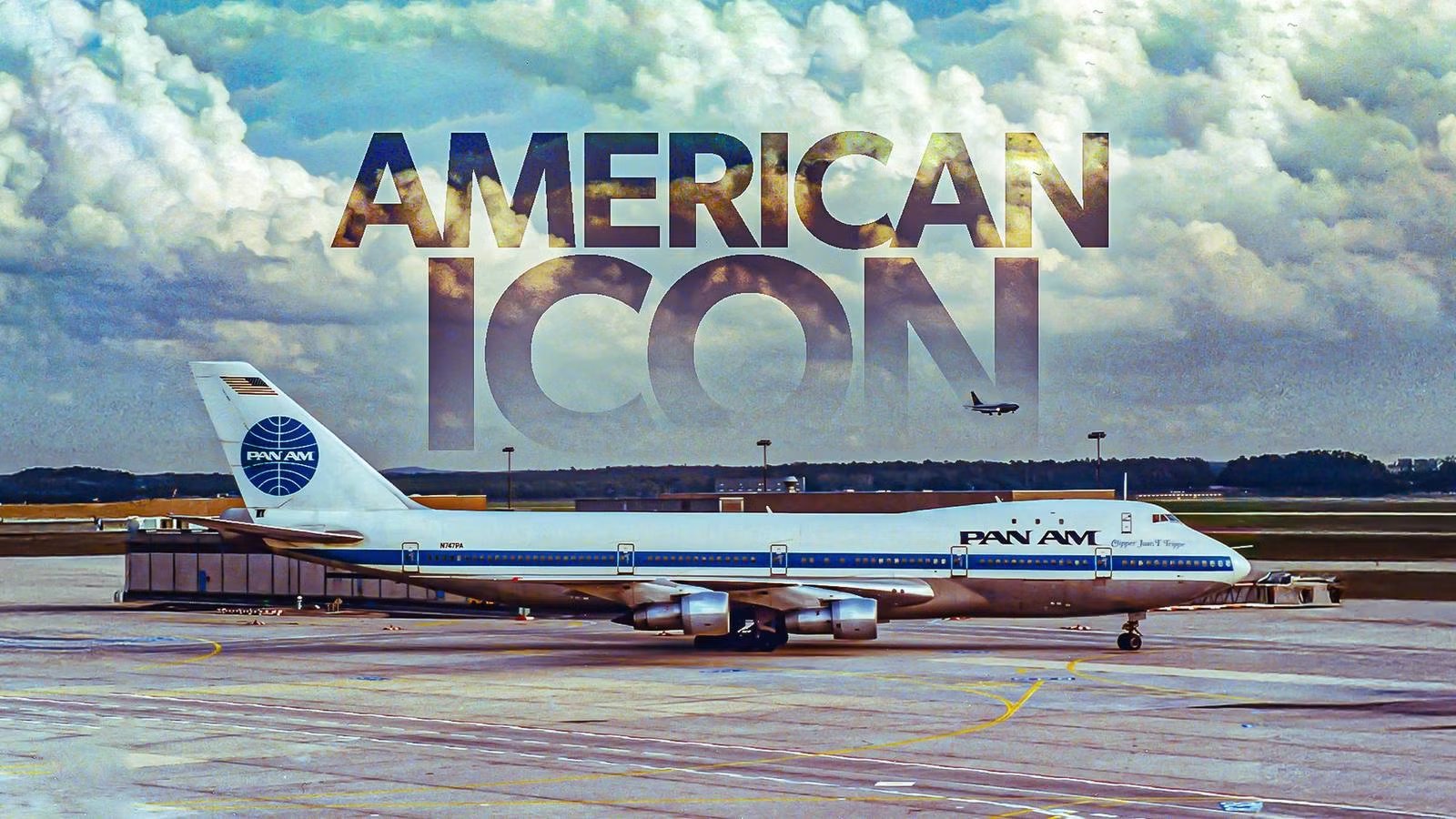
Few aircraft have come to be as iconic or written their names into the history books quite like the Boeing 747. Featuring a twin-aisle cabin design, the 747 was the world’s first widebody airliner. So large and groundbreaking was the Queen of the Skies, as it came to be known, that  Boeing purpose-built an assembly plant to specifically support its production. This factory itself, at Everett in Washington, retains the title as the world’s largest building by volume to this day.
Indeed, one could go on and on about the facts and figures associated with the 747. But there has always been a key standout feature of the aircraft. One that has placed it among the most distinguishable commercial aircraft in existence. Notably, it is something that has never been replicated in a subsequent passenger jet design. That is, its hump.
Boeing 747’s Original Ties To US Military

It was an amalgamation of falling airfares, growing passenger demand, and increasingly busy skies throughout the 1960s that set the scene for the world’s first widebody jet. The 747 as we know it now was not simply the result of a reaction to these factors, though. Instead, the jumbo jet has its roots in the US military and an effort by Boeing to get its hands on a multi-billion-dollar Air Force contract.
Boeing entered the competition for a new massive military transport in the early sixties. As it turned out, this left it already deep into research that could apply to a comparable civilian aircraft by the time the industry came calling for it. So while the Lockheed C-5 Galaxy ultimately prevailed over Boeing’s entry in 1965 to win the contract, Boeing’s work did not go to waste.
Far from it, the high-bypass engine technology developed during the competition proved key in the design stage of the 747, for instance. Hardware from the military transport concept drawn up by Boeing was largely avoided, in fact, with the 747 built almost entirely from scratch. However, the research behind its engines remained relevant, alongside the thinking behind some other familiar features.
Boeing 747 Hump Always Key For Cargo Loading

Allowing the cockpit to be raised above and effectively placed out of the way of the nose, this partial bump in the fuselage meant a huge door could be fitted at the front of the aircraft unimpeded. This in turn opened up the possibility for cargo loading and unloading at the nose.
Such a characteristic was a key part of Boeing’s military transport concept. That said, it was not Boeing’s idea alone, with guidelines for the transport aircraft from the Air Force actually requiring competing parties to propose a plane that could open up at the front and rear. As a result, a similar layout with the cockpit situated above a huge, upward-hinged cargo door could, and still can, be found on the winning Lockheed model.
Simply put, by getting the cockpit out of the way, the likes of complex wiring would not have to somehow be worked into the door system. Thanks to this, a massive space allowing direct access to the hold could be far more easily created. At the time, this thinking proved invaluable to the needs of airlines, whether deliberate or not.
Pan Am Heavily Influenced 747 Program Early On

How Boeing went from a failed military transport proposal to the jumbo jet is largely attributable to Pan American World Airways. While the manufacturer did have the basis for a huge transport aircraft, it appeared to be an interest from the airline’s head at the time, Juan Trippe, that really got the ball rolling on a separate passenger model.
In 1965, the same year Boeing was trumped by Lockheed for the airlifter, Trippe and then Boeing president William Allen are said to have held initial discussions over the 747. Trippe reportedly told Allen: “If you’ll build it, I’ll buy it.” Allen responded in turn: “If you buy it, I’ll build it.” The following year, the two companies solidified a deal for 25 of the planes for over $20 million each.
Boeing 747-100 specifications:
Wingspan | 195 feet, 7 inches (59.60 meters) |
Length | 231 feet, 8 inches (70.60 meters) |
Height | 63 feet, 4 inches (19.30 meters) |
Range | 5,300 nautical miles (9,815 km) |
Max takeoff weight | 151,228 lb (333,400 kg) |
Cruise speed | Mach 0.84 |
Engines | 4 x P&W JT9D-7A or 4 x P&W JT9D-7F or 4 x GE CF6-45A2 |
Nevertheless, in spite of the sizable deal, there remained lingering doubt across the industry over such a large conventional jetliner. Yes, the aircraft fit the bill following Pan Am’s requests for something two and a half times larger than the existing Boeing 707. Sheer size alone, though, was under threat of becoming obsolete against another emerging idea of how commercial flight could look: Supersonic.
Supersonic Flight Left Operators Wary Of Conventional Airliners

It was under this very premise that Boeing stuck with the hump design on the 747. The manufacturer itself was vying to create a supersonic transport (SST), known as the Boeing 2707. Albeit, no models were ever built, but selection by the US government in 1966 to build a prototype and 122 orders from 26 airlines laid bare the crossroads the industry was at.
In the space of the same year, Boeing announced production of a 490-seat passenger transport and the construction of a new plant in Everett had begun, before then winning the SST competition in the US. Nobody knew yet whether supersonic flight would prevail over subsonic as the industry standard for passenger operations in the years ahead, not least Boeing, Pan Am, or anyone with an interest in the 747 for that matter.
So, the 747 had to be versatile from the point of its inception. For airlines, that meant an aircraft capable of being easily converted into a freighter if needs be. None other than Pan Am’s Trippe himself believed in this very scenario of supersonic aircraft taking over the passenger space and leaving subsonic jets confined to courier operations. Hence, for Boeing and operators alike, the hump design offered a marketable solution.
But The 747 Outlived Any Fears Around Supersonic Threat

As it transpired, government funding for the Boeing 2707 dried up in 1971 before a prototype could be finished. Supersonic flight itself was ultimately becoming a staple of luxury travel rather than the dominant force in commercial aviation, in the meantime. Regardless, it was too late for the 747 by this point. Production had begun in 1967, with the first delivery then taking place in 1969 before its inaugural commercial flight with Pan Am the following year in 1970. All told, the hump that had originally been incorporated as a compromise was there to stay.
That is not to say the front-loading capability offered by the jumbo jet was not incredibly useful. Three configurations were offered from the beginning: All passenger; all cargo; and a convertible model. Both the freighter and convertible models housed the hinged nose. For couriers, passenger airlines, or those involved in both, the 747 offered a solution at the heaviest end of the market. Again, it was the raised cockpit and hump design that made this all possible.
Core Boeing 747 variants:
Aircraft | 747-100 | 747-200 | 747SP | 747-300 | 747-400 | 747-8 |
Entry into service | 1970 | 1971 | 1976 | 1983 | 1989 | 2012 |
Approx range in nautical miles (km) | 5,300 (9,815) | 6,865 (12,715) | 6,650 (12,315) | 6,691 (12,392) | 7,260 (13,445) | 8,000 (14,816) |
Typical seating (three-class) | 366 | 400 | 276 | 412 | 416 | 467 |
Over the more than five decades that ensued, between the first model rolling off the production line in 1967 and the final delivery in 2023, a total of 1,574 747s were built. These took the form of six primary variants, all with the distinctive hump, which itself varied in size between versions. Of those built, many found homes at cargo airlines, whether initially or in the latter stages of their lives, all thanks to the versatility of the Queen of the Skies.
Boeing 747 Hump Also Synonymous With Luxury Travel

In many ways, it is fitting that Atlas Air, primarily a cargo carrier, took delivery of the final 747, an aircraft with such operations so ingrained into its design philosophy. For many, though, the distinctive hump of the jumbo jet became a symbol of something else. Where Boeing had initially toyed with and scrapped the idea of a full-length second deck early on, the separate upstairs cabin became a key component of operators’ luxury offerings.
Pan Am itself used the space to house an exclusive lounge on its first jumbo jet services. Airlines later began fitting the area with premium seating to attract the highest-paying customers, taking advantage of the increasing space offered by newer models. Even today,  Lufthansa and the largest remaining passenger operator of the 747, offers business-class seating in the jet’s upper deck. Where the space had been created with far less glamorous cargo flights in mind, its use case among passenger carriers became synonymous with luxury travel.


![18-Hour Flights: Qantas’ 11 New Ultra-Long Nonstop Flights Revealed [Full List]](https://dailynewsnblog.com/wp-content/uploads/2026/08/209-qantas-airbus-a380-ceri-breeze-merrillie-redden-_-shutterstock.jpg)